
EVERY SIGNATURE MATTERS - THIS BILL MUST PASS!

CLICK - GOAL - 100,000 NEW SIGNATURES! 75,000 SIGNATURES HAVE ALREADY BEEN SUBMITTED TO GOVERNOR CUOMO!
EFF Urges Court to Block Dragnet Subpoenas Targeting Online Commenters

CLICK! For the full motion to quash: http://www.eff.org/files/filenode/hersh_v_cohen/UOJ-motiontoquashmemo.pdf
Wednesday, March 11, 2026
Tuesday, March 10, 2026
The War against The Orthodox Jews by the Orthodox Jews!
A rabbi accused of sexually abusing roommate as a teen is now teaching at Orthodox Jewish school in Chicago
The rabbi’s accusations date to the early 2000s at a Jewish boarding school on the East Coast, according to a recently settled lawsuit. He was hired by Yeshiva Eitz Chaim in Chicago while that suit was pending, and school leaders won’t say why.

The rabbi works at Yeshiva Eitz Chaim at 6045 N. Keystone Ave., and was hired there several years ago as the sexual misconduct lawsuit was pending, according to court records from New York and Cook County.
The Chicago Sun-Times isn’t naming the rabbi because he has not been charged with a crime, and he and the accuser were minors when the alleged misconduct occurred.
Both are now adults, and their respective lawyers each declined to comment.
Filed in 2021, that lawsuit was settled this past fall quietly for undisclosed terms — confidentiality generally frowned upon by victim advocates, and restricted by other faith groups such as the Catholic church because such secrecy was used for years to hide legitimate claims and allow abuse to fester.
Typically such settlements come without an admission of wrongdoing.
Whether leaders of Yeshiva Eitz Chaim knew of the allegations when they hired the rabbi isn’t clear.
But school officials certainly have known about the accusations — which date to the early 2000s when the future rabbi and his accuser were students and dorm mates at Torah High School in Long Beach, N.Y. — for at least a year and continued to employ him, according to records and interviews.
Chicago attorney Hal M. Garfinkel released a statement Thursday from school leaders that said:
“Despite the civil claim being unsubstantiated, the School, out of an abundance of caution for the safety of its students, sought legal, rabbinical and professional guidance as to the appropriate next steps.”
“After doing extensive independent research, they unanimously advised the School leadership that there is no cause for concern. The School proceeded to notify parents, lay leaders and supporters as to the civil suit along with the School’s reaction and subsequent decision. They all wholeheartedly supported the School in its handling of the situation.”
But school officials wouldn’t say when parents were notified or provide details on their research, including who conducted it and how recently was it done.
Yeshiva Eitz Chaim’s web site says the school “provides both high school and post-secondary education to students from across the United States.”
“We cater to students who seek an honors-level program in both religious and general education, as part of a growth-oriented community,” according to the web site. “Special emphasis is placed on ethics and character building which results in graduates of the highest moral standards.”
Founded in 2019, the school is on the edge of the Sauganash and Peterson Park neighborhoods and also offers “dormitory facilities” so “in-town and out-of-town students” have “the opportunity to focus on their studies unhindered.”

The lawsuit, filed by the accuser under the pseudonym John Doe, accused the rabbi, when they were teens, of sexually abusing him “regularly and repeatedly . . . at least 300 times over the course of two years,” court records show.
The suit also named Torah High School, also known as Mesivta of Long Beach, and two rabbis there as defendants, saying they either knew the accuser was being sexually abused or should have.
The school “completely controlled what the children did hour by hour,” yet nobody there “supervised, checked on or even determined if the children were healthy and well from day to day,” the lawsuit said.
The suit said that during one “bed check,” a Torah High School leader walked in while the future rabbi was victimizing the accuser in their room and “did nothing to stop the abuse,” instead admonishing that he did not want to “see that again.”
While the suit was still active, attorneys for the New York school tried to shield the Torah rabbis from being named, and also tried to force the accuser to use his real name — prompting the accuser’s lawyer to allege that the defendants were trying to harass and shame him.
The case isn’t an anomaly, says Ariella Kay of ZA’AKAH, a group that advocates for survivors of sexual violence in the Jewish community.
Child
sex abuse is relatively common in Orthodox Jewish communities, but it’s
often swept under the rug or otherwise not publicly addressed, Kay said,
calling Jewish communities “20 years behind” some other faith groups in
dealing with this scourge.
Publicizing cases is important not only because it helps victims on their “healing journey,” they also serve as “cautionary tales for the community about what happens when you don’t deal with this properly.”
There have been other child sex allegations — and alleged cover-ups — centering on Chicago’s West Rogers Park neighborhood where there’s a sizable Orthodox Jewish community, records show.
The New York lawsuit alleges there “were other instances of sexual abuse that occurred” at the Torah High School.
That case was sealed by the court in recent months. Before that occurred, a court filing revealed a 2019 letter said to be from the Yeshiva Eitz Chaim teacher to his accuser in which he said:
“I would like to apologize for what happened when we were together in 11th grade. As I got older, I realized the severity of what I’ve done. My words cannot undo my actions, but I would like to express my deepest regret and apology.”
Monday, March 09, 2026
“Imminent Threat” - Defending Trump's Decision To Go To War With Iran
"Ha-ba lehargecha hashkem lehargo" (אם בא להורגך השכם להורגו) is a Talmudic maxim from Sanhedrin 72a instructing that if someone actively seeks to take your life, you are permitted—and often obligated—to kill them first in self-defense.
For forty seven years Iran's leaders have declared their intention to erase Israel, bring death to America, and export their revolution through militias, missiles, and martyrdom. Believe Them! War is ugly. Jews, of all people, know this better than most. Our prayers plead for peace three times a day.
When the President of the United States—whether one admires him or despises him—stands before the intelligence briefings and hears the phrase “imminent threat,” he is standing, whether he knows it or not, in the shadow of that Talmudic principle.
The phrase “imminent threat” is bureaucratic and dull. But Jews raised on Talmud know that danger is not decided by paperwork. The rabbis used a different word: rodef — the pursuer. If someone runs at you to kill, the law expects you to stop him before he succeeds. That blunt rule matters when the pursuer is not a single man with a knife but a regime building weapons and proxies with open hostility toward your country.
The medieval giant Maimonides—the Rambam—codifies the law of the rodef with brutal clarity. If a pursuer is chasing an innocent person to kill him, anyone witnessing it is obligated to stop the pursuer, even with lethal force if necessary.
Notice what Rambam does not require.
He does not require that the pursuer fire the gun first. He does not require that the victim be bleeding on the ground. The law intervenes before the murder is completed.
Iran is the free world's enemy. For decades its leaders have supported militias, funded terrorist groups, and promoted a revolutionary agenda hostile to American interests and to allies in the region. That pattern — talk of destruction mixed with concrete steps to increase capability — is the modern equivalent of a pursuer drawing a blade. Treating such a pattern as mere rhetoric is wishful thinking, not strategy.
The halachic rule of the rodef does not demand absolute proof before action. Medieval authorities like Maimonides made that clear: you are not required to wait until the murderer’s hand strikes you. The law favors preemption when delay would mean inevitable harm. Applied to statecraft, the logic is straightforward. Waiting for an attack to be carried out before responding is morally and practically perilous.
Democratic leaders face an impossible calculus. They do not have prophecies; they have intelligence — incomplete, messy, often contested — and the obligation to protect their people. When the question is whether to act now or to risk catastrophe later, prudence argues for preventing a clear, growing danger rather than deferring until it is undeniable. That is uncomfortable, and it will earn criticism; history often rewards the patient, not the preventative. But history also punishes those who sleep through obvious threats.
Critics accuse leaders who act early of recklessness. That charge ignores a second possibility: that the action prevented a catastrophe and therefore looks unnecessary in hindsight. Preventive measures rarely gain monuments. They gain headlines and political attacks. Still, the moral test is not the applause of the day but whether the leader upheld the duty to protect the nation and its allies.
Jewish tradition values peace deeply, but it is not pacifist. Our texts are realistic about power and survival. The Maccabees and other Jewish leaders fought when survival demanded it. Saying “war is terrible” is not the same as saying “we must refuse to act when facing a real, growing threat.” Sometimes the moral choice is the hard choice.
So when a president hears “imminent threat” about a hostile, nuclear-capable regime that funds proxies and openly seeks regional dominance, the decision to act can be understood as the secular analogue of the halachic duty to stop the pursuer. That does not make war desirable. It does, however, make acting to prevent grave danger defensible in both moral and practical terms.
If this is the calculus a leader faces — incomplete intelligence, plausible catastrophe, and a duty to protect — then choosing to confront the threat is not swagger. It is responsibility. The preacher of delay may be sentimental; the leader who errs on the side of preventing mass harm may be judged harshly, but history will be the truer arbiter of which approach kept people alive.
Modern democracies suffer from a peculiar disease: the belief that danger must first be photographed, notarized, and confirmed by editorial boards like the New York Times before it becomes real.
But the Talmud does not think like that. The sages knew something about enemies. They lived under Rome, Persia, Byzantium—empires that rarely issued polite warning letters before persecution. Jewish survival depended on reading intentions early. The rabbis therefore developed a legal instinct that the modern West has largely forgotten: threats are judged by trajectory, not merely by the final act. When a regime builds the weapon, funds the proxy armies, and declares the coming war inevitable, the question is not whether danger exists. The question is how long you are willing to pretend otherwise.
 |
| REPUBLSHED |
https://blogs.timesofisrael.com/imminent-threat-defending-trumps-decision-to-go-to-war-with-iran/
Friday, March 06, 2026
The Haredi Draft Crisis Is Reaching a Breaking Point | Yehoshua Pfeffer | Tikvah Podcast
Rabbi Yehoshua Pfeffer is a prominent Haredi scholar, author, and legal expert who publishes analytical, intellectual pieces on Haredi society, Jewish law, and modern Israeli issues. His work often appears in the journal Tzarich Iyun (Need to Consider), which he contributes to or edits.
Key aspects of his work include:
- Tzarich Iyun: His articles, such as those discussing Charedi basic training in the IDF, "Shall Your Brothers Go to War?", and theological reflections on "Yes" (Embracing the Courage of Abraham), offer nuanced, often counter-cultural, perspectives on the intersection of religious life and Israeli society.
- Haredi Thought: He is recognized for deep analysis of the Haredi world’s response to crises, social issues, and technological changes.
- Perspective: His writing often bridges the gap between traditional Jewish legal thought (Halakha) and modern,, complex contemporary challenges in Israel.
Thursday, March 05, 2026
***No "Best Guy In Lakewood" For These Ladies!*** A female aircrew member said there are more than 70 female combat pilots and navigators in the Israeli Air Force.
Dozens of female pilots, navigators and technicians have taken part in Operation Roaring Lion since Saturday, as debate over women in combat roles continues and the Air Force maintains high operational tempo
More than 30 female aircrew members have taken part in Israeli Air Force strikes on Iran since Saturday as part of Operation Roaring Lion, the Israel Defense Forces confirmed Monday in response to a query from ynet.
The figure includes dozens of female pilots, combat navigators and technicians who participated in the long-range missions.
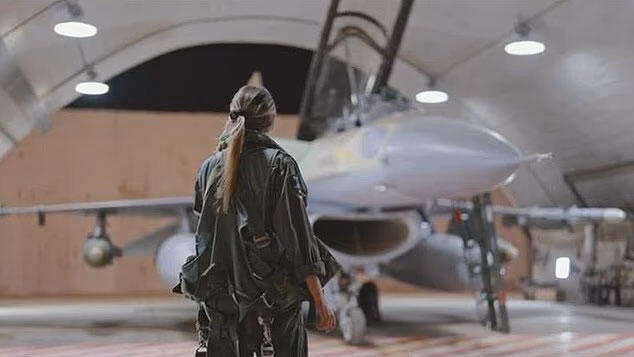
Following Operation “With the Lion” in June, Capt. N., an F-16 combat navigator from the 107th Squadron who took part in the strikes, described the prolonged flight to Iran in an interview with ynet.
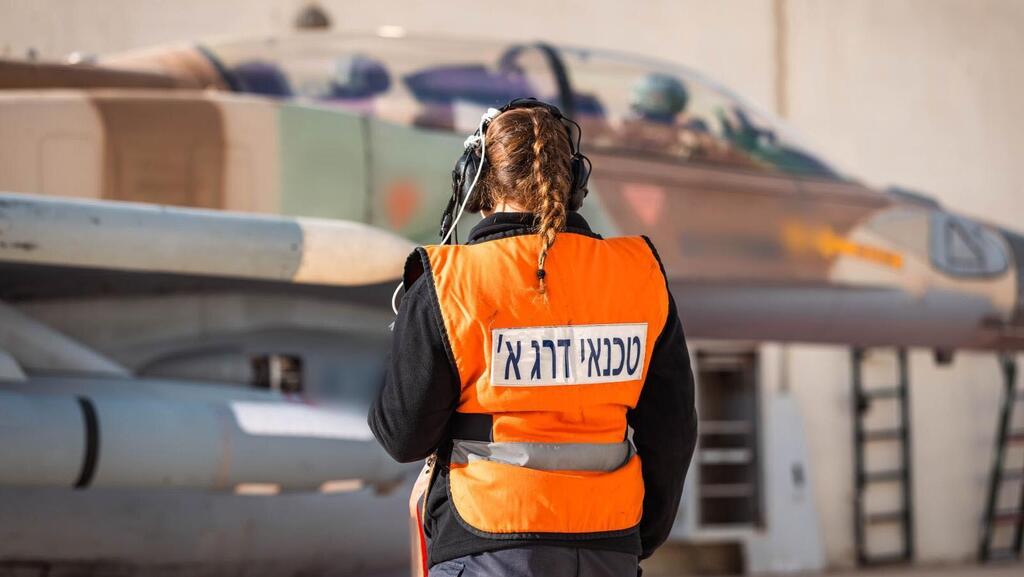
(Photo: IDF)
“On the way to the target you’re tense, listening to the radio for any change and knowing what you’re doing,” she said. “There’s no moment for casual conversation in the cockpit. Only when you return to non-threatened territory do you say something to the pilot, ‘Wow, what an experience we just had.’”
Describing the intensive operational activity since October 7, she added: “You’re just waiting for them to call you. You want to defend and to strike. That’s what we trained for, that’s why we’re here. It doesn’t matter how much you slept at night, if you slept at all. You fly and you do the job.”
At the time, Capt. N. said she believed the confrontation with Iran was not over. “We did very good work here and it’s not finished yet,” she said. “We are still alert and ready for anything.”
Wednesday, March 04, 2026
Tuesday, March 03, 2026
Here We Go - It's The Jews --- "Lawmakers: Israeli plan to attack Iran dictated Trump’s decision on strikes" Listen To Rubio - at 1:40, 4:26 --- and the Entire Press Conference
Senior lawmakers in both parties said Monday that the Trump administration’s decision to launch bombing and missile strikes across Iran this weekend was largely dictated by Israel’s plan to attack Iran with or without U.S. support.
RELEVANT TRANSCRIPT:
The third is the
assessment that was made that if we
stood and waited for that attack to come
first before we hit them, we would
suffer much higher casualties. And so
the president made the very wise
decision. He we knew that there was
going to be an Israeli action. We knew
that that would precipitate an attack
against American forces and we knew that
if we didn't preemptively go after them
before they launched those attacks, we
would suffer higher casualties and
perhaps even hire those killed. And then
we would all be here answering questions
about why we knew that and didn't act.
And the imminent threat was that we knew
that if Iran was attacked and we
believed they would be attacked that
they would immediately come after us.
And we were not going to sit sit there
and absorb a blow before we responded
because the Department of War assessed
that if we did that, if we waited for
them to hit us first after they were
attacked and by someone else, Israel
attacked them, they hit us first and we
waited for them to hit us, we would
suffer more casualties and more deaths.
We went proactively in a defensive way
to prevent them from inflicting higher
damage. Had we not done so, there would
have been hearings on Capitol Hill about
how we knew that this was going to
happen and we didn't act preemptively to
prevent more casualties and more loss of
life.
US was forced to strike because of an
impending Israeli action.
No, first well I mean two things I would
say. Number one is no matter what
ultimately this operation needed to
happen. That's the question of why now.
But this operation needed to happen
because Iran in about a year or a year
and a half would cross the line of
immunity. Meaning they would have so
many short-range missiles, so many
drones that no one could do anything
about it because they could hold the
whole world hostage. Look at the damage
they're doing now. And this is a
weakened Iran. Imagine a year from now.
So that had to happen. Obviously, we
were aware of Israeli intentions and
understood what that would mean for us
and we had to be prepared to act as a
result of it. But this had to happen no
matter what.
*
Senior administration officials told Republican and Democratic lawmakers at a classified briefing on Capitol Hill that the Israeli plan to strike Iran pushed the United States to take preemptive action to protect U.S. troops stationed at bases throughout the Middle East, whom the Pentagon believed would have been targeted by retaliatory strikes.
Sen. Mark Warner (D-Va.), who serves as vice chair of the Senate Intelligence Committee attended the briefing, said the decision to initiate a massive military assault on another country because of pressure from a U.S. ally put the nation in “uncharted” territory.
“This is still a war of choice that has been acknowledged by others that was dictated by Israel’s goals and timeline,” Warner told reporters at the briefing.
Secretary of State Marco Rubio, Secretary of Defense Pete Hegseth, CIA Director John Ratcliffe and Chair of the Joint Chiefs of Staff Gen. Dan Caine provided the briefing to lawmakers Monday afternoon.
Warner said he supports Israel, but he questioned the decision to put American lives at risk when an imminent threat may be directed at an ally instead of the United States itself.
“Israel is a great ally of America. I stand firmly with Israel. But I believe at the end of the day when we are talking about putting American soldiers in harm’s way and we have American casualties and expectations of more, there needs to be the proof of an imminent threat to American interests. I still don’t think that standard has been met,” he said.
Warner argued if the military operation against Iran “was being driven by imminent security threats from Iran against America, I think we would have had better planning.”
Speaker Mike Johnson (R-La.), speaking to reporters after the briefing, said that President Trump faced a tough call on ordering strikes against Iran when it became clear that Israel would launch military operations, even without U.S. support, which would have put U.S. troops in the region in danger.
“Israel was determined to act in their own defense here, with or without American support. Why? Because Israel faced what they deemed to be an existential threat. Iran was building missiles at a rapid clip to the point where our allies in the region could not keep up,” Johnson said.
“Because Israel was determined to act with or without the U.S., our commander in chief and the administration and the officials [in the Cabinet] had a very difficult decision to make. They had to evaluate the threats to the U.S., to our troops, to our installations, to our assets in the region in beyond,” Johnson said.
https://thehill.com/homenews/administration/5764030-trump-administration-iran-strikes-israel/?
Monday, March 02, 2026
We are not yet ready to celebrate


Not yet.
A cornered enemy is the most dangerous enemy of all. History has taught this lesson in blood, and we dare not forget it in a moment of adrenaline. When a regime built on fanaticism feels the walls closing in, it does not surrender gracefully; it thrashes. It claws. It fires wildly in every direction. Victory parades are for later. Now is the hour for vigilance.
Our hearts break for the lives already lost. Each name is a universe. Each funeral is a world collapsed into a grave. We sit comfortably in our kitchens and living rooms, but our brothers and sisters in Israel sit in reinforced rooms—safe rooms that are anything but safe for the soul. Children are counting seconds between sirens. Mothers are pretending not to tremble. Fathers are pretending not to calculate worst-case scenarios. Anxiety has become the national soundtrack.
And yet there they stand.
Young Israeli soldiers, barely older than the students in our yeshivot and universities, shoulder rifles heavier than their years. American servicemen and women, representing the might of the United States, position themselves not for conquest but for containment—for the ugly, necessary task of pushing back tyranny before it metastasizes.
Let us speak plainly: tyranny does not retire. It does not mellow with age. It does not negotiate in good faith when its theology or ideology demands annihilation. When such forces are cornered, they grow desperate. And desperation armed with rockets is not a theoretical danger; it is a midnight phone call.
We are not yet ready to celebrate because this is not yet over.
There is a temptation, especially among political commentators and social media generals, to declare turning points, to speak of “decisive blows,” to tweet victory emojis while others sit in bomb shelters. That temptation is obscene. Real war is not a press release. It is sweat pooling under body armor. It is a soldier whispering Shema under his breath. It is a mother clutching her child as the concrete walls shake.
Yes, we are grateful. Grateful for the bravery. Grateful for the coordination. Grateful that tyrants are being challenged rather than appeased. But gratitude is not triumphalism. Gratitude bows its head; triumphalism puffs out its chest.
A Jew must say what is uncomfortable: we do not measure success by how loudly we cheer, but by how soberly we assess the moral cost. Every missile intercepted is a miracle of engineering. Every civilian spared is a mercy. But every escalation reminds us how fragile civilization truly is.
A cornered enemy is dangerous because it has nothing left to lose. That is precisely why our side must never lose its soul. We fight tyranny not to become a mirror of it, but to prevent it from swallowing the innocent.
So pray.
Pray for the soldiers who stand in harm’s way. Pray for the families who wait by their phones. Pray for wisdom among leaders who must make decisions measured not in headlines but in lives. Pray that restraint accompanies strength.
Celebration will come when the sirens fall silent—not for a night, not for a week, but for good. Until then, we stand with our brothers and sisters. We ache with them. We refuse to look away.
And we remember: the most dangerous moment is not when the enemy advances confidently—but when it realizes it is cornered.
*
 |
| A Very Worthy Tzedaka |
https://causematch.com/idfwopurim26?
 |
| REPUBLISHED |
https://blogs.timesofisrael.com/we-are-not-yet-ready-to-celebrate/
Thursday, February 26, 2026
An Open Letter to Donald Trump

Mr. President,
You have gilded your name in brass and glass from Manhattan to Las Vegas. You have stamped it on towers, golf courses, steaks, and skylines. But history is not impressed by signage. It is impressed by rupture. By men who understood that their moment was not about branding but about breaking something dangerous before it broke the world.
Your legacy will not be measured in square footage. It will be measured in centrifuges.
The Islamic Republic of Iran has waged a four-decade war against the West not merely with slogans, but with strategy. It funds and arms Hamas and Hezbollah. It stains the map of the Middle East with proxies and missiles. It has turned ancient Persia into a modern theology of death, exporting revolution while its own people suffocate under clerical rule.
You understood something many in Washington preferred to forget: that appeasement dressed up as diplomacy is still appeasement. When you withdrew from the Joint Comprehensive Plan of Action, you shattered the polite illusion that a regime built on “Death to America” could be bribed into moderation. You did not treat Tehran as misunderstood. You treated it as adversarial.
History will judge whether you finished that thought.
Because dismantling Iran does not mean reckless war. It means clarity. It means recognizing that the regime’s nuclear ambition is not a bargaining chip but a doctrine. It means understanding that a theocracy armed with intercontinental reach is not a regional nuisance but a civilizational threat. It means aligning American power—economic, diplomatic, covert, and, if necessary, military—with the singular objective of preventing a regime of apocalyptic theology from acquiring apocalyptic weapons.
There are moments when restraint is wisdom. There are moments when restraint is surrender wearing a tuxedo.
The Iranian people themselves are not the enemy. They have risen in protest, chanting for freedom against their own rulers. They are heirs to Cyrus, poets, merchants, students who risk prison for the crime of wanting normalcy. The regime fears them more than it fears sanctions. A strategy that isolates the mullahs while amplifying the aspirations of the Iranian public is not imperialism; it is moral alignment with history’s long arc away from tyranny.
Mr. President, you have always understood optics. Understand this optic: if the Islamic Republic crosses the nuclear threshold on America’s watch—any watch—the Middle East becomes a multipolar nuclear bazaar. Saudi Arabia will not sit idle. Turkey will not pretend indifference. Israel will not outsource its survival. The fragile architecture of deterrence collapses into a regional arms race with theological overtones.
And if that happens, no tower bearing your name will look tall enough to cast a shadow over it.
You have often spoken of strength—of projecting it, of restoring it, of refusing to apologize for it. Strength is not measured only by tariffs and rallies. It is measured by whether an American president recognizes that some regimes cannot be managed; they must be contained, rolled back, or fundamentally transformed.
You once moved an embassy to Jerusalem, signaling that symbolic lines on a map can become permanent when backed by conviction. The Iranian question is not symbolic. It is structural. It is the hinge upon which the next half-century of Middle Eastern stability will turn.
This is not a call for impulsiveness. It is a call for doctrine. A clear declaration that the United States will never permit the clerical regime in Tehran to acquire nuclear weapons—and that this is not negotiable across administrations, across parties, across news cycles.
Men who build towers leave monuments. Men who dismantle threats leave peace.
If you wish your name to echo beyond the skyline, let it be attached to the moment America finally closed the nuclear file on the Islamic Republic—not with hopeful signatures, but with irreversible reality.
History is not asking how many buildings carry your brand.
It is asking whether you understood the scale of the threat—and acted accordingly.
Sincerely,
Paul Mendlowitz
Cc; The White House https://blogs.timesofisrael.com/an-open-letter-to-donald-trump/ |


America’s Interests Will Not Always Align - Why Israel Must Be Prepared to Go It Alone

A dangerous lullaby is being sung in Hebrew and English on both sides of the ocean. It goes like this: America will always be there. The melody is reassuring, almost parental. It has the tone of permanence. But it is not history. It is hope masquerading as strategy. And Jewish history is merciless toward those who confuse the two.
For more than seventy-five years, Israel has lived beneath the protective shadow of the American eagle. Military aid, diplomatic cover, vetoes at the United Nations, joint exercises, intelligence cooperation, Iron Dome funding, aircraft carriers stationed in the Mediterranean like steel mezuzot affixed to the doorposts of the Jewish state. The relationship is real, deep, and unprecedented in Jewish history. But in real life relationships change in scope, narrative, needs, interests and motives.
To say this is not an accusation against the United States. It is an observation about how great powers behave. America is a superpower with global obligations: China, Russia, Taiwan, Ukraine, oil routes, trade corridors, domestic political cycles, public opinion, and an ingrained reluctance for open-ended wars in distant deserts. At some point—whether in five years or fifteen—a president will sit in the Oval Office and ask a question no Israeli prime minister wants to hear: Is stopping Iran worth risking American lives, American bases, American elections, and American stability? The honest American answer may be no. Not because America hates Israel, but because America is not Israel.
At the moment, Washington and Jerusalem share overlapping concerns: Iranian expansionism, terror proxies, regional instability. But this alignment is conditional. If Iran becomes, in American eyes, a containable nuclear power rather than an imminent one; if Hamas becomes a manageable nuisance rather than a catalyst for regional war; if American voters grow weary of Middle Eastern entanglements; if China becomes the overriding strategic obsession—the calculus changes. For America, a nuclear Iran may become a problem to be managed. For Israel, a nuclear Iran is an existential clock. These are not the same category of threat. Pretending that they are is a form of strategic self-deception.
Here an uncomfortable Jewish reflex must be confronted. Jews have a long and tragic habit of believing that powerful nations will ultimately protect Jewish continuity because doing so is moral, rational, and mutually beneficial. Spain. Germany. Russia. France. Poland. The pattern is painfully familiar: they need us, they value us, they understand. Until the moment they do not.
The entire purpose of Jewish sovereignty was to end this reflex. The founding idea of Israel was radical in its simplicity: the Jews would never again outsource their survival to the goodwill, political moods, or fatigue of another nation.
Yet, quietly and comfortably, Israel has slipped back into a familiar psychological posture. America will restrain Iran. America will deter Hezbollah. America will manage Hamas. America will supply the munitions and apply the diplomatic pressure. America will draw the red lines. But America draws red lines with erasable ink. Israel writes them in blood.
Tehran understands this dynamic with unnerving clarity. The Iranian regime is patient, strategic, and civilizational in its thinking. It is not trying to defeat America; it is trying to outlast America’s interest. Each year, it enriches a little more uranium, arms Hezbollah a little more heavily, strengthens its regional proxies, and watches American elections, American divisions, and American fatigue. The calculation is chillingly simple: if they wait long enough, the day will come when America decides this is no longer worth the trouble. On that day, Israel will face a problem that can no longer be postponed.
The Hamas catastrophe exposed more than a security failure. It revealed a conceptual one. Israel convinced itself that Hamas could be contained through deterrence, intelligence, and a stable regional equilibrium underwritten by American power. But enemies animated by theology, grievance, and martyrdom do not operate by the logic of containment. They operate by the logic of destiny. Iran and its proxies are not trying to manage the conflict. They are trying to reshape the region over decades. America manages. Iran endures. Israel cannot afford to be the manager in a struggle where its enemies are zealots.
This leads to a thought Israeli leadership is reluctant to voice publicly: there may come a moment when Israel must choose between waiting for American approval that will not come, or acting alone and absorbing the diplomatic, economic, and military consequences. That moment is not a distant hypothetical. It is the predictable outcome of how alliances evolve. Every empire eventually recalculates its interests. When it does, it does not ask Jerusalem for permission.
To speak of “going it alone” is not a call for recklessness or ingratitude. It is a call for psychological independence. Israel must cultivate the capacity—military, economic, and political—to act in a scenario where American support is delayed, diluted, or denied. This means independent strike capabilities, stockpiles sufficient for sustained conflict, strategic doctrines not reliant on Washington’s green light, and a political culture that understands the real cost of sovereignty. Sovereignty is not tested when your ally agrees with you. It is tested when they do not.
There is also a moral dimension deeply rooted in Jewish tradition. Classical Jewish law does not treat delay in the face of mortal danger as prudence; it treats it as negligence. When a threat to Jewish life is imminent, waiting for external permission is not piety. It is abdication. Jewish history did not assume Rome’s approval before defending Jewish lives. It is not obvious why Jerusalem should assume Washington’s.
One can easily imagine a headline a decade from now: U.S. Urges Restraint as Israel Considers Action Against Iran. The phrase “urges restraint” is diplomatic shorthand for something far more consequential: this is your problem now. On that day, Israel will either be prepared for independent action, or it will discover that it spent decades confusing alliance with insurance.
Alliances are blessings. The American–Israeli alliance is one of the most remarkable partnerships in modern history. But alliances are never substitutes for self-reliance. America is Israel’s greatest ally. It is not eternal, not uniform in its politics, and not bound by Jewish fate. Israel is. And only Israel is.
The greatest danger to Israel is not Iranian uranium or Hamas rockets. It is the quiet, comforting belief that someone else will ultimately handle the decisive moment. That belief has followed the Jewish people for two thousand years. It should not be allowed to take root again in the era of Jewish sovereignty.
 |
| REPUBLISHED |
https://blogs.timesofisrael.com/why-israel-must-be-prepared-to-go-it-alone/
Subscribe to:
Posts (Atom)