EVERY SIGNATURE MATTERS - THIS BILL MUST PASS!

EVERY SIGNATURE MATTERS - THIS BILL MUST PASS!
CLICK - GOAL - 100,000 NEW SIGNATURES! 75,000 SIGNATURES HAVE ALREADY BEEN SUBMITTED TO GOVERNOR CUOMO!

EFF Urges Court to Block Dragnet Subpoenas Targeting Online Commenters

EFF Urges Court to Block Dragnet Subpoenas Targeting Online Commenters
CLICK! For the full motion to quash: http://www.eff.org/files/filenode/hersh_v_cohen/UOJ-motiontoquashmemo.pdf

Friday, September 23, 2022

After her family arranged her marriage at the age of 17, Romi was still having panic attacks from her childhood trauma. Her husband tried to help by arranging therapy sessions with Walder.


Israel: Is this an ultra-Orthodox MeToo moment?
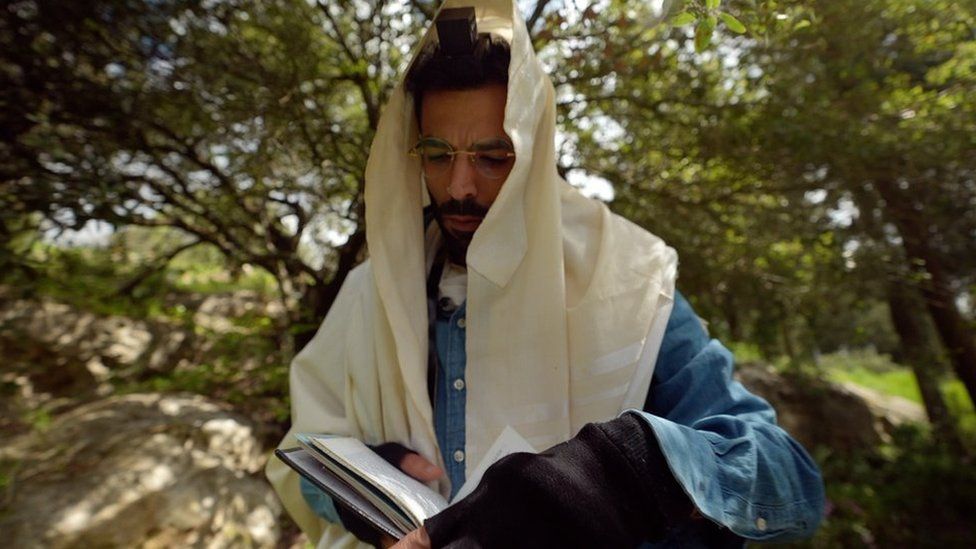

Shayli Tevel prays in the forest
Shayli Tevel says he was abused throughout his teens by a leading member of the community
 

When senior ultra-Orthodox Jews in Israel tried to silence or blame victims of sexual abuse who had been allegedly attacked by high-profile men in the community, young people expressed their anger. Some likened the furious response by young haredi Jews - for whom talk of sex is taboo and reaching out to police is often not an option - to the #MeToo movement.

Shayli Tevel weeps as he prays, calling out to God: "Father, I've no energy left to absorb all this."

The former ultra-Orthodox Jew is wearing a white prayer shawl and tefillin - long leather straps with small boxes attached, containing scrolls with verses from the Torah.

After a decade of silence, Shayli, now in his early 30s, has recently broken strict religious conventions and spoken publicly about being groomed and sexually abused between the ages of 12 and 19, by a leading ultra-Orthodox - or haredi - figure.

The man Shayli accuses of abusing him is Yehuda Meshi Zahav, famous in Israel as a social activist and the founder of an emergency rescue service.

"Everyone gave him respect and I wanted to be around him," Shayli says. One of 13 children, Shayli often craved attention and felt flattered to be singled out by Meshi Zahav.

Then, one day, Meshi Zahav offered him a free T-shirt. "When he put [it] on, he put his hand inside my pants."

There is no sex education at Jewish seminaries called yeshivas - like the ones where Shayli received all his schooling - and he found it hard to articulate the abuse to others.

He thought about harming himself. "I didn't want life anymore," he says.

In his early 20s, Shayli did go to the police, but their first investigation of Meshi Zahav was soon closed. "Everywhere I mentioned his name, the door was shut," he says.

But that changed in 2021, just after it was announced that Zahav had won the esteemed Israel Prize - regarded as the country's highest cultural honour. A newspaper published accusations of how since the 1980s, Zahav had been using his status and power to assault women and children.
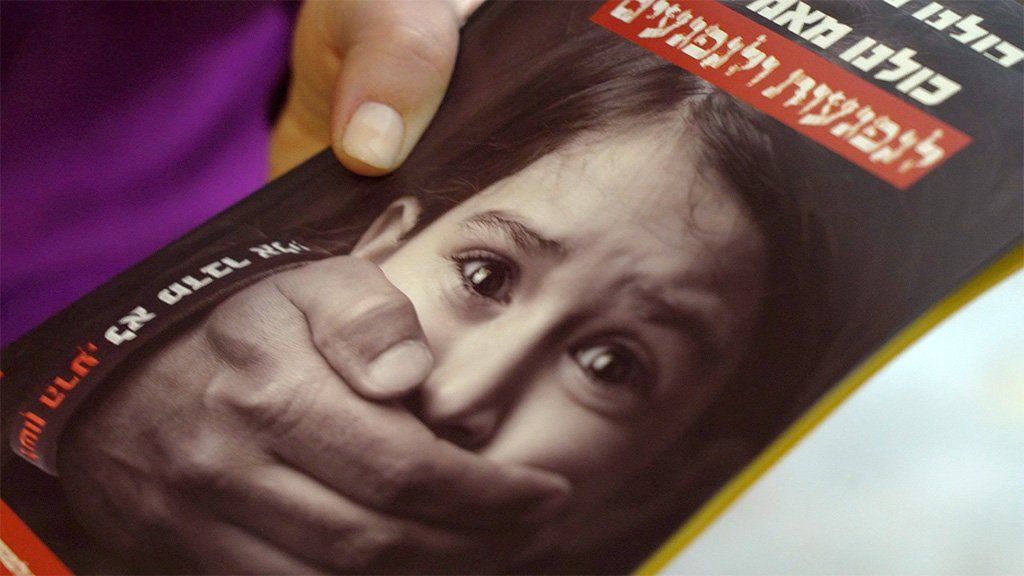
Avigayl Heilbronn holds flyer
One of the flyers Avigayl Heilbronn is circulating to her haredi community

Meshi Zahav denied it and after police opened an investigation, he tried to kill himself, ending up in a coma.

But the Meshi Zahav case hasn't been the only recent high-profile sex abuse scandal to have come to light among haredi Jews - who make up about 12% of Israel's population.

Romi Schwartz, now 40, was sexually abused as a child and later raped by children's book author, therapist, and media personality Rabbi Chaim Walder to whom she had turned for help.

"He was like a mentor, a guru. The kids' whisperer," Romi says of Walder. His children's books were found in almost every ultra-Orthodox home.

After her family arranged her marriage at the age of 17, Romi was still having panic attacks from her childhood trauma. Her husband tried to help by arranging therapy sessions with Walder.

Romi says she felt reassured at first. "He said I'm going to be there for you."

But after a year, he took advantage of her trust and the fact she had led a sheltered life. He sexually assaulted her in his book storeroom and later tricked her into going to a hotel, where he raped her.

Despite her ultra-Orthodox upbringing, Romi now considers herself a secular Jew. She says reporting such abuse to the police would be considered unthinkable by many in the haredi community.

"You don't go to the secular world's authorities, it's forbidden."

It was only late last year, after another newspaper investigation, that a special rabbinical court acted against Walder. The religious court found him guilty of sexually assaulting or raping more than 20 women and girls over decades.

He protested his innocence, but as police began an investigation, he shot himself dead.

It was the subsequent defensive reaction from some senior haredi Jews which drew a furious backlash from others in the community.

Some rabbis and religious media reacted with silence or even by criticising the victims. They accused those who had spoken out against Walder of the sin of slander, even murder. One abuse survivor then killed herself.

Presentational grey line

Religious activist, Shoshana Keats Jaskoll, says she and others couldn't believe that Walder was still being defended, and that it was his victims who were being blamed.

She said their reaction prompted an "explosion" of anger and "an absolute revolution in the haredi community".

Avigayl Heilbronn, who describes herself as a modern haredi, is one of a growing number of women trying to raise awareness in a community which shuns the internet.

She and others have been leafleting ultra-Orthodox households across Israel - more than a million flyers have been put through letterboxes. "These are instructions for parents [on] how to talk to their children about sexual abuse," says Avigayl. "We're not only making noise."

The activists liken what is happening to the #MeToo movement. They say it has had a similar domino effect - "with adults and children speaking out about historic and recent abuse by powerful figures - both men and women".

Questions remain, though, about how effectively the most conservative haredi authorities can act against sexual abusers.

"Because a lot of it is the culture of how the haredi community thinks and no matter what you say or do, the rabbi is everything"

But Rabbi Aharon Boymel - who considered himself a friend of both Zahav and Walder - insists things are changing.

He says rabbinical leaders did not know about abuse by the two men but admits that a culture of shame and secrecy has been "a big problem".

"Once we used to brush this stuff under the carpet. Today there is no such thing. If someone abuses a young boy or girl, immediately we call the police," he says.


Rabbi Aharon Boymel and Yehuda Meshi Zahav
 

"Today I know another story like that of Chaim Walder and Yehuda Meshi Zahav. Big names, important people, they've stopped [the abuse] and gone to get treatment thanks to this story," he says.

Such comments have raised concerns among victims who believe some abusers are still being offered treatment rather than reported directly to the police.

After more than a year in a coma, news broke in June that Yehuda Meshi Zahav - the man who had long tormented Shayli Tevel - had died.

Days later, Shayli searches for his grave in the vast, centuries-old Jewish cemetery on the Mount of Olives. He finds it in a corner reserved for those who killed themselves - seen as a violation of Jewish beliefs.

Shayli prays there alone for a short time. He leaves tearful but relieved.

"It's behind me," he says. "It's painful, but now it's over."

"For everyone who's passed something like that, don't be afraid, whatever happened to you, whatever happened to your child, speak about it," he says.

"It heals you."

Wednesday, September 21, 2022

And The Good News is? ------ No Jews Involved :-) (I Hope)

Justice Dept. Charges 47 in Brazen Pandemic Aid Fraud in Minnesota


The defendants were charged with stealing $240 million intended to feed children, in what appears to be the largest theft so far from a pandemic-era program.


The indictments said the defendants had pulled in millions of dollars a week by taking money from federal anti-hunger programs for meals they never served.

MINNEAPOLIS — The Justice Department said on Tuesday that it had charged 47 people with running a brazen fraud against anti-hunger programs during the coronavirus pandemic, stealing $240 million by billing the government for meals they did not serve to children who did not exist.

The case, in Minnesota, is the largest fraud uncovered in any pandemic-relief program, prosecutors said, standing out even in a period when heavy federal spending and lax oversight allowed a spree of scams with few recent parallels.

The Minnesota operation, prosecutors said, involved faked receipts for 125 million meals. At times, it was especially bold: One accused conspirator told the government he had fed 5,000 children a day in a second-story apartment.

Other defendants in the case seemed to put minimal effort into disguising what they were doing, using the website listofrandomnames.com to create a fake list of children they could charge for feeding. Others used a number-generating program to produce ages for the children they were supposedly feeding, which led the ages to fluctuate wildly each time the group updated its list of those nonexistent children, court papers said.

But their scheme — details of which were reported in The New York Times in March — still pulled in millions of dollars per week, prosecutors said in court papers, because government officials had relaxed oversight of the feeding program during the pandemic and because the other defendants had help from a trusted insider.

That insider was Aimee Bock, the founder of a nonprofit group, Feeding Our Future, that the State of Minnesota relied on as a watchdog to stop fraud at feeding sites. But Ms. Bock did the opposite, the indictments said: When pandemic-relief programs flooded the programs with money, she exploited her position to bring in nearly 200 new feeding operations she knew were submitting fake or inflated invoices.

Even when the government of Gov. Tim Walz, a Democrat, raised questions, Ms. Bock rebuffed them by filing a lawsuit and accusing state officials of discriminating against her group’s largely East African clientele.

“In effect, Feeding Our Future operated a pay-to-play scheme in which individuals seeking to operate fraudulent sites under the sponsorship of Feeding Our Future had to kick back a portion of their fraudulent proceeds,” one indictment said, according to a copy obtained by The Times.

“The subjects in this case weren’t interested in feeding our future,” Michael Paul, a special agent for the F.B.I., said at a news conference on Tuesday, when the charges were announced. “They were interested in feeding their own gluttony.”

Ms. Bock was indicted on charges of wire fraud and bribery involving federal programs. Other defendants were also charged with money laundering, for allegedly routing the funds they stole through a web of shell companies.

The case is the largest brought by the Justice Department as it scrambles to address waves of fraud involving pandemic-era programs that sent billions of dollars of aid into the economy, often with few strings attached and little oversight.

The Labor Department’s inspector general’s office has opened 39,000 investigations. At the Small Business Administration, about 50 agents have been sorting through two million potentially fraudulent loan applications. And while the sheer volume of cases all but ensures that some cases will go unaddressed, the prosecutions in Minnesota signal that the Justice Department is moving aggressively on others.

The indictments said the defendants spent their money on real estate in the United States, Kenya and Turkey, as well as on cars and luxury goods. The Justice Department is seeking to seize many of those purchases, including more than 20 cars, more than 40 properties, guns, cryptocurrency and a Louis Vuitton duffel bag.

Prosecutors said on Tuesday that many defendants had been arrested or had turned themselves in. They said some had left the country, but declined to say how many.

The indictments are accusations, and many of those who were charged have said they did nothing wrong. After a series of F.B.I. searches in January revealed the existence of the investigation, Ms. Bock told The Times that she had put in place strong antifraud measures and did not believe anyone in her system had broken the rules.

If there was fraud, Ms. Bock said then, “every test we have in place and every protection we have in place didn’t catch it. Is it possible? Absolutely. And if they got one over on us, I will help hold them accountable.”

On Tuesday, Ms. Bock, accompanied by her lawyer, was seen walking into the Minneapolis federal courthouse. Her lawyer did not respond to a request for comment.

Prosecutors said that those indicted included Sharmarke Issa, the former chairman of the Minneapolis Public Housing Authority, and Abdi Nur Salah, a former aide to Mayor Jacob Frey of Minneapolis, a Democrat. Both men were publicly connected to this case earlier in the year, because of their ties to a property that prosecutors said was bought with stolen money.

Also among the 44 people indicted was a Feeding Our Future employee, Abdikerm Abdelahi Eidleh, who was accused of taking kickbacks from people involved in the scheme. Three other defendants — including another of the nonprofit’s employees, Hadith Yusuf Ahmed — were charged via “criminal information” rather than a grand jury indictment.

The state blocked Feeding Our Future from receiving more aid money after the F.B.I. served search warrants in the case in January. The nonprofit group sought to dissolve at the time, but Attorney General Keith Ellison of Minnesota, a Democrat, blocked the move. Mr. Ellison asked a judge to supervise the group while he investigated whether it broke state charity laws. That investigation appears to be continuing.

As described by prosecutors, the participants targeted two federal food-aid programs, which were administered through state governments. They were intended to feed children in after-school programs and summer camps. But when the pandemic hit, Congress rejiggered the programs to reach millions of children stuck at home, pouring in billions of dollars more and changing the rules to let families pick up meals to go.

As funding went up, however, oversight went down: State officials, for instance, no longer had to check on feeding sites in person.

That left one last line of defense: the so-called watchdog sponsors, like Feeding Our Future. Those nonprofit groups served as conduits for money, from the states to individual feeding sites, and they were supposed to be on guard against fraud.

But the system also gave those watchdogs a reason not to bark: They could keep 10 to 15 percent of the money that flowed through them.

In this case, the indictments said, Ms. Bock’s group kept the money flowing to increase its own cut.

“The defendants exploited the Covid-19 pandemic — and the resulting program changes — to enrich themselves,” the indictments say.

Feeding Our Future had started before the pandemic as a small sponsor overseeing $3.5 million in funding. It never had an accountant on staff and sometimes struggled with basic governance, even allowing its nonprofit status to expire for a time.

But by 2021, Feeding Our Future was handling $197 million in annual funding.

Under its umbrella, the indictments said, six different groups began to operate similar frauds. The conspirators would often register new companies or nonprofits, then quickly sign them up as feeding operations under the supervision of Feeding Our Future.

Then, the indictments said, the new groups would soon report that they were feeding thousands of children per day — numbers that put them among the biggest feeding operations in the state — and began reaping thousands or millions of dollars in federal payments. In Minneapolis, for instance, a man named Guhaad Hashi Said told the state that he was serving 5,000 meals, twice a day, at a new facility called Advance Youth Athletic Development.

The site he listed was an unlikely place for anyone to feed children en masse: The address was a second-story apartment.

Mr. Said was one of those indicted; the indictment said he was paid $2.9 million out of federal money routed through the state and Feeding Our Future. But the indictment said that Mr. Said provided “only a fraction” of the meals he claimed. In an interview this year, Mr. Said said that he had never claimed to serve 5,000 meals a day in the first place.

In other cases, prosecutors said, feeding sites submitted invoices that were suspiciously consistent, with thousands of children listed as attending, day after day with no variation.

“No one got sick. No one missed a meal. No one was away,” said Andrew M. Luger, the U.S. attorney for Minnesota. “Same children. Every single day. Every single week.”

In 2020, Minnesota officials grew concerned by the speed at which Feeding Our Future was creating new distribution sites and began giving them more scrutiny.

In November of that year, the nonprofit responded defiantly, filing a lawsuit that accused state officials of discrimination. The suit said the state was harming children by delaying the start of Feeding Our Future’s new operations. “Every day that goes by, hundreds of the state’s most vulnerable children are going without much needed meals,” it said.

Several of the sites where the state had sought to delay operations later became centers of fraud, according to the indictments.

In response to Feeding Our Future’s lawsuit, a state court judge ruled that Minnesota had not taken the steps necessary to block the payments. After that, in April 2021, frustrated state officials turned to the F.B.I. — and continued paying Feeding Our Future and its partners while federal agents investigated.

The state “moved quickly and repeatedly raised the issue to federal authorities until we were able to find someone who would take the troubling spending as seriously as we were,” said Kevin Burns, a spokesman for the Minnesota Department of Education, which handled the food-aid money.

Republicans in the State Senate released a report this month, before the indictments were made public, accusing the state’s Education Department of “dereliction of duty” for failing to stop Feeding Our Future sooner.

https://www.nytimes.com/2022/09/20/us/politics/pandemic-aid-fraud-minnesota.html

Tuesday, September 20, 2022

The Hasidim We Should All Be Proud Of!


Hasidic nonprofit brings shoes to greet asylum-seekers arriving in NYC from Texas


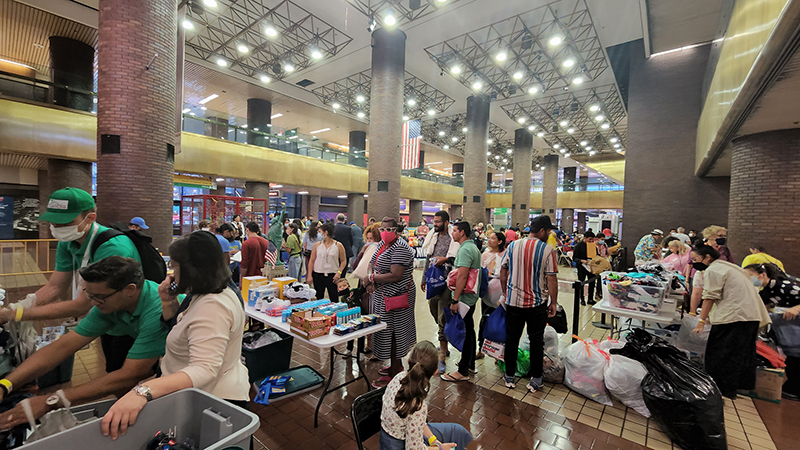
'It’s like a little pop-up Ellis Island,' said Alexander Rapaport, whose Jewish nonprofit volunteers at a triage center at the Port Authority Bus Terminal. 


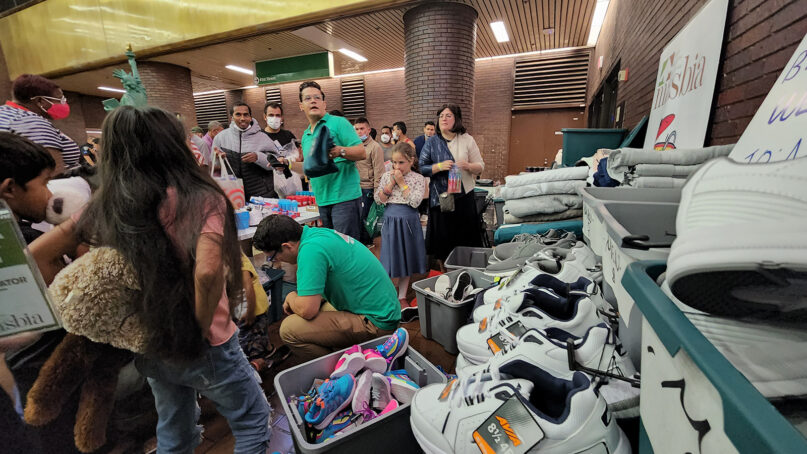
Masbia Relief Team members, in green, distribute shoes and other aid to asylum-seekers arriving at the Port Authority Bus Terminal in Manhattan, New York, on Aug. 19, 2022. Photo courtesy of Masbia

(RNS) — On any given day, the Port Authority Bus Terminal in Midtown Manhattan is crammed with commuters and tourists off to the office or to Broadway’s “The Lion King.” But since August, the world’s largest bus station has also welcomed thousands of asylum-seekers arriving on unscheduled buses from Texas.

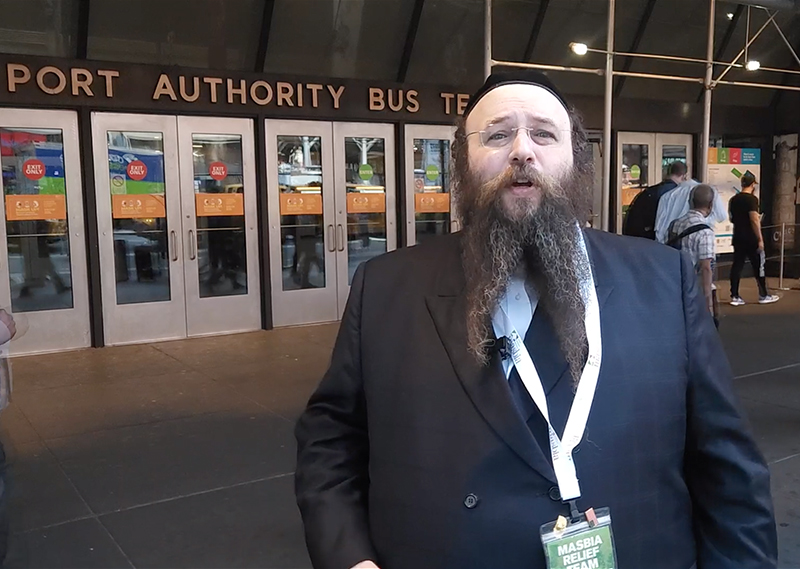
“It’s like a little pop-up Ellis Island where people are meeting volunteers with clothes, shoes and socks and other items,” Alexander Rapaport, CEO of a Jewish nonprofit called Masbia (which in Hebrew means “to satiate”), told RNS in a phone call. “There are volunteers telling them where they can go, where bathrooms are, how they can get more help.”

Just before dawn on Monday (Sept. 19), four Masbia volunteers with a truckload of donations arrived at the triage center, set up by the New York City Mayor’s Office of Immigrant Affairs (MOIA), the Port Authority and the governor’s office. They joined a handful of other nonprofits to greet three busloads of migrants (most of whom came to the U.S. from Venezuela), handing them new shoes, deodorant and tote bags labeled “With Love from the Jewish Community

Masbia, a Hasidic Jewish organization, is a New York City-based soup kitchen network whose relief team has been distributing shoes at the triage center since mid-August. Rapaport estimates they’ve donated 3,000 pairs of shoes worth tens of thousands of dollars and says many asylum-seekers arrive without shoes or in flip flops.

Masbia CEO Alexander Rapaport. Photo courtesy of Masbia

Masbia CEO Alexander Rapaport.


“The people, some of them went through so much horror, they are so broken, all we want to do is give them their humanity back,” said Rapaport.

Ruben Diaz, a chef who oversees the food distribution at Masbia, told RNS he’s given away shoes at the Port Authority roughly a dozen times.

“After being in a bus for two days, without food, shower, you can see they are a little desperate,” he told RNS. “Today there was an older lady, maybe 60 years old, and it was tough seeing somebody at that age coming to find a new opportunity at this time of their life. After she left the Port Authority, what is she going to do? Where is she going to find a job? The language is a barrier. It’s hard that you can’t do much more for them.”

Those arriving on the buses are coming from El Paso, Texas, where Mayor Oscar Leeser is filling buses with migrants, as well as from other Texas towns on buses sponsored by Texas Gov. Greg Abbott. Shaina Coronel, director of communications at MOIA, told RNS that the migrants are asylum-seekers who have a legal right to be in the United States. While some come to New York trying to connect with local friends or family, she said many were unaware of the buses’ destination and have family or court hearings in places like Miami or Chicago. Neither Leeser nor Abbott returned requests for comment in time for publication.

Coronel said lawyers at the triage center can assist the migrants with changing the location for their hearings, while medical staff can intervene for those who’ve been stuck on a bus for 50-plus hours. “Last week, a 2-year-old child came severely dehydrated, and our EMTs were there to transport him to the hospital. We are seeing folks in dire need of medical attention.”

Asylum seekers exit a bus arriving from Texas at the Port Authority Bus Terminal in Manhattan, New York, on Aug. 19, 2022. Photo courtesy of Masbia
Asylum-seekers exit a bus arriving from Texas at the Port Authority Bus Terminal in Manhattan, New York, on Aug. 19, 2022.

For asylum-seekers who don’t have family nearby and aren’t being transported elsewhere, New York City is ramping up its sheltering capacity. Coronel says the city doesn’t always know when the buses of asylum-seekers will arrive.

“We’ve reached out to Abbott’s office to try to coordinate, and he refuses to coordinate with us. He actually had the bus companies he’s using sign a nondisclosure agreement to also not coordinate with us,” she said.


At this point, buses are arriving nearly every day.

“It’s almost nonstop,” said Rapaport. “There’s about 50 people on a bus. In the beginning it was less than 100 people per day, and it was only three times a week. Now it’s close to 300 people a day, almost every day of the week.”

Despite the tense circumstances, Rapaport says the volunteers try to be cheerful when the buses arrive, greeting the asylum-seekers with smiles, signs in Spanish and even a model Statue of Liberty as a symbol of welcome. Rapaport says for him, it’s all an extension of his faith.


Masbia Relief Team members distribute aid to asylum seekers arriving at the Port Authority Bus Terminal in Manhattan, New York, on Aug. 19, 2022. Photo courtesy of Masbia

Masbia Relief Team members distribute aid to asylum-seekers


“In Scripture, in the Bible, there is so much about welcoming the stranger, talking about immigrants. You were an immigrant to Egypt, and bringing bread and water to the passer-by. To me it’s an opportunity to put all that into action.”

New York City estimates that over 11,000 asylum-seekers have entered the city in the last few months. As politicians continue to ship asylum-seekers to sanctuary cities and vacation destinations, Rapaport hopes the real lives of the asylum-seekers involved aren’t forgotten.

“The humanity gets overshadowed by all the political chatter,” said Rapaport. “There is a political element, but that shouldn’t be the only element. It’s not a game.”


https://religionnews.com/2022/09/19/hasidic-nonprofit-in-nyc-greets-asylum-seekers-from-texas-with-shoes/

Monday, September 19, 2022

R. Aaron Teitelbaum, one of the two Satmar rebbes, is quoted as having said back in 2018: “The truth is, we either had very little secular studies or none at all. We will not comply, and we will not follow the state education commissioner under any circumstances.”


Critics of Hasidic Schools Exposé Missed the Point: It Wasn’t Antisemitic or the Product of Secular Bias — It’s a Story of Corruption


by Shaul Magid
 

When I was in yeshiva in Boro Park in the early 80s, I was asked by my Rosh Yeshiva, a Satmar Hasid, to go to Downtown Brooklyn to sign a few documents for state funds for the yeshiva. When I got there, I was told the money was for a summer program run by the yeshiva to teach English to new Russian immigrants. I knew nothing about this program and didn’t sign the forms. 

When I returned and the Rosh Yeshiva asked why I’d refused to sign the forms I asked him about the program. He told me no such program existed. When I asked, “How can we take public money for a program that doesn’t exist?” he smiled and looked at me as though I’d landed from another planet.

I was reminded of this incident as I read the recent feature in the Sunday New York Times on public funding of hasidic schools in New York City which has raised an enormous backlash on social media and among many American Jews. Accusations of bias, unfairness, and even antisemitism, have floated across social media and Jewish journalism.

It seems to me that there are a variety of issues here that have become mashed into one large set of accusations based on various interrelated but not identical components. 

  • First, that it was unfair to accuse the school systems in haredi communities of failing to prepare students to attain the basics of citizenship and educational skills. This is hardly new. 
  • Second, that this became a featured story in the Sunday New York Times in the first place. Here, suspicion of antisemitism raises its head—as seems to be the case whenever Jews are written about these days. 
  • Finally, that the very accusation is based on chauvinistic assumptions about what constitutes “knowledge” given that haredi education is certainly intense and rigorous, albeit in matters that arguably fail to provide its students with basic 21st century life skills. This is especially true if they choose to live outside their enclaves which, in some ways, is precisely the point.  

Regarding the educational curricula and policies of haredi schools, much of what appeared in the Times has been a source of controversy for decades. Naftuli Moster and his “Young Activists For Fair Education” (a.k.a. YAFFED) have been working tirelessly on this issue, while numerous essays in law journals have addressed these matters, including a recent 57-page scientific essay by Matty Lichtenstein published in the American Journal of Sociology. This is clearly not the creation of a bunch of editors at the New York Times.

What almost none of the article’s critics appears to mention is that this story is really about corruption; it’s about the city and state political figures and yeshiva deans who have duplicitously taken money from state coffers without abiding by state regulations, and the politicians who’ve looked the other way to insure a haredi voting bloc. As much as a Hasidic story, this is also a New York story of political malfeasance. 

The nature of haredi education is a matter that’s largely internal to the Jewish community, even as legal issues sometimes extend to the courts. Private schools in general have great latitude in curricula so long as they abide by certain very broad procedural mandates. One can think of the Amish schools and Wisconsin v. Yoder (1972) where the Supreme Court ruled that the Amish are not bound to put their children in compulsory education past 8th grade. 

For the Amish, what we generally call “knowledge” is considered hubris and counter to the “plain life” to which they aspire. But the Amish refuse state funding for schools as a matter of religious principle while these haredi yeshivas take state funds yet fail to comply with educational regulations. And the state seems to look the other way. So this report isn’t merely an indictment of “Jews” (that is, the haredi schools in question) but equally of the state. It’s a case of collusion in which students are the victims.

The haredi schools are taking money from the state, and thus American taxpayers, without abiding by the dictates of state educational procedures. In fact, according to the article, R. Aaron Teitelbaum, one of the two Satmar rebbes, is quoted as having said back in 2018: 

“The truth is, we either had very little secular studies or none at all. We will not comply, and we will not follow the state education commissioner under any circumstances.” 

And yet his schools readily accept state funding. It is this corruption that merits a feature essay in the Times. Teitelbaum can certainly refuse to comply with state mandates and suffer whatever consequences may come his way. But if he takes money and doesn’t comply, that is corruption.

*

But let’s review some of the criticism and accusations against the Times. Two essays, one by Liel Leibovitz in Tablet and one by Avi Shafran in Religion News Service, are worth noting. Neither focuses on corruption, with Leibovitz ignoring it entirely and Shafran dismissing it as “a few dollars per child…for things like school safety and nutritious meals.”

Leibovitz asks us to consider the unwarranted hegemony about how we define “knowledge”—that is, secular knowledge—and how that definition doesn’t produce healthy adults overall, but a society riddled with drugs, abuse, and unhappiness. In other words, Leibovitz wants us to determine educational value by output and not input. While a legitimate concern for which I have some sympathy, his assessment of the “happiness” of the haredi world is purely speculative. He has never lived in it (I have) and his judgment is a purely romantic, or more likely opportunistic, view of one gazing in from the outside. 

Setting that aside, he falsely suggests—again with no knowledge whatsoever—that yeshiva students must know math because a medieval glossator on the Talmud in the 13th century (known as Tosafot) discusses a rudimentary notion of Pi and thus the student must know enough math to understand that. What he fails to mention is that those cherry-picked medieval comments on mathematical calculations from the Middle Ages are most often glossed over in yeshiva classrooms—in part because the teacher doesn’t have the requisite knowledge to figure them out in any detail either. But how would Leibovitz know, he never studied Tosafot in a haredi yeshiva? 

Leibovitz proceeds to note that yeshiva students know of the Sasanian Queen Shushandukht while public school kids would be scratching their heads. Really? First of all, not one in a thousand haredi yeshiva students would know what the word “Sasanian” even means (it’s the term for a pre-Islamic middle Persian empire). And secondly, I would wager that most yeshiva students who study the Bavli (Babylonian Talmud) all day, couldn’t find Bavel on a map, let alone know anything about how the Babylonian sages lived their lives.

In the end, Leibovitz simply wants to use the Times essay to weaponize the “liberal” media’s latent antisemitism. The problem is that his understanding and experience of that world is so scant that it fails miserably, almost comically.

Shafran’s response is more standardly apologetic, minimizing the cases of abuse and malfeasance (“a few bad apples”); yet, unlike Leibovitz, he openly states that the Times piece is not antisemitic at all. Shafran focuses on the productive nature of haredi society, noting that people become storeowners, plumbers, therapists, “yes, even candlestick makers.” (His haredi readers will not get that reference.) This is true. The haredi world is a fully functioning subculture where Torah study is accompanied by professions that do not require a secular education (this is true of the Amish as well). 

But that does not mean that some secular education doesn’t contribute mightily to good citizenship (even if some, or many, citizens lead unhappy lives for all kinds of reasons). Unlike Leibovitz, Shafran actually lives in the haredi world, and thus while he apologizes for it, he doesn’t romanticize, or overly distort it. His reading is thus contestable, but not comical. 

He does overemphasize the old argument that Talmud study sharpens one’s critical thinking, which it does, but that’s no substitute for knowing how to write a cogent sentence in English if you live in America, or to decipher instructions on how to assemble a piece of IKEA furniture (ok, I agree, that’s exceedingly difficult regardless). As Matty Lichtenstein argues in her essay, the skills acquired through Talmud study only substitute for secular knowledge if they are transferred into a different register, which haredi yeshiva education intentionally and in principle does not do.

Maligning the many for the few is always an argument used to deflect social ills (most citizens are not, contra Leibovitz, abused, unhappy drug addicts). But how many students need to be traumatized, underserved, marginalized, or basically illiterate for something to constitute a serious social problem? That’s a serious question. Shafran defends his community’s behavior at great peril—certainly for the sake of the children ill-equipped to function if they choose to leave the enclave in which they were raised.

*

But again, neither Leibovitz nor Shafran addresses the reason this made it to the front page of the Sunday New York Times: malfeasance and corruption. I leave the reader with one more personal anecdote. 

In 2016 I was hired as an expert consultant for a case being brought by the ACLU against a large (non-Hasidic) yeshiva in New Jersey that had taken $10 million of state funds to build a new dormitory and library. In order to get the state funds, the yeshiva claimed it was a non-sectarian institution. I read through hundreds of pages of yeshiva documents arguing that its classes were “secular,” taught secular skills, and that it didn’t discriminate against race or creed in its admission policies. It was, of course, absurd. After months of consultation, two days before the trial the yeshiva relented and eventually returned the money. They knew they had no case in court.

Are my experiences exceptional? I will let the reader decide. Taking money from state coffers while openly claiming “We will not comply” is both illegal and egregious (and, unless you hold by the halakhic (Jewish legal) opinion that theft is only a transgression if it’s theft against a Jew, it’s also forbidden and transgressive). If there is any antisemitism being fostered here, it’s not by the New York Times but by the yeshiva deans who engage in such activity and those who defend them.


https://religiondispatches.org/critics-of-hasidic-schools-expose-missed-the-point-it-wasnt-a-case-of-antisemitism-or-of-who-defines-knowledge-but-there-is-a-word-for-it/?utm_source=rss&utm_medium=rss&utm_campaign=critics-of-hasidic-schools-expose-missed-the-point-it-wasnt-a-case-of-antisemitism-or-of-who-defines-knowledge-but-there-is-a-word-for-it&utm_source=rss&utm_medium=rss&utm_campaign=critics-of-hasidic-schools-expose-missed-the-point-it-wasnt-a-case-of-antisemitism-or-of-who-defines-knowledge-but-there-is-a-word-for-it

Sunday, September 18, 2022

Biden signs bill eliminating civil statute of limitations for child sex abuse victims --- No federal statute of limitations was in place for criminal claims regarding child sex abuse.

ונקה ינקה


President Biden on Friday signed a bill that will eliminate the statute of limitations for people who were sexually abused as minors to file civil claims.

The Eliminating Limits to Justice for Child Sex Abuse Victims Act was passed by the House by voice vote on Tuesday after passing the Senate by unanimous consent in March.

The bill eliminates time constraints for survivors to file civil claims related to sex abuse crimes against minors, including forced labor, sex trafficking, sexual abuse and sexual exploitation of children.

Previously, minors who survived such abuse were able to file federal claims until they reached the age of 28 or until a decade after the violation or injury was discovered.

No federal statute of limitations was in place for criminal claims regarding child sex abuse.

The bill was initially introduced by Sens. Dick Durbin (D-Ill.) and Marsha Blackburn (R-Tenn.) and co-sponsored by Sens. Dianne Feinstein (D-Calif.), John Cornyn (R-Texas) and Patrick Leahy (D-Vt.).

“The science of trauma is clear: it often takes years for victims to come forward,” Durbin said in a statement after the House passed the bill. “Our bipartisan bill honors the basic notions of justice for survivors, and I was proud to work with Senator Blackburn and our colleagues in the House to lead it across the finish line. By signing this legislation into law, we can finally help survivors have their day in court and a moment of healing—when they are ready.”


https://thehill.com/homenews/administration/3647958-biden-signs-bill-eliminating-civil-statute-of-limitations-for-child-sex-abuse-victims/

Thursday, September 15, 2022

Under current law, minors who experience sexual abuse are able to file federal civil claims until they turn 28 years old, or until 10 years after the violation or injury is discovered. The bill Congress passed seeks to eliminate those time restraints. There is no statute of limitations in place for criminal offenses involving child sex abuse.


Bill eliminating statute of limitations for child sex abuse civil suits heads to Biden’s desk

The House on Tuesday passed a bill eliminating the statute of limitations for victims of child sex abuse who seek to file civil claims, sending the measure to President Biden’s desk for final approval.

The chamber cleared the bill, titled the Eliminating Limits to Justice for Child Sex Abuse Victims Act, by voice vote, a strategy reserved for non-controversial, popular measures. The Senate passed the legislation by unanimous consent in March.

The measure calls for removing the statute of limitations for minors filing civil claims relating to a number of sex abuse crimes, including force labor, sex trafficking, sexual abuse and sexual exploitation of children.

Under current law, minors who experience sexual abuse are able to file federal civil claims until they turn 28 years old, or until 10 years after the violation or injury is discovered. The bill Congress passed seeks to eliminate those time restraints.

There is no statute of limitations in place for criminal offenses involving child sex abuse.

During debate on the House floor Tuesday, Rep. Jerrold Nadler (D-N.Y.) said survivors of child sex abuse often delay reporting their situations, which could put them at risk of not seeking damages because of the statute of limitations.

“Also common is delayed disclosure, with the tendency of survivors of child sexual abuse to wait many years before disclosing abuse to others,” Nadler said. “This is because survivors of sexual abuse often take a long time to process their trauma and many survivors who were abused as a child may not even recognize the abuse they suffered until much later in life.”

“Unfortunately, because survivors of child sexual abuse often delay reporting, any statute of limitations may prevent survivors accessing justice and seeking damages in civil court,” he added.

The New York Democrat argued that statutes of limitations in place for civil claims of child sex abuse “can serve to protect abusers and enable them to continue to exploit their power by allowing victims’ claims to expire.”

“This bill will enable survivors who are victims of federal child sex abuse offenses, including aggravated sexual abuse, sex trafficking, human trafficking, forced labor, and sexual exploitation, to seek civil damages in federal court regardless of the amount of time that has passed since the abuse,” he added.

Rep. Jim Jordan (R-Ohio) on the House floor Tuesday said the bill “would allow victims of human trafficking or sex offenses to seek civil remedies regardless of when the crime took place.”

https://www.cnyhomepage.com/hill-politics/bill-eliminating-statute-of-limitations-for-child-sex-abuse-civil-suits-heads-to-bidens-desk/


“It is dangerous. It is a risk. There is nothing that we or the Ukrainians can do to help protect you,” said Michael Brodsky, Israel’s ambassador to Ukraine.


Michael Brodsky the anti-Semite ---- NaNaNaNaNaNa

Defying Ukraine’s wartime warnings, thousands of Hasidic pilgrims have made it to Uman for Rosh Hashanah


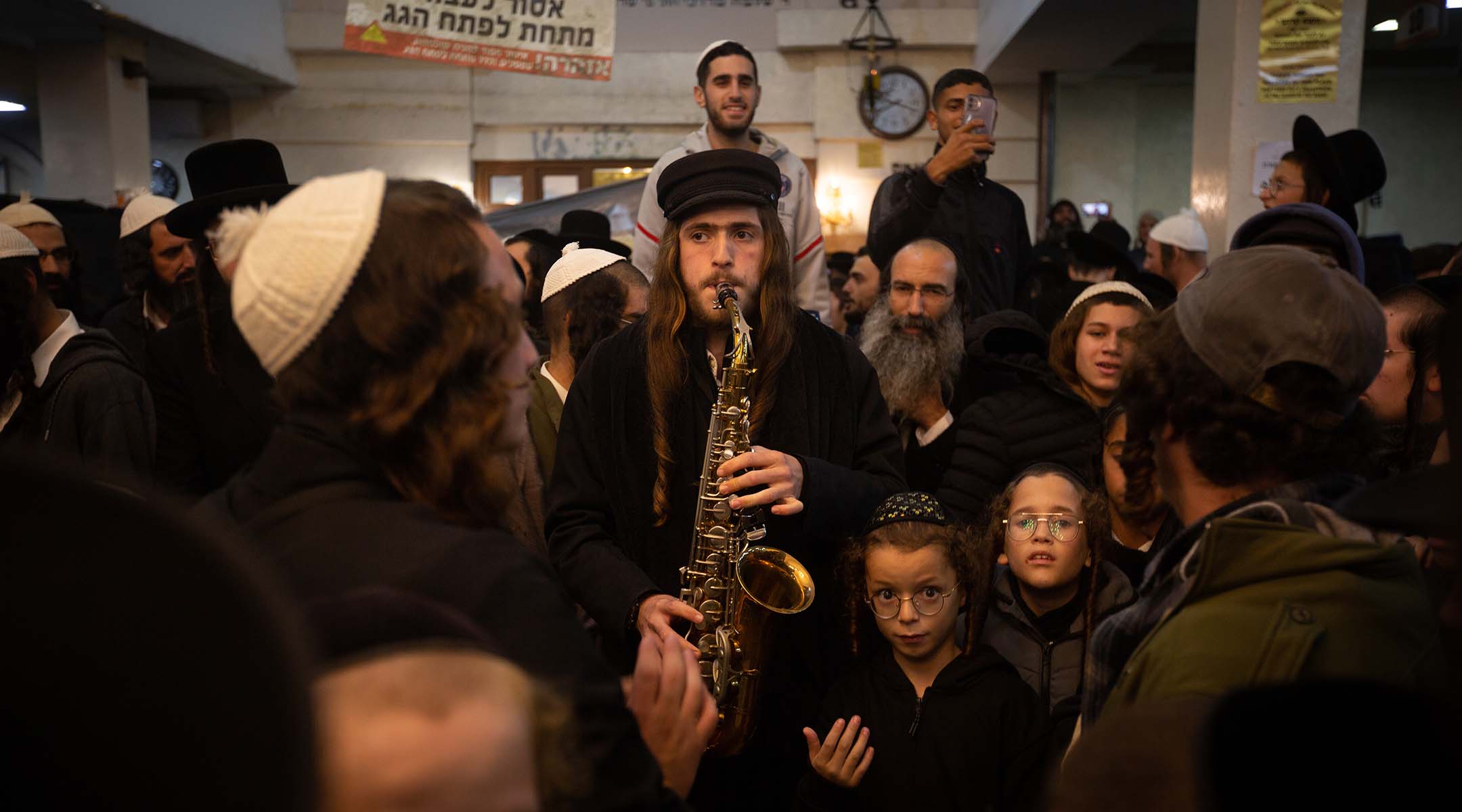
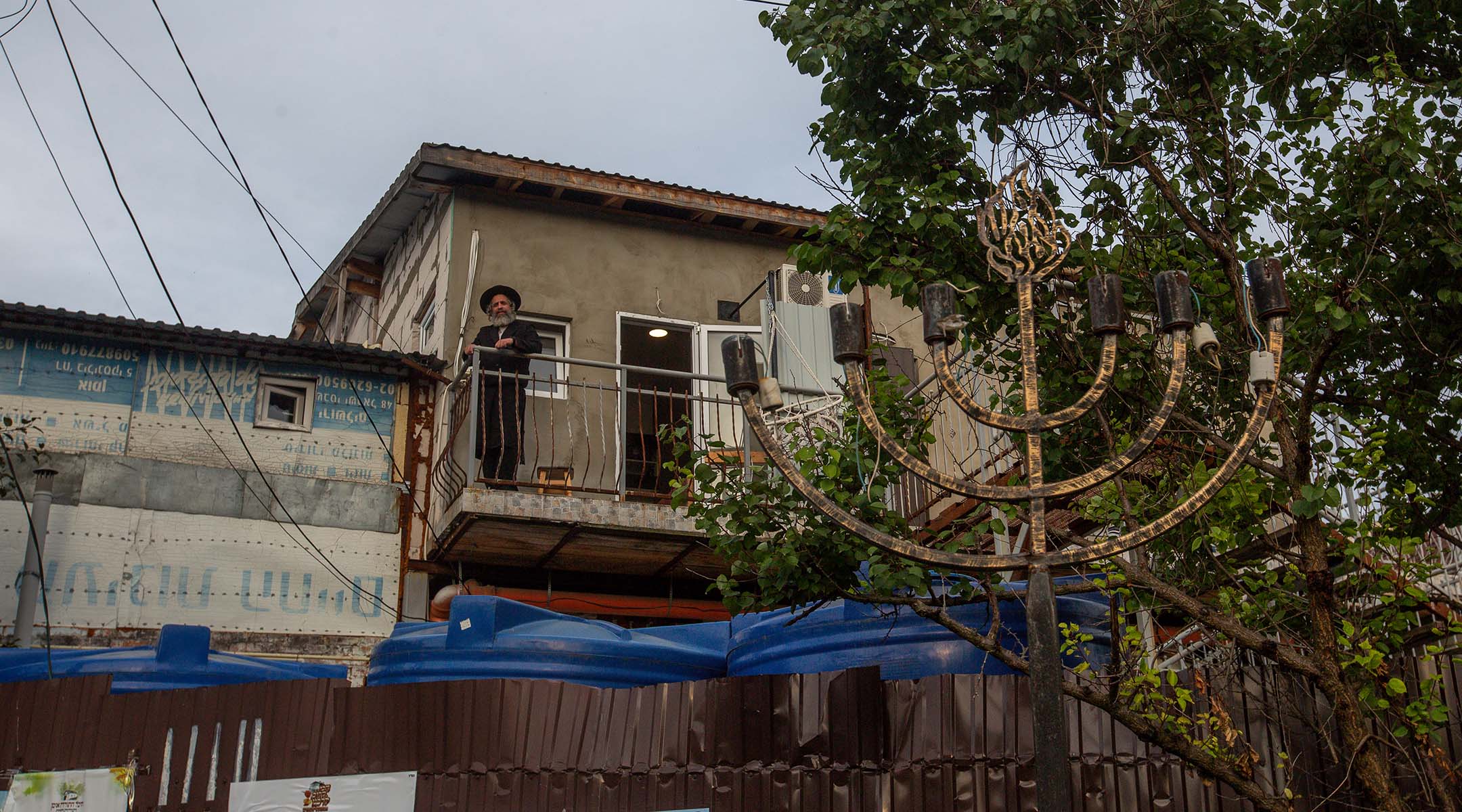
UMAN, Ukraine (JTA) — As he jogged up a hill in this central Ukrainian town, a Hasidic man in a black knee-length coat flicked through a pocket prayer book. He was heading towards the one-story complex built atop a cemetery that houses the tomb of Rabbi Nachman of Breslov. And he was late for a post-morning prayer celebration that involved music — including some klezmer-influenced saxophone — and rhythmic clapping.

It felt like a scene from just about any past Rosh Hashanah season in Uman, when the town’s Jewish quarter turns into a shtetl of sorts, hosting thousands of mainly Israeli pilgrims who belong to the Breslov branch of Hasidism. Rabbi Nachman encouraged his followers to visit his tomb for the Jewish New Year, and visit they have — in groups of varying size since his death in 1811, through various periods of 20th and 21st century upheaval. In 2018, over 40,000 Jews thronged the streets of Uman.  

So far this year, it is estimated that 2,000 Hasidic pilgrims — overwhelmingly men, although some families visit as units — are already believed to be here, crowding into shoddy local apartment and hotel buildings. Some 8,000 more could arrive by the holiday, which begins at sundown on Sunday.

But this year has presented the pilgrims with an array of obstacles — all stemming from the ongoing war that has made Uman a danger zone.

A man plays a saxophone.

A man plays a saxophone at a gathering in Uman, Sept. 19, 2022.

Ukrainian officials have urged Jewish pilgrims to not come, warning that any mass gathering in Uman, which has been struck multiple times since the start of the war, could become a target for Russian attack. U.S. embassies in Israel and elsewhere put out a striking warning that urged people who decided to go anyway to “draft a will.” 

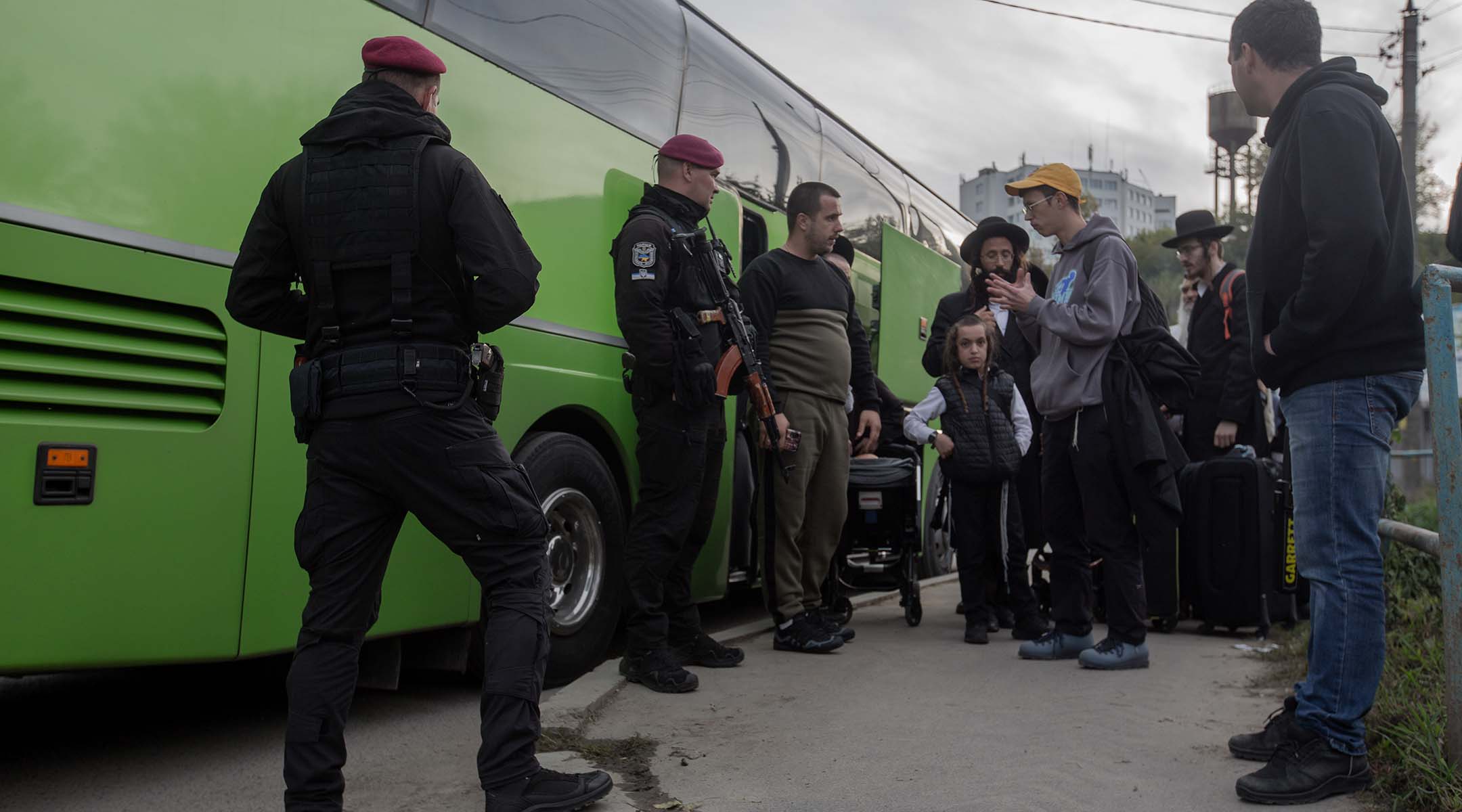
By now, some areas in the Jewish quarter seem to have more armed police than Jews. A JTA journalist who arrived on Monday was only able to move around under the observation of two heavily armed minders.

“It is clearly not the best time to come,” Ukraine’s Minister of Culture Oleksandr Tkachenko told the Jewish Telegraphic Agency. “A better time will come after our victory.”

Nevertheless, when interviewed by the JTA, some pilgrims preparing to leave for the trip from the heavily Orthodox town of Monsey, New York, and some of those already in Uman either nonchalantly laughed at the warnings or responded to them with righteous indignation. The potential of a missile attack seemed to be a relative afterthought for most. 

Uman apartments.

The town’s apartments and hotels are old, cramped and shoddily built

“My mother was afraid,” said Moe, an 18-year-old from Williamsburg, Brooklyn, who like several others did not give his last name for privacy concerns. “There was no other option for me. I was not afraid to come, because everything — my health and my wealth — depends on me being here at Rosh Hashanah.” 

On a recent weekday, outside the grave complex — which also contains a synagogue and several other rooms — bearded Israelis in hoodies hung around smoking and sipping tea under a drizzling rain. When asked whether the potential dangers caused by the Russian invasion had made them consider skipping Uman this year, there was bewildered chatter. 

“This is my rabbi,” protested Avi Koller, a 49-year-old Jerusalemite. “It is like when they told Jimi Hendrix that he was going to die from drugs. Jimi Hendrix replied that while he could die from drugs, he could also be hit by a bus tomorrow. We can die from anything.” 

Koller, a former rocker who said he found religion late, took another drag on his cigarette. 

Pilgrim in Uman.

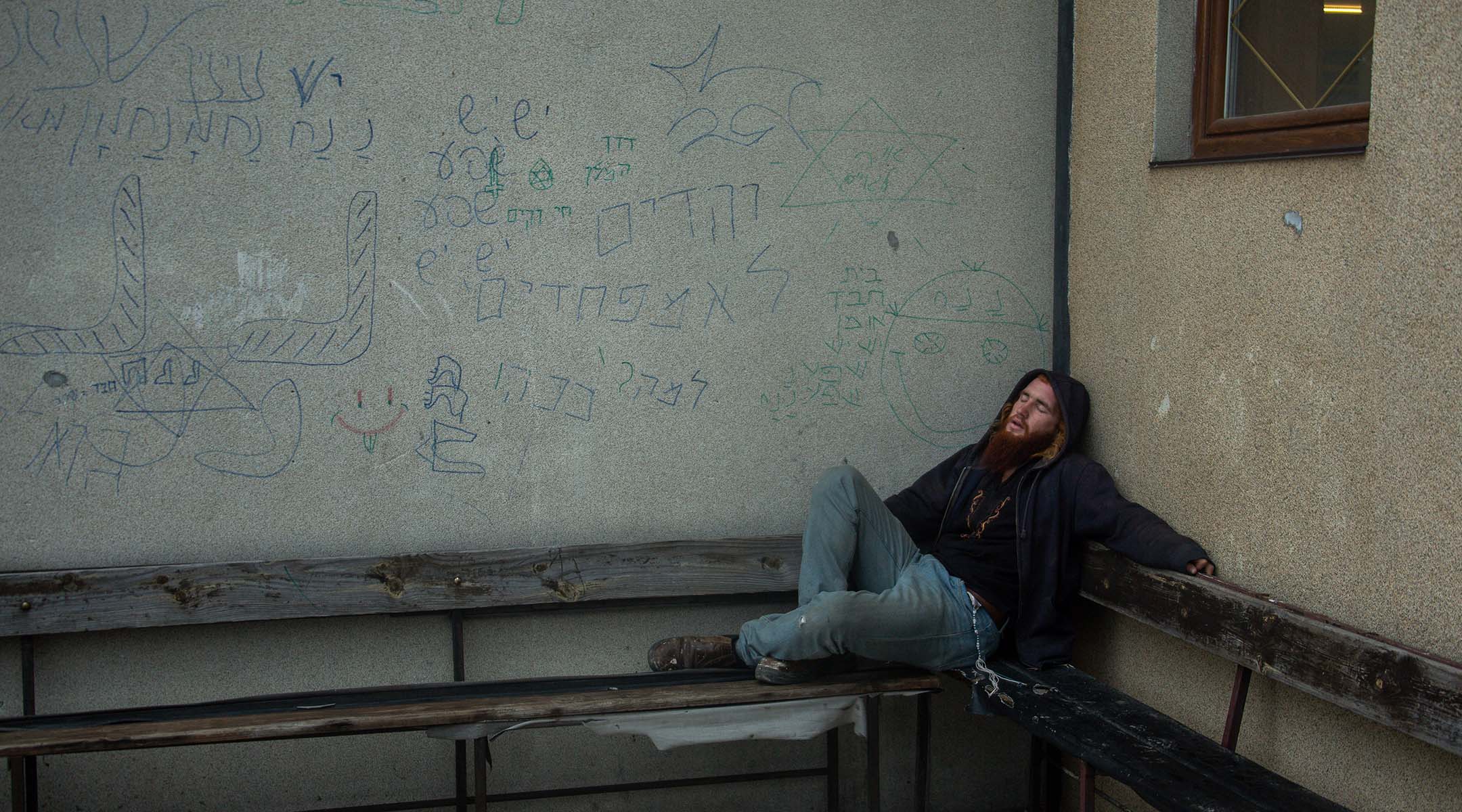
A pilgrim gets a nap in.

“Anyway, do you see any Russian missiles? Everything is fine here. In the evening, we have our curfew, from 11 to 5, and that is it,” he said.

But the journey has not been easy for most this year. The pilgrims, who usually come to Uman via Kyiv, have had to make other arrangements. Many decided to come days or weeks early to ensure that they were in Ukraine come what may. Since direct flights to Ukraine have been canceled, most are flying to Poland, Romania and Moldova, before hopping in taxis for expensive rides across the border. Some have stopped for a respite in a western city like Lviv; the journey from western Ukraine to Uman can then take up to 10 or more hours. 

In some Breslov Telegram channels, which have been abuzz with requests for advice, users continually comment on an endless stream of photos of Turkish Airlines and El Al tickets to Chisinau and Bucharest, all being resold at exorbitant rates. Travel agents offer “once in a lifetime” offers for $1,000 tickets for flights and transport. 

“When the war started, the only question I was asking myself was how I would get to Uman. All I knew was that for sure I would have to get here,” said Binyamin, 27, who said this year is his 20th time spending Rosh Hashanah in Uman. “I came through Romania. I landed in Bucharest and took an 18-hour taxi ride here.”

He spent $800 on his flights. “If you come earlier,” he said with a smile, “it is cheaper.”  

On Monday, Ukrainian officials said they would be increasing security checks around Uman and redoubling efforts to explain the wartime rules — such as a strict curfew and a restriction on taking photos of military personnel — to pilgrims arriving from Israel. There is much skepticism on the ground that the guidance is needed or will even be imparted. 

Police in Uman.

The town has upped its police presence as the pilgrims continue to make their way in

“I haven’t seen anyone come to explain anything yet,” says Bernard, 25, from Borough Park in Brooklyn. Men pushed past him in a hallway inside the grave complex to collect their coats and hats after morning prayers had finished. “I don’t think that they need to come and explain anything anyway.” 

“The war is eight hours away from here,” he added, referring to the fact that Ukrainians are currently in the middle of a successful operation to push the Russians back to the east. “In Israel, everyone lives much closer to the areas where the missiles fall from Syria or from Gaza than here.” 

There is also a perception that the past two pilgrimages, which took place during the start of and then a year into the COVID-19 pandemic, had prepared many for the logistical difficulties of getting to Ukraine in a crisis.

“We all came early last year because of COVID,” said Bernard. “They wanted to close the borders, so everyone came early. We came months before, two years ago, when corona started.”

Despite the enthusiasm of those who have made the trek, the overall number of pilgrims is way down. In 2018, when 40,000 Jews filled every available bed — from hotel suites to hostels in damp Khrushchev-era apartment buildings — Mikhail Pinto was charging $5,000 for four days in one of his rooms in the large hotel he owns on Pushkin Street, the main drag that runs through the Jewish quarter. This year, that rate is down to $1,000.

Banner.

A banner reads “We are praying for peace in Ukraine”

He has noticed a steep drop in people coming from New York specifically.

“Americans and Canadians … they can’t get the proper insurance,” he said. “For Israelis, this isn’t so much of a big deal, but for Americans, it has been a huge issue.” 

Overcoming obstacles to the pilgrimage has become ingrained in the collective myth of those who come to Uman. During the 1930s, when access to Uman was strictly forbidden to Jewish pilgrims, they secretly visited apartments near the cemetery where Rabbi Nachman was buried under the threat of arrest and deportation to Siberia. The Soviet Union then tried to stamp out the pilgrimage as part of its atheist agenda, but by the late 1940s officials relented to allow tiny numbers of closely watched Soviet Jews make the trip. 

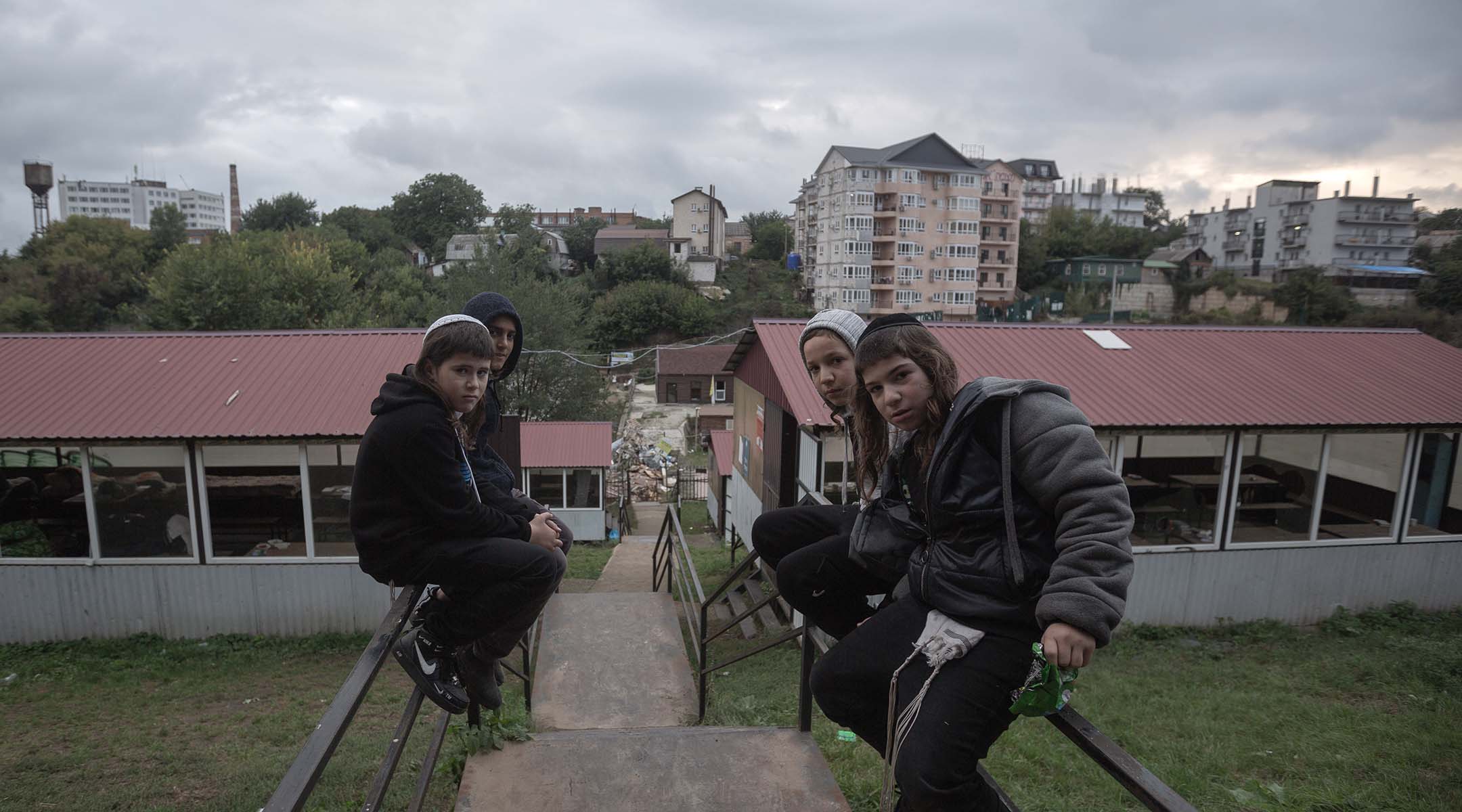
Kids in Uman.


It was not until the Soviet Union began to liberalize under Mikhail Gorbachev that it began to reopen access to Uman for the vast majority of Breslov followers who lived in Israel and the United States. In 1988, some 250 visas to visit Uman were granted. 

This year, both Ukrainian and Israeli officials are clearly frustrated at the steadfast insistence among many Israelis, who make up roughly 90% of those who make the pilgrimage to Ukraine. The Israeli government has opened discussions with some Breslov leaders to encourage them to take a clear stance against coming, but officials have clearly been disappointed with the response, as few have chosen to echo these messages with any urgency internally. 

Many pilgrims have also already run afoul of the wartime restrictions that are in place across Ukraine. In Ternopil, in western Ukraine, a group of pilgrims were arrested after hanging around and taking photos of a Ukrainian military checkpoint. Many others have been stopped for not taking the strict curfew restrictions seriously. 

“It is dangerous. It is a risk. There is nothing that we or the Ukrainians can do to help protect you,” said Michael Brodsky, Israel’s ambassador to Ukraine. “The Ukrainians are using all of their efforts to fight the war and they don’t have the bandwidth to deal with the problems of tourists coming.”

 https://www.jta.org/2022/09/21/global/defying-ukraines-wartime-warnings-thousands-of-hasidic-pilgrims-have-made-it-to-uman-for-rosh-hashanah?utm_source=JTA_Maropost&utm_campaign=JTA_Around_the_World&utm_medium=email&mpweb=1161-48748-25499

Wednesday, September 14, 2022

Everyone Of The Member Rabbis of These 2 Groups Had A Minimum of a High School Education, Some are College Graduates! (Except Malkiel Kotler).

ALWAYS A DAY LATE AND A DOLLAR SHORT ON EVERY IMPORTANT ISSUE!


Do religious Jews have a right to reject basic secular education?


Chassidic communities are entitled to isolate their children from the secular world. Does that mean scrutiny of their schools’ alleged failures by “The New York Times” is anti-Semitic?


After more than a century of biased reporting about Israel, contempt for Zionism, and a lack of interest in reporting about anti-Semitism, readers are right to regard any coverage of the Jewish community by The New York Times with skepticism, if not justified suspicion, of ill intentions. So, after the Times invested a year of the time of two reporters and who knows how many researchers in investigating conditions in schools run by the ultra-Orthodox community and Chassidic sects in the greater New York area, the assumption on the part of many Jews was that the product of this effort would reek of prejudice.

That explains why the reaction from many Jews to the massive front-page feature published on the subject by the Times this past Sunday was intense and angry. They wondered why, in an era when inner-city public schools are notoriously failing their students, the newspaper thought that schools run primarily by Chassidic Jews in Brooklyn and Rockland County were deserving of so much scrutiny. That much of the reporting seemed to be driven by criticisms of these communities by former members who complain that they emerged from these schools lacking basic skills in English or math, as well as with stories about suffering beatings by teachers, also left many Jewish readers thinking that an anti-Orthodox agenda rather than justified concerns were behind the decision to report and publish the piece.

That the Times also took the extraordinary step of publishing the story in Yiddish and included a form response for those with experiences in these schools to send in their thoughts also seemed to indicate that the goal of the project was to disparage the Jewish community. That it came after the last two years when politicians and news outlets unfairly scapegoated the ultra-Orthodox for spreading COVID-19 deepened the hurt. The fact that the Times continues to ignore an epidemic of anti-Semitic attacks on this community from African-American assailants has also created a situation in which nothing the paper is likely to publish on related subjects will be taken as anything other than an attack by many Jews.

But even if all that is true, and the Times’ reporting does betray a cultural bias and condescension on the part of its staff and the overwhelmingly liberal readership of the paper, does that mean any scrutiny of ultra-Orthodox schools is inherently anti-Semitic?

As much as it would be easy to dismiss the story, if test scores and reports from other sources, including from Jews who are deeply worried about the failure of this system to prepare its students for any sort of a productive life other than Torah scholarship—are to be trusted, then there is more here than cultural or religious bias.

The ultra-Orthodox community under scrutiny here has seemed to adopt the same model as their haredi counterparts in Israel, where educational standards in their schools on secular subjects are abysmal. While most of the discussion about the haredim in Israel has focused on their refusal to do their fair share in defending the Jewish state by refusing military service, the fact that their rapidly growing ultra-Orthodox schools are solely focused on religious education while producing people who lack the rudimentary skills to support themselves is an even greater challenge for Israel.

A situation where Torah study is the only respectable profession for haredi men is one that is a recipe for endemic poverty. Nevertheless, the political muscle of Israel’s religious parties has not only guaranteed funding for these schools but also ensured that the state is never going to require that their students are given even minimal adequate instruction in non-religious subjects.

While politics has created a daunting economic challenge that poses huge dilemmas for Israel’s future, it appears a similar situation has unfolded in New York. Observers of New York politics have long understood that the ultra-Orthodox communities vote as blocs with members apparently doing the bidding of their rabbinic leadership in much the same way as in Israel. In this manner, New York politicians like disgraced former Gov. Andrew Cuomo and his successor, Kathy Hochul, have obtained the lockstep support of Chassidic enclaves in exchange for their influence in ensuring that no one looks too closely at what happens in their schools.

The result is that these institutions are turning out students who lack rudimentary skills in English and math. You don’t have to share the contempt for religious Jews that may be widespread in the Times newsroom to be alarmed by the fact that test scores in these subjects at ultra-Orthodox schools for boys (girls, who are expected to get jobs rather than merely study sacred texts, get slightly more instruction and do marginally better) appear to be the lowest in the state. That means that they are worse than those at public schools in New York where poor and minority students are being short-changed by a system that is resistant to change, as well as those at other religious institutions.

As philanthropist Michael Steinhardt wrote last week in the New York Post, the failure of these schools is a Jewish tragedy. That is why he and others have been urging greater state scrutiny of these schools, and forcing them to change to improve their secular education. To that the communities and many of their defenders, such as the editors of the New York Sun, cry foul.

They believe that the issue here isn’t so much poor education as the refusal of the secular state—cheered on by secular Jews—to accept the desire of the ultra-Orthodox community to opt out of society. The point of the education they are giving their children is not, after all, to produce productive members of a secular society—let alone, as is the case with many schools, to prepare children for college — but for religious lives as separate as possible from their non-Jewish neighbors. Their fear of assimilation—and the toll it takes on Jewish and religious identity—is such that in some quarters, there is not only hostility to Internet use and secular subjects but also English as an everyday language. Under those circumstances, it’s little wonder that these schools must be understood as playing a role in the growth of Jewish poverty. But their defenders seem to be taking the position that any interference in their curricula is a denial of their right to religious freedom.

The secular left has been waging war on public religious observance and seeks to marginalize people of faith. The hostility on the part of newspapers like the Times and mainstream liberal Jewish groups, like the American Jewish Committee and the Anti-Defamation League, to recent Supreme Court decisions that defend the rights of religious believers is lamentable. But the attempt to shoehorn this controversy into the broader debate about religious freedom is unpersuasive. Those who want to ensure that ultra-Orthodox schools give students at least the basics of English and math—something that is required by the New York State Constitution—are not attempting to infringe on their right to worship or have schools dedicated to their faith. The haredim are fully entitled to live and worship as they please, and to isolate themselves from the secular world as much as they want. But it is both reasonable and necessary for the state to ensure that their schools do not turn out students that are functionally illiterate in English and unable to do basic math.

Even if we were to dismiss the Times’ focus on the use of corporal punishment at Chassidic schools, which is deeply problematic if true but tangential to the question of their academic failures, as a function of the paper’s bias, it is not anti-Semitic to worry about the role that schools are playing in fomenting poverty. The reality of a population that is not only growing at exponential rates due to large family sizes—something that those who care about the shrinking non-Orthodox population applaud—but also increasingly dependent on state welfare programs paid for by taxpayers, is something that must be addressed.

Nor does anyone need to be caught up, as is the Times, in the drama surrounding defectors from the ultra-Orthodox world. The literary genre of the memoirs of such rebels against religious life is, as scholar Ruth Wisse has discussed, not new. It’s been going on since the late 19th century. One can sympathize with such people or revile them as turncoats who are besmirching their origins, but that has nothing to do with whether Chassidic schools are fulfilling their obligations to provide a minimal decent secular education along with their focus on Judaism.

As some point out, institutions that produce students capable of understanding and studying the Talmud and other sacred texts are learning advanced reasoning skills that are often missing elsewhere. Yet as even a defender of these schools, like Mosaic columnist Eli Spitzer notes, it is something of a fairy tale to pretend that such instruction is a substitute for teaching Jewish children the basic English and math they need to survive outside of a yeshivah or kollel. These schools should neither be demonized nor idealized; however, the idea that any outside scrutiny is an attack on Judaism is not an argument that can be reasonably defended.

As much as it can be a mistake to generalize about conditions in these schools and as much as the Times’ motives are suspect, the willingness of many Jews to reflexively circle the wagons around them and to defend the resistance of the ultra-Orthodox leadership to even minimal scrutiny or accountability for their failures in secular subjects is not merely a mistake. It’s consigning a large and important part of the Jewish community to a future of poverty that would be indefensible if we were describing any other group.

https://www.jns.org/opinion/do-religious-jews-have-a-right-to-reject-basic-secular-education/?utm_source=The+Daily+Syndicate&utm_campaign=41d9853d55-Daily+Syndicate+09-11-22+%28copy+2%29_COPY_01&utm_medium=email&utm_term=0_8583953730-41d9853d55-%5BLIST_EMAIL_ID%5D&ct=t%28Daily+Syndicate+09-11-22+%28copy+2%29_COPY_01%29

Jonathan S. Tobin is editor-in-chief of JNS (Jewish News Syndicate). Follow him on Twitter at: @jonathans_tobin.

Tuesday, September 13, 2022

“It is entirely possible for yeshivas to offer enriching English, math, and science education at the same time as a strong grounding in religious texts and Jewish tradition – indeed, many do. I know it personally, because many of my friends and colleagues are smart, well-educated yeshiva graduates".


Statement from Comptroller Lander on Board of Regents Vote on Academic Standards at Private Schools Receiving Public Funds


September 13, 2022
 

New York, NY – New York City Comptroller Brad Lander issued the following statement on today’s New York State Board of Regents vote to establish new regulations for holding private and parochial schools to substantially equivalent academic standards. The vote comes on the heels of The New York Times story outlining a lack of oversight of private Hasidic Jewish schools that fail to provide a basic secular education.“Every single New York City child is owed a solid education that prepares them to thrive – yet as The New York Times report this week made starkly clear, too many yeshivas are failing that essential task. That so many young people have been denied the necessary skills they need to succeed in the higher educational opportunities, jobs, and diverse cultural and civic life of our city is a tragedy. That some of them may have been subjected to physical abuse is a shande.“It is entirely possible for yeshivas to offer enriching English, math, and science education at the same time as a strong grounding in religious texts and Jewish tradition – indeed, many do. I know it personally, because many of my friends and colleagues are smart, well-educated yeshiva graduates.“It’s also true that too many of our public schools fail to provide the enriching education that every one of our students deserve. The answer, of course, is to do all we can to demand accountability from all our schools – not to use the shortcomings of some to excuse those of others.“Like all other private and public schools in New York State, yeshivas receive public funding to help meet the needs of and their obligations to their students. The government has an oversight responsibility to ensure those public dollars are spent as intended. Unfortunately, in recent years both the City and State have failed to hold yeshivas to appropriate educational standards. It is time for that to change. “Today, the Board of Regents adopted regulations clarifying the City’s oversight responsibilities to ensure that private and parochial schools offer a substantially equivalent basic education. As Comptroller, I’ll work to make sure we meet them.”


https://comptroller.nyc.gov/newsroom/statement-from-comptroller-lander-on-board-of-regents-vote-on-academic-standards-at-private-schools-receiving-public-funds/