EVERY SIGNATURE MATTERS - THIS BILL MUST PASS!

EVERY SIGNATURE MATTERS - THIS BILL MUST PASS!
CLICK - GOAL - 100,000 NEW SIGNATURES! 75,000 SIGNATURES HAVE ALREADY BEEN SUBMITTED TO GOVERNOR CUOMO!

EFF Urges Court to Block Dragnet Subpoenas Targeting Online Commenters

EFF Urges Court to Block Dragnet Subpoenas Targeting Online Commenters
CLICK! For the full motion to quash: http://www.eff.org/files/filenode/hersh_v_cohen/UOJ-motiontoquashmemo.pdf

Wednesday, August 07, 2019

A grandfather telling stories to a young boy may just nudge that boy to one day write his own stories, ones that help ease the burden on all our minds. An especially caring teacher may infect a little girl with an engineering passion that later gives her the vitality to make the breakthrough that permanently changes our relationship to outer space. And of course, both that boy and that girl may just inspire millions of other people, who may inspire many millions more, in a long, unbroken chain of interactions...

The purpose of life is right in front of us: It’s to create a reality we want to inhabit — to reach towards the better end of our conscious experience. At each moment, in every second of life, we are given a choice about how we want to conduct ourselves in this world, and though it might not always seem like it, each of these choices are of consequence. They each interact with culture to give it a new form; a form that we are responsible for creating by either doing what is right or doing what is wrong in that specific moment.


“Look again at that dot. That’s here. That’s home. That’s us. On it everyone you love, everyone you know, everyone you ever heard of, every human being who ever was, lived out their lives. The aggregate of our joy and suffering, thousands of confident religions, ideologies, and economic doctrines, every hunter and forager, every hero and coward, every creator and destroyer of civilization, every king and peasant, every young couple in love, every mother and father, hopeful child, inventor and explorer, every teacher of morals, every corrupt politician, every “superstar,” every “supreme leader,” every saint and sinner in the history of our species lived there–on a mote of dust suspended in a sunbeam.”


https://medium.com/personal-growth/the-purpose-of-life-is-right-in-front-of-you-c95f79d989ba

Think you're a bigshot? Got to speak at an Agudah Convention? At a Lakewood asifa? Got a plaque at the Siyum HaShas?

What percentage of the universe does earth take up?


Julius Bier Kirkegaard, PhD Candidate, University of Cambridge
 

Anyway, let's just say that by universe you mean "the observable universe". The radius of this beast is 45.7 billion light years whereas earth only has a radius of 6.371 kilometres. Actually you don't even have to look that up, since wolframalpha already knows it.

Volume scales as radius cubed, so: (radius of earth)^3/(radius of universe)^3 =

or
0.0000000000000000000000000000000000000000000000000000000003 %


Tuesday, August 06, 2019

The first case involves Malka Leifer, a former ultra-Orthodox girls’ school principal charged in Australia with 74 counts of child sex abuse. The police announced in February that they were investigating Litzman on suspicion that he had pressured employees in his office to alter the conclusions of psychiatric evaluations that had deemed Leifer fit for extradition...

Police recommend Litzman stand trial for bribery, aiding alleged pedophile


Deputy health minister and UTJ party head could be charged over pressuring employees to prevent extradition of Malka Leifer to face 74 counts of child sex abuse in Australia


Deputy Health Minister Yaakov Litzman at the ceremony for the opening of a new branch of his Agudath Israel party, ahead of the upcoming elections, in the northern city of Safed, July 4, 2019. (David Cohen/Flash90)
Deputy Health Minister Yaakov Litzman at the ceremony for the opening of a new branch of his Agudath Israel party, ahead of the upcoming elections

Police recommended on Tuesday that Deputy Health Minister Yaakov Litzman be indicted on charges of fraud and breach of trust for using his office to illicitly provide assistance to an alleged serial sex abuser, as well as on a separate bribery charge for helping to prevent the closure of a food business that his own ministry had deemed unsanitary.

The first case involves Malka Leifer, a former ultra-Orthodox girls’ school principal charged in Australia with 74 counts of child sex abuse. The police announced in February that they were investigating Litzman on suspicion that he had pressured employees in his office to alter the conclusions of psychiatric evaluations that had deemed Leifer fit for extradition.

In their statement, police said that the investigation, conducted by the Lahav 433 anti-corruption unit and the National Fraud Investigation Unit, had found enough evidence to put Litzman on trial over his involvement in the Leifer case, as well as for intervening to help several other sex offenders obtain improved conditions, including prison furloughs and other benefits, by pressuring state psychiatrists and prisons service officials.
In the second case, police said that Litzman attempted to influence officials in the Health Ministry in order to prevent the closure of a food business whose owner “he is close to” — a closure that had been ordered due to “serious sanitary findings found that led to the sickness of a number of people who ate from its products.”



In this February 27, 2018, file photo, Malka Leifer, center, is brought to a courtroom in Jerusalem.

Kan reported that breakthroughs in the police’s case came from the testimonies of various state psychiatrists. One of them told investigators, “I’m just a bureaucrat. A senior minister is sitting in front of me [making requests]. I know my place and I know his place and what is expected of me.”

Several psychiatrists told police that they feared they’d be fired if they didn’t follow Litzman’s orders.

Litzman, who possesses many authorities of a full minister despite serving as a deputy, denied any wrongdoing, maintaining in a response to the police recommendation that his office has a “clear open-door policy for assisting members of the public. This is without discrimination between populations and without clarifying the status of those who call for assistance. The deputy minister expressed confidence that no charges would ultimately be filed.”

In the wake of the police recommendation, it will be up to Attorney General Avichai Mandelblit to determine whether or not to indict.

Dassi Erlich, a Leifer accuser who launched a campaign to extradite her former principal back to Australia, said in a statement Tuesday, “We are feeling so grateful that the questions we continually raised through the #BringLeiferBack campaign resulted in one more step to achieving justice.”

In May, Channel 13 news reported that Litzman helped at least 10 serious sex offenders obtain improved conditions, including home visits and other benefits, by pressuring state psychiatrists and prisons service officials.

Earlier in the year, the TV channel had reported that police were investigating suspicions that Litzman and his chief of staff pressured a psychiatrist, Moshe Birger, to ensure that another imprisoned sex offender close to Litzman’s Gur sect of Hasidim was placed in a rehabilitation program. Participation in the program can lead to furloughs and early release from prison.

Police said Tuesday that they had not found sufficient evidence to prosecute Litzman on his suspected assistance to other alleged pedophiles.

Leifer, a former school principal who is wanted for alleged sex crimes in Australia, is known to have links to the Gur community, having once taught at a school in Israel affiliated with the branch.
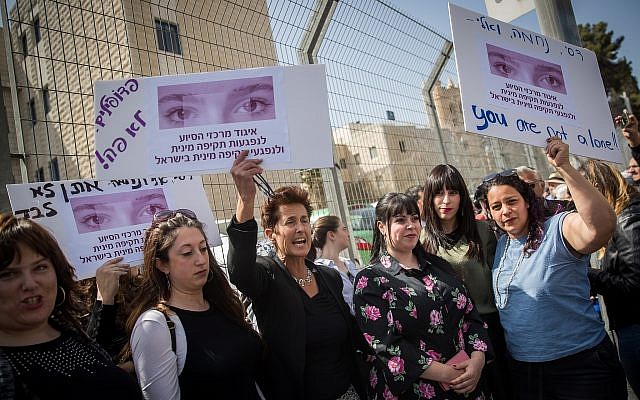


Protesters demonstrate on March 13, 2019, outside the Jerusalem District Court during extradition hearings for Malka Leifer, a former girls school principal wanted for sexual abuse in Australia.

A Justice Ministry official told The Times of Israel in February that police had recordings of Litzman and officials in his office speaking to Health Ministry employees and pressing them to act on Leifer’s behalf.

In 2000, Leifer was recruited from Israel to work at the Adass Israel ultra-Orthodox girls school in Melbourne. When allegations of sexual abuse against her began to surface eight years later, members of the school board purchased the mother of eight a red-eye plane ticket back to Israel, allowing her to avoid being charged.

After authorities in Melbourne filed charges against her, Australia officially filed an extradition request in 2012. Leifer was arrested in Israel two years later, but released to house arrest shortly thereafter. Judges deemed her mentally unfit to stand trial and eventually removed all restrictions against her, concluding that she was too ill to even leave her bed.
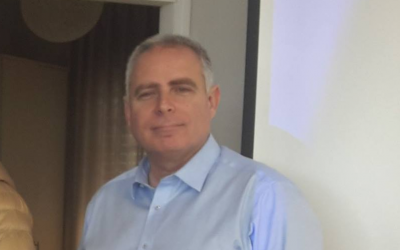


Jerusalem District Psychiatrist Jacob Charnes

She was rearrested in February 2018 following a police undercover operation that cast doubts on her claims regarding her mental state, and has remained in custody since. The operation was launched after the Jewish Community Watch NGO hired private investigators who placed hidden cameras in the Emmanuel settlement, a Haredi community in the northern West Bank, where Leifer had been living, which showed the alleged sex abuser roaming around the town without any apparent difficulty.
 
Despite the seemingly damning footage, the trial has dragged on for an additional year, as the court continues to debate her mental fitness. The Jerusalem district psychiatrist responsible for evaluating Leifer, Dr. Jacob Charnes, has changed his mind three times regarding whether Leifer was fit for extradition, ultimately signing off an a legal opinion in which state psychiatrists found her fit for extradition.

However, when the psychiatrist was cross-examined by the defense on the evaluation late last year, he told the court that he recommended an additional evaluation of Leifer be carried out — a proposal that both sides have rejected.

A legal official told The Times of Israel that police suspected Charnes changed his medical conclusion after being contacted by officials in Litzman’s office. Though Charnes has been interrogated under caution in the case against the deputy health minister, police on Tuesday said they did not recommend he be tried.

The Jerusalem District Court will hand down a final decision regarding Leifer’s mental fitness for an extradition hearing on September 23. The Times of Israel learned last month that a separate court appointed medical board is slated to officially concluce that Leifer has been feigning mental illness, in a ruling that would likely impact the Jerusalem District Court’s decision.

Jewish Community Watch founder of director Meyer Seewald said in a Tuesday statement, “Our private investigation in 2017 only clarified what was obvious to so many: that Malka Leifer was feigning mental illness to avoid extradition. Considering she was doing very little to hide her ruse, it was apparent that Leifer was being protected by very influential people. The police recommendation clarifies that it was allegedly Litzman and his office that were diligently working to make sure Malka Leifer’s victims never received justice.”

Seewald called on senior lawmakers to ensure that Litzman is not made a member of the next cabinet after the elections on September 17.


https://www.timesofisrael.com/police-recommend-litzman-stand-trial-for-bribery-aiding-alleged-pedophiles/?utm_source=The+Daily+Edition&utm_campaign=daily-edition-2019-08-06&utm_medium=email



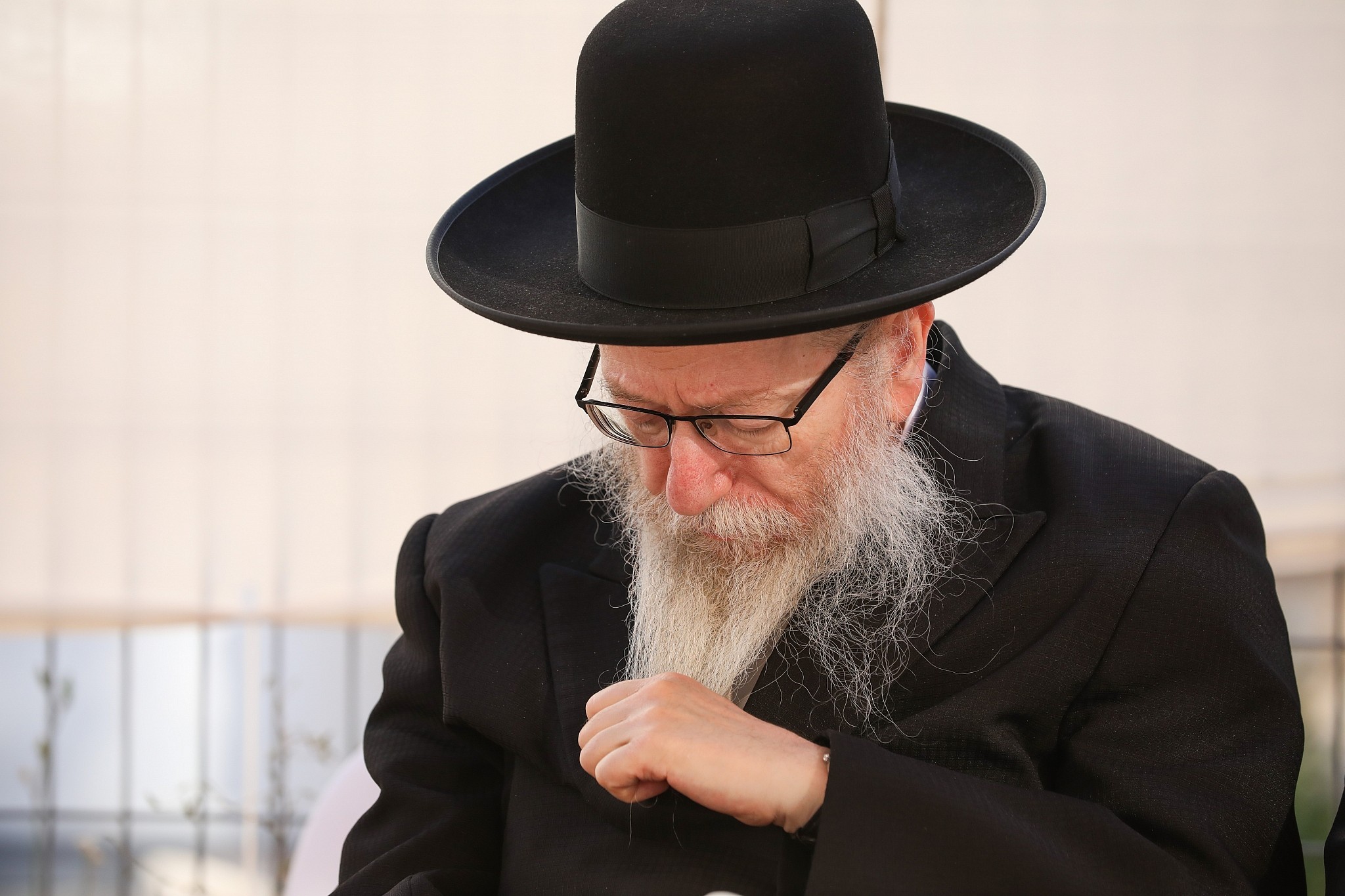
 

“It is going to be a cold day in hell when I step back into a Baptist church.” --- When Bible verses, prayer, hymns, faith, God-talk and church rituals are perverted into weapons for sexual assault and then hammered into shields for church cover-ups, they become neurologically networked with trauma, and this renders them polluted and often toxic for the survivors. This is the truth of the damage done by a faith group that enables abuse and turns a blind eye to clergy-predators in their midst.

Clergy sex abuse: the damage done when faith is weaponized (substitute out "church" for "yeshiva" or "shul"...)


“Get your hand off me!” I wanted to yell. But I didn’t.

More than a month after the Southern Baptist Convention’s annual meeting in Birmingham, I am still processing something that happened there. After the For Such a Time as This Rally, abuse survivors and advocates gathered at a coffee house to decompress. It was a warm-hearted event, filled with a sense of “beloved community,” and I felt gratitude to everyone who was there. There was even a lovely candle-lighting ceremony honoring me for my years of advocacy work against sexual abuse and cover-ups in the SBC.

Then, as the evening drew to an end, one of the event’s organizers called on a prominent Southern Baptist woman to offer a closing prayer. Suddenly, the woman was standing right over me, and with me still seated, she put her hand firmly on my shoulder and launched into an out-loud prayer for me.
I froze.
“I felt powerless, unsafe, targeted, disconnected and manipulated.”
Ironically, this was a woman who has written extensively about sexual abuse in general and is a survivor herself, though in a different context – i.e., she is not a survivor of sexual abuse by clergy nor a survivor of religious institutional cover-up.

I’m sure her prayer was well-intentioned. Yet I felt the urgent need to shove her hand off me and run. I came pretty close to doing just that. But I restrained myself, and amid the panic of my hyper-triggered brain and body, I tried to figure out what to do.

I thought about standing to my feet and walking out of the room. But she was looming over me so closely that to even rise from my chair would have required pushing her aside.

I felt trapped. Trapped by the weapon of her hand-on-the-shoulder, wanting-all-to-hear prayer. Trapped by my own good-girl, don’t-make-waves upbringing. Trapped by past trauma.

I felt powerless, unsafe, targeted, disconnected and manipulated. In short, I felt mightily triggered.
My self-anger and self-loathing went from zero to 100 in a split-second, and I felt myself getting short of breath. It was as though a sink-hole had suddenly swallowed up the normal me, and I was suffocating.

So, despite my instinct to shove aside her hand and yell, I focused on breathing. I prayed that her sword of a prayer would be short and dull, and that I wouldn’t bleed out completely right in front of everyone. I stayed passive and quiet.

Now, here I am weeks later, still kicking myself for my failure to honor the truth of my own reality and my failure to set an honest example for other clergy abuse survivors who were in the room. I was inauthentic.

Why didn’t I have the courage to show up in the world exactly as I am – as someone whose adrenaline can surge mightily if confronted with triggering religious trappings? Why could I not be fierce with my own reality? Why did I not protest? Why did I not immediately stand to meet her eye rather than cower under her hand?

The answer, of course, is that I was having a PTSD reaction. Her hand-on-the-shoulder, standing-over-me style of prayer was too similar to what my SBC pastor-perp used to do when I was a kid. 

And then there were the weaponized prayers of so many others who used God-talk afterwards to try to silence me.

Intellectually, I understand a lot about my complex PTSD – I’ve been fortunate enough to have years of therapy – and yet, in that moment, cognitive understanding wasn’t enough to stop the cascading feeling of doom in my body.
“Once faith has been used to eviscerate, it doesn’t serve well as a healing balm.”
Right after the event, I talked with several other clergy survivors, and one of them likely told the woman how distressing her prayer had been for me. She sent a gracious apology for causing me stress, and I thanked her. Nevertheless, I’m still left reeling and trying to return to normal.
Once faith has been used to eviscerate, it doesn’t serve well as a healing balm.

I think this is something many religious people – even well-intentioned people – just don’t understand. For them, faith can be a powerful resource for healing in all manner of life’s travails, and they can scarcely imagine it otherwise. But for people like me for whom faith was weaponized for sexual assaults and church cover-ups, the rituals and indicia of faith can be a minefield.

This is one reason why many clergy abuse survivors sever all relationships with institutional faith. 

For the sake of health, sanity and self-preservation, we turn away from the minefield.

It’s why many clergy abuse survivors nodded in solidarity at the words of SBC survivor Anne Marie Miller: “It is going to be a cold day in hell when I step back into a Baptist church.”

And while many people understand that survivors are often triggered by being in the same place where sexual assaults occurred, what they often fail to comprehend is that a triggering “place” may be something as simple as the context of a prayer or a particular piece of scripture. It may be any sort of stimulus that brings about the feelings of trauma in a “place” in our heads, and that includes sights and sounds associated with church and faith.

When Bible verses, prayer, hymns, faith, God-talk and church rituals are perverted into weapons for sexual assault and then hammered into shields for church cover-ups, they become neurologically networked with trauma, and this renders them polluted and often toxic for the survivors.

This is the truth of the damage done by a faith group that enables abuse and turns a blind eye to clergy-predators in their midst.\

https://baptistnews.com/article/clergy-sex-abuse-the-damage-done-when-faith-is-weaponized/?fbclid=IwAR01H4EpoXfCrjrpCyEs7dcK3zF_Q2zHYWymccH60Ty-bMAfwncRRICyK0Q#.XUOuU8PPCeo.facebook

Monday, August 05, 2019

What do paternalism and clemency for sex abusers have in common? The answer seems obvious: a worldview that values male dominance does not wish to shine light on the fact that a certain percentage of men take advantage of their position to sexually abuse women over whom they have power.

Paternalism, sex abuse, and the eternally unchanging Torah 

The Orthodox world today safeguard's this truth: the Torah’s meaning is eternal, unchanging, and decided by men


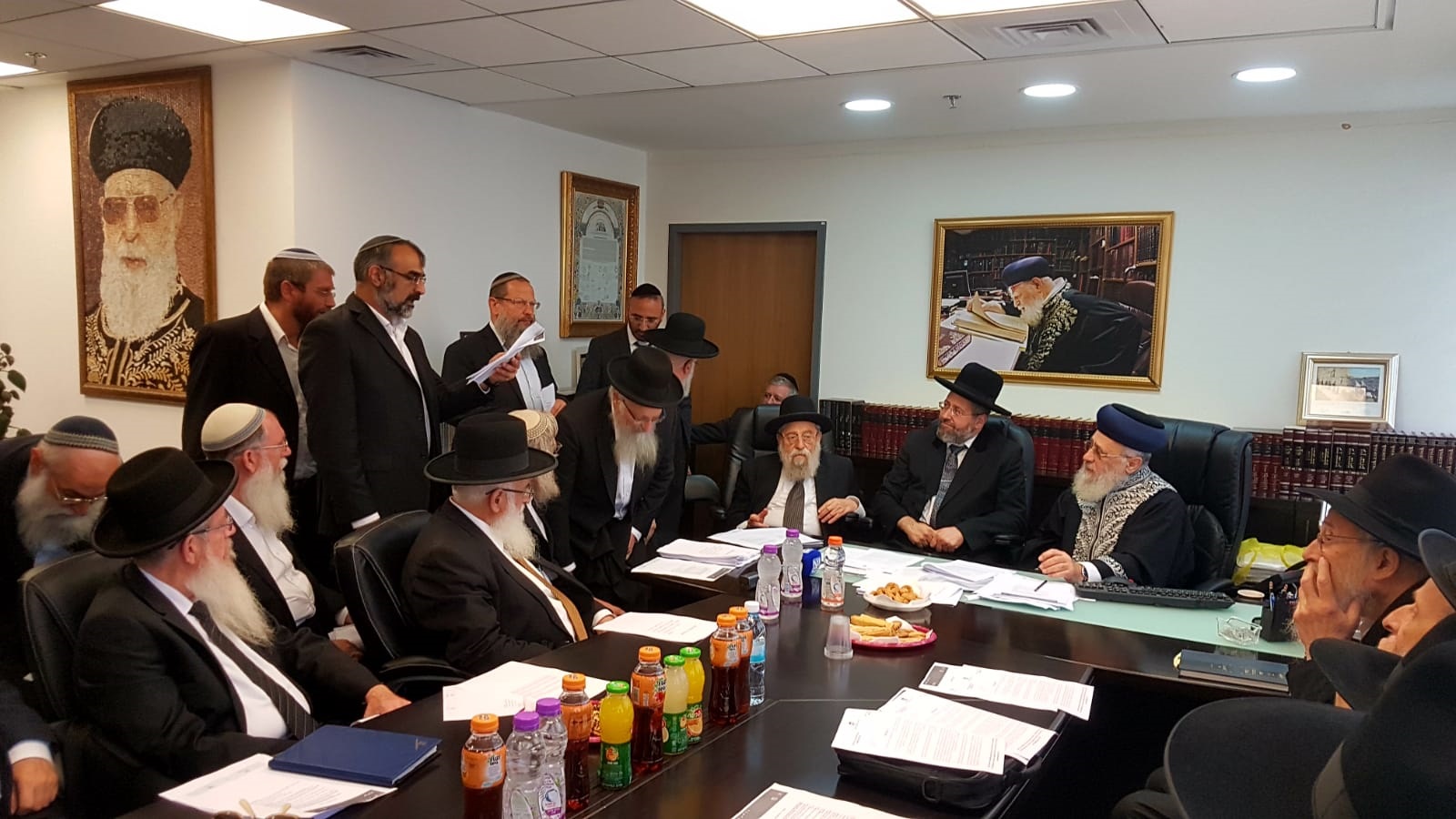
Illustrative. Israel's chief rabbis convene an emergency meeting with religious Zionist rabbis, against a proposal to overhaul the conversion to Judaism system in the country on June 3, 2018. (Courtesy of the Chief Rabbinate/File)
Israel's chief rabbis convene an emergency meeting with religious Zionist rabbis


What do paternalism and clemency for sex abusers have in common? The answer seems obvious: a worldview that values male dominance does not wish to shine light on the fact that a certain percentage of men take advantage of their position to sexually abuse women over whom they have power.

In a religious society such as Orthodox Judaism, this goes double for calling out rabbis who abuse those under their care. Such abuse runs the gamut from lewd talk with women they are counseling to forcing themselves on their seminary students. It is not that Orthodox society condones such behavior — it does not — but that when confronted with it, there is a tendency to try and keep it quiet, or minimize it, in order to “protect” the Torah. 

It is worth unpacking this point: What is being protected here exactly? If halakha forbids such behavior (it does), and Orthodox Jewish society condemns it (it does), and every so often a rabbi or educator is caught having engaged in it (which happens), what is stopping us from simply supporting the victim and condemning the perpetrator? How does minimizing the offense or keeping it quiet help the Torah? It doesn’t. But it does help the male dominated power in the Orthodox world that functions as the gatekeeper for the Torah and halakha.

To be clear, I do not believe this is a conscious process. There is no secret WhatsApp group of cover-up rabbis discussing how they need to defend another perpetrator. The process is more subtle and is related to the “mystique” of Torah.

Among the more conservative elements of Orthodox Judaism, there exists a popular myth: the eternal Torah has always been more or less what it is now. The Torah is not a product of a given time period but an eternal set of rules and beliefs that remains constant even as the world changes.

This belief can be challenged on many fronts, but a particularly difficult one for those who wish to maintain it relates to women’s issues. As Jewish law has its roots in pre-modern society, a core assumption is that the purveyors of its truths, the enforcers of its rules, and the participants in its institutions, are men. This means that the Torah’s meaning is decided by men, and the status of someone’s Judaism or marriage is determined by men.

A modern person might push back and say that Judaism is thousands of years old, and certainly much of what it takes for granted is based upon outdated assumptions. When the rabbis discuss medicine, for example, it is clear they do not know what the heart or liver does, that blood circulates, or that germs are what cause illness. They do not know that the earth revolves around the sun, or that the solar system is just a small part of a galaxy in an infinitely more immense universe.

Along the same lines, a critical thinking person could argue, the rabbis believed that women were inferior to men in their mental and emotional make up, just as the ancient societies in which they lived did. In such a context, the paternalism of the halakhic system makes a certain amount of intuitive sense.

Nowadays, however, just as we have revamped our understanding of medicine and science and adjusted our behaviors and laws accordingly, so too we must do the same with regard to the place of women in halakhic Judaism. Now that we know the old premise to be false, women should be full participants in its power structures.

To this challenge, some Orthodox rabbinic leaders have responded, “No, halakha’s paternalism is not based on a pre-modern understanding of the nature of women, but on the mysterious will of the divine creator.” Sometimes, apologetic explanations are offered, “women are more spiritual,” “men need more rules and responsibilities than women,” etc. With or without these, however, the take-home message remains the same: halakhic Judaism is fine as it is, and needs to make no adjustments to accommodate modern life.

Of course, any scholar of Modern Judaism can see that Orthodox Judaism has shifted in response to the modern notions of women’s equality. This began in the early 20th century, with the Beis Yaakov school system, when women started receiving formal Jewish education. It continued with religious women in Israel accepting the right to vote (this was controversial in its time), and today, in some streams of Orthodox Judaism, women are to’anot (a kind of lawyer) in religious courts, teachers in religious schools, and even spiritual leaders in synagogues. But there is also push-back.

As noted above, the idea of a pristine religious tradition that stays the same no matter the circumstances is a myth. Like all social movements, religion is a moving target. While certain elements of Orthodox Judaism have been slowly accommodating the modern notions of women’s equality, others, such as the hadarat nashim movement, have been moving in the opposite direction.

In these circles, not only is it a problem for women to be in positions of authority (especially over men), it is now forbidden for them to ride on the same part of the bus or even have their pictures in a magazine. Putting aside whatever halakhic rationalizations are put forward to defend this conservative position, the bottom line is that it is a reaction to the inroads women have been making in the Orthodox world.

Though this is not her argument, this, I believe, is at the core of the insight in Shoshanna Keats Jaskoll’s blog post, “Something’s Rotten in the State of Orthodoxy,” in which she shows the correlation between the kid gloves used on sex abusers (mostly men) and the increasing strictures on women.

Some rabbinic detractors have responded to Keats Jaskoll by saying that she is simply “complaining.” This reaction was almost a necessity. Those who wish to “defend the Torah,” meaning, the male dominated social structure halakha has had built in for millennia, need to push the view that it is a cardinal and eternal principle of the Torah that women cannot have power or publicity. For whatever reason, the divine creator has mandated that power is best left to men.

This brings us back to the cover up of sex abuse. The more we admit that rabbis — the male leaders the Torah ostensibly mandates based on hidden divine wisdom — are just people, and that some of them have used their status to obtain forbidden sexual pleasures at the expense of their flock, then it may have the “unfortunate” consequence of making the flock question the divine wisdom of male-only power structures.

As such, the natural, if subconscious, calculation is made: better to sacrifice the sexual safety of a small percentage of women than to open the floodgates to women’s equal participation in halakhic society. When the former occurs, it is a “minor” tragedy but if the latter were to occur, what would happen to our eternally unchanging Torah?

https://blogs.timesofisrael.com/paternalism-sex-abuse-and-the-eternally-unchanging-torah/?utm_source=The+Blogs+Weekly+Highlights&utm_campaign=blogs-weekly-highlights-2019-08-01&utm_medium=email


Friday, August 02, 2019

For a Minimum of $95 and Up --- This Charlatan Chazer Will Steal Your Hard Earned Money ---- This Other Blog Keeps Taking Money From This Thief For Promoting This Fraud! Just Sayin'....

Removing Ayin Horah Remotely from Yerusholayim (and remotely removes you from your money at the same time - mamash a nes)


 People from the frum community worldwide have recently been enthralled with the amazing abilities of Rav Doniel Hool shlitah, who diagnoses ayin horah and then destroys it remotely from Yerusholayim, using the traditional method of pouring molten lead or ‘Blei Gissen’. Almost every day for the last few months, the list of stories on ‘the lead reveals’ page of his website gets longer!

  Provided with only the hebrew name of the client (and his/her’s mothers hebrew name) Rav Hool does the procedure in Yerusholayim and then tells the client -wherever they are on the planet- with uncanny accuracy what physical ailments he/she is suffering from. He has told people from all over the world whether they have problems with their teeth, a stiff neck, back pain, intestinal issues and so on.

 Rav Hool says “Telling people whom I have never met- what they are suffering from is not simply a ‘party trick’……There may be six hundred Reuven Ben Rochel’s alive, but when I tell Reuven ben Rochel in Los Angeles that he has a problem with his right leg and his left shoulder- he now has full confidence that I am treating the right person!”

 When asked how he can ‘read the lead’ like this, he simply says: “Every breath I breathe is with Siyyatah DiShmayah, and similarly it is only with Siyattah Dishmayah that I can do anything at all!”
 Rav Hool says almost everyone he has done the procedure for- showed clear signs of ayin horah in the lead. “Even if they have no physical ailments, the ayin horah shows up in the lead and it may be affecting any non physical area of their lives…”

 Not only has Rav Hool successfully diagnosed the ailments people have, he also has an impressive record of bringing a positive change in their lives by destroying their ayin horah! For example a woman had the procedure done because she needed a shidduch, but when Rav Hool did the procedure, he told her “You have lower back pain that is giving you difficulty to walk!” Three days after the procedure she reported her back problem had disappeared!

 A couple of weeks ago, a client who had the procedure done for his wife three weeks prior told Rav Hool ” “Yeah! No toothaches whatsoever since the procedure (she had toothaches the whole time beforehand!) and even though she has had some light headaches- they are much, much much better, not comparable to the absolutely agonizing headaches she had before the procedure!

Thanks!”

 Last week, a woman who had suffered continuous pain in her arm for two years straight, reported her pain has completely disappeared only four days after the procedure!

 Rav Hool has successfully ‘treated’ migraines, insomnia, parnossah issues shidduchim and so on!
 One can never know for sure whether it was the procedure done by Rav Hool that has caused a positive change, but the yeshuos people have seen soon after the procedure are too many to ignore! Many of the impressive successes are listed on the “success stories” of his website.

 Rav Hool only does the procedure for someone who agrees to undertake the strengthening of a mitzvah. Rav Hool says: “They don’t need to tell me what mitzvah they have chosen- it is between them and Hashem Yisborach, but I feel we can only have Siyattah DiShmayah if they provide this ‘spiritual currency’. I insist the undertaking is very small so that their kabolloh is 100% genuine.”

 Rav Hool has the full written endorsement (!) of Harav haGaon Rav Mattisyahu Doitch shlitah- dayan of the Eidah Chareidis and Moreh D’asrah of Ramat Shlomo Yerusholayim. He also has the encouragement from Harav Hagaon Rav Dovid Abuchatzerah Shlita.

 A talmid of Yeshivas Mercaz HaTorah, Gateshead, Ponevez and Mir, Rav Hool has been learning Torah full time for 30 years. It is intriguing that a talmid of the ‘litveshe’ yeshivos would get into such a thing but Rav Hool replies “I saw that the procedure actually works, and I know Hagaon Rav Yisroel Yaakov Fisher ztz’l sent hundreds of people to get rid of ayin horah in this way. What’s more- the Tzemach Tzeddek even allows heating up the lead on shabbos to try and save someones life- under certain circumstances! So if with S’D’ I can help people, and they will strengthen the performance of a mitzvah- why not?!”

To have the procedure done remotely-wherever you are in the world!- go to www.shevatiheyenoh.com


Moreynu Rosh Hayeshivah Hagaon Rav Gershon Edelstein Shlitah, Rosh Yeshivas Ponevez discussing divrey Torah with Rav Hool in Rav Hool’s home in 1997

 Moreynu Rosh Yeshivas Gateshead, Hagaon Rav Avrohom Gurvitz Shlitah with Rav Hool in 2005

בס''ד


INTERESTING FACT: Facial/skin blemishes are caused by Ayin horah! (Ba'al Shem Tov)
Pricing:


Procedure: $95


Kamiah discounted to $95 (plus $10 postage) if purchased with procedure.


Kamiah alone: $125 (plus $10 postage)


Payment may be made via Paypal (using email: dons77@gmail.com -Please select 'Pay for products or services' not 'family and friends') and we will confirm receipt of payment with you by email before the procedure. 

To Contact us:

Please provide your name

1. Please enter your email address here.

2.  Once you have contacted us we will contact you by email (usually within 24 hrs) and let you know when the procedure can be done, or how to receive the kamiah.
Please provide a phone number as Rav Doniel would like to speak with you before doing the procedure.

Any emails you receive from Rav Hool will be from email: dons77@gmail.com

Please also tell us where you heard about us!

YOU CAN USE THE MESSAGE BAR TO ASK US ANY QUESTIONS YOU MAY HAVE!
Name
Email address*
Message


Thursday, August 01, 2019

What Happens When A Brilliant, Brash Ex-Orthodox Yeshiva Student Goes Mad? He suggests that the age of consent should be lowered to 15, or perhaps even 14.


Dershowitz defends ’97 column claiming statutory rape an ‘outdated concept’


22-year-old article resurfaces as Harvard law professor scrutinized over Jeffrey Epstein ties


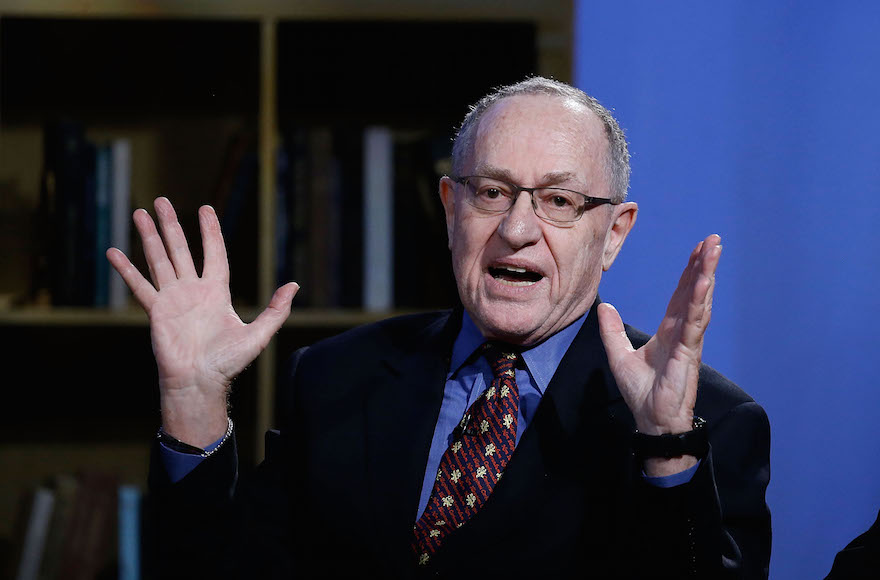
Alan Dershowitz at NEP Studios in New York, February 3, 2016. (John Lamparski/Getty Images for Hulu, via JTA)
Alan Dershowitz
 
 
JTA — In 1997, Alan Dershowitz wrote an opinion column headlined “Statutory rape is an outdated concept.”

Now, 22 years later, he’s defending the column on Twitter, at an awkward time: Dershowitz was a member of the team that got convicted sex offender Jeffrey Epstein a plea deal that sent him to prison for 18 months, a sentence that critics today say was unusually brief and lenient. Epstein is now being prosecuted for sex trafficking, and is accused of sexually abusing dozens of underage girls.

Dershowitz, a prominent defense lawyer and emeritus Harvard University law professor, himself faces accusations of sexual abuse from two of Epstein’s alleged victims — Virginia Roberts Giuffre and Sarah Ransome. He vehemently denies the accusations against him.

The 1997 column is getting renewed attention after it was quoted in a current New Yorker article about Dershowitz and his entanglement with Epstein. In the column, which ran in the Los Angeles Times, Dershowitz argues that statutory rape is an increasingly irrelevant legal concept as teenage sex is normalized and rarely prosecuted.

“This raises a fundamental question about the continuing legitimacy of statutory rape laws at a time when sex involving teenagers is so rampant and prosecution for statutory rape so selective,” Dershowitz wrote. “It is obvious that there must be criminal sanctions against sex with very young children, but it is doubtful whether such sanctions should apply to teenagers above the age of puberty, since voluntary sex is so common in their age group.”

He then suggests that the age of consent should be lowered to 15, or perhaps even 14.


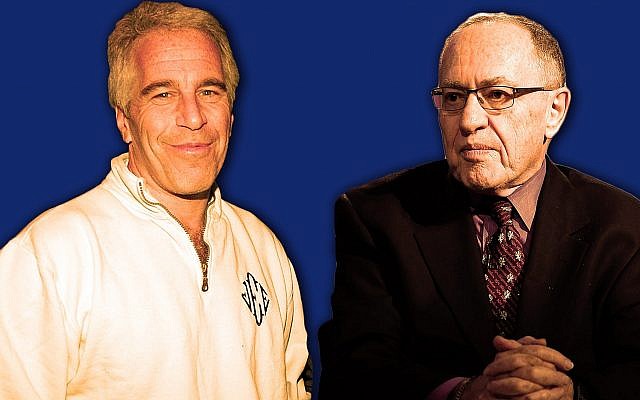
Alan Dershowitz, right, represented sex offender Jeffrey Epstein in a controversial 2008 plea deal
 
 
Facing a barrage of criticism — for his handling of the Epstein plea deal, for the allegations against him and now for this column — Dershowitz has been unapologetic. He told the Jewish Telegraphic Agency earlier this month that “I have no misgivings and I will continue to represent controversial people. That’s what I do. If I’m in a case, my job is to get the best possible result.”

He similarly defended the 1997 column in a series of tweets. He said there should be “Romeo and Juliet exceptions” to statutory rape.

“I stand by the constitutional (not moral) argument I offered in my controversial oped,” he wrote. “[I]f a 16 year old has the constitutional right to have an abortion without state or parental interference, how could she not have the constitutional right to engage in consensual sex? … I did not suggest that it is moral to have sex with a 16 year old, but rather that the issue presents a constitutional conundrum worthy of discussion.”

He has also attacked the New Yorker profile of him, written by staff writer Connie Bruck. Before it was published, he called it a “hit piece” with the “explicit purpose of silencing my defense of President Trump, Prime Minister Netanyahu, and the State of Israel.”

The lengthy article, titled “The Devil’s Advocate,” quotes Giuffre, who in accusations going back to 2014 names Dershowitz among the men she says Epstein forced her to have sex with. Giuffre says she had sex with him at least six times. When asked why she had decided to name Dershowitz, she told Bruck, “Jeffrey got away with it, basically. And Dershowitz was one of the people who enabled that to happen.”

Dershowitz vociferously denied her allegations and ended up suing her lawyers in 2015. According to the article, the case was settled in 2016, with Dershowitz’s insurance company paying Giuffre’s lawyers an undisclosed sum. The settlement also included a sum of money to Dershowitz “which would allow him to claim a payment.”

Dershowitz writes that Giuffre “has a long history of lying for money,” and appears not to have told her friends or the FBI that he was among the people with whom she had sex. He says he gave Bruck access to tapes in which Giuffre’s high-powered lawyer, David Boies, acknowledges that it would have been impossible for Dershowitz to have been in the places where Giuffre claims to have met him. Boies disputes Dershowitz’s account.

https://www.timesofisrael.com/dershowitz-defends-97-column-claiming-statutory-rape-an-outdated-concept/?utm_source=The+Daily+Edition&utm_campaign=daily-edition-2019-07-31&utm_medium=email


Wednesday, July 31, 2019

Predators are great at sniffing out the kids who are already having trouble in other areas of their lives and who may be vulnerable. Still, there are many things that parents and caregivers can do to protect children!

Give Your Child the Tools to Recognize Sexual Abuse

Talk to kids about their bodies and empower them to speak out.


It seems that every day we open our newspapers, go on social media or watch the news, there’s a horrific new story of child exploitation and abuse. In my role as a counselor and educator who focuses on prevention of child sexual abuse, people often ask me, “Is sexual abuse more rampant today than in the past?” Caregivers and teachers want to know why it seems as if there is an explosion of new allegations.

It’s a legitimate question and one that’s not easy to answer: Sexual abuse remains an underreported crime, yet there are more outlets than ever for survivors to talk about traumatic experiences. Light is slowly shining into the dark places where predators have always hidden and on those who harbor and aid them. So while stories of abuse by trusted clergy or even family members are difficult to read and painful to witness, I am elated to know that we are finally giving a voice to the voiceless. Statistics show at least one in 10 children in the United States will be sexually abused before their 18th birthdays — it’s a topic we cannot ignore.

With a spotlight shining on survivors’ stories, today is a new day. The Child Victims Act was signed into law in New York in February, extending the statute of limitations under which child abusers can be held criminally and civilly liable and giving survivors a broader path to justice. In June, New York’s state Assembly passed Erin’s Law, which mandates sex abuse education in public schools. Now is the time to focus on prevention. Predators are great at sniffing out the kids who are already having trouble in other areas of their lives and who may be vulnerable. Still, there are many things that parents and caregivers can do to protect children:
  • Teach children that their feelings matter and that they deserve respect. For parents, this does not mean that children get to run the house or do whatever they please, but it does mean that when a child shares a feeling, we validate it. Many parents can relate to the classic scenario of preparing a wonderful dinner, with a main course and side dishes and even dessert. Then, shortly after dinner and right before bedtime, as your child is putting on PJ’s, you hear: “I’m hungry.” We all know that we would love to say, “That’s just not possible” or “No you’re not,” or maybe something not as PG. But it takes just a little tweaking to validate a child and still hold our place at the top of the household hierarchy. Try something like, “I’m sorry you’re hungry, but you will have to wait for breakfast,” or “Oh, you’re hungry … there’s a carrot in the fridge for you,” to maintain the validity of your child’s feelings.
    Respect for a child and validation of her feelings gives her a sense of self and helps a child recognize her emotions. Being able to recognize our feelings is the first step in knowing when something doesn’t feel right. Predators rely on the fact that children can be easily manipulated. Children who have a better sense of what feels O.K. and what doesn’t — and are able to receive validation by communicating those feelings to trusted adults — are at a big advantage.

  • Emphasize that children’s bodies belong to them. Kids need to understand that no one is allowed to touch their private parts, look at their private parts or talk to them about their private parts outside of appropriate settings, such as a doctor’s office. Communicate this concept to your kids as early as 2 years old. You can start while giving them a bath or during toilet training. Keep your language simple and age appropriate: “Mommy is washing your eyes and ears and back and your penis. Your body is so special and it belongs to you, no one is allowed to touch you because this is your body. If anyone does, you tell Mommy right away because my job is to keep you safe and touching, especially on your private parts, can be unsafe.”
    As your child gets older, the conversation should get more detailed and can include using “what if” scenarios, dialogue and even role playing. Ensure your child knows that these rules apply for everyone. That means using sentences like, “No one is allowed to make you feel uncomfortable, even if that person is your cousin, uncle, aunt or neighbor. It’s never O.K., and I will always believe you.” Many children will not know this unless you tell them.

  • Make sure kids understand the difference between secrets and surprises. Teach children that a secret should never be kept about their private parts. An example you can use is a doctor’s visit, where someone is looking at and possibly touching private parts. Tell them that it is O.K. because the doctor is making sure the child is healthy, but most importantly it is not a secret. Parents should be in the room with a child when he is getting checked or know of the visit and then discuss what occurred with the child.
    As a counterbalance, help kids understand the nuance between secrets and surprises. Asking a child to keep a surprise party or gift under wraps could be confusing, so emphasize that there’s a difference between secrets and surprises. A gift’s recipient will eventually know of the surprise and will most likely feel comfortable and happy. On the other hand, a secret that can never be told is not O.K. and can make us feel yucky, confused or sad. This is a crucial concept for children, because predators will try to have children keep their secret.

  • Share your own stories, and include as many feelings and sensations as you can. Children look to adults who are close to them to figure out the meaning of what they are experiencing, so it’s helpful to share our own experiences. This will help kids learn what it means to express what they are feeling and it will put words to things they don’t understand. Your stories do not have to be abuse-related; the important thing is to model what it means to listen to our gut feelings. Stories can be as simple as: “I was so frustrated this morning, because I got stuck in traffic and I knew I would be late to work. My stomach felt like there were butterflies in it, and my hands were so tight I was gripping the steering wheel.” Communicating these things with our children gives them permission to share their own feelings of anger, confusion, happiness and sadness and to understand that someone else can feel this way.

  • Ask for permission to touch a child. When we ask children for small permissions, we are giving them the sense that they have control over their bodies. This way, if a predator walks into their life, they will have a reference to pull from that what they are experiencing feels different. Something as small as asking, “Is it O.K. if I fix your collar? It’s turned up,” sends a message to a child that he has some autonomy over his body. Practicing dialogue like this can go a long way in helping a child realize that a predator will not ask permission, and it will help him spot those tricky people.

  • Empower kids to say “no” and talk openly. Encouraging emotional honesty and physical boundaries helps kids gain some control over their bodies. Letting a child say, “No, I don’t want a hug, but a handshake is O.K.” shows her that she has choices. Still, children may not be able to say “no” to their abuser or stop the abuse. Most children who are sexually abused do not disclose their abuse, so we need to tell children that even if they can’t say “no,” even if they can’t get away, the most important thing to do is to tell someone about the abuse. Tell them that you will believe them no matter what happens, and they will not get into trouble for telling you.
Parents and caregivers can help children come forward with stories of abuse, and get the validation and help they need. Preventing abuse is equally important: By giving children the necessary tools, we can help them learn how to stay safer and support them should they face a traumatic situation.

Dr. Shani Zoldan-Verschleiser, AuD., L.M.S.W., an alumna of the Touro College Graduate School of Social Work in New York City, is the CEO of Magenu, an organization dedicated to preventing child sexual abuse.

Tuesday, July 30, 2019

“Aleinu means ‘it’s on us’ or, ‘it is our duty.’ We believe that it is our collective responsibility, as a Jewish community, to protect the children in our care from abuse or harm.”


Danielle Pitkoff, program coordinator at Sacred Spaces.

Danielle Sara Pitkoff is passionate about her work, her studies, her Judaism and in “making a difference” in the world. Pitkoff who is 24 years old, is the program coordinator  at Sacred Spaces, a non-profit that builds healthy Jewish communities by partnering with Jewish institutions to prevent and respond to sexual abuse and other abuses of power. A core member of the organization’s consulting team, she is coordinating “Aleinu: Safeguarding Our Children,” an initiative funded by UJA Federation of New York, which will give youth-serving organizations the tools to implement child protection policies and best practices. She also works on policy development and program assessment.

Pitkoff, who lives in Manhattan, grew up in Pound Ridge, New York,  attended the Bi-Cultural Hebrew Academy in Stamford, Connecticut, and SAR High School in Riverdale. Before matriculating at Johns Hopkins University, she attended Midreshet Ein Hanatziv in Israel.

After arriving at Johns Hopkins University in 2014, Pitkoff started to volunteer at the university’s crisis intervention hotline for victims of sexual assault. She was soon working shifts on the hotline on her own and by her senior year, she was the co-director of Johns Hopkin’s Sexual Assault Resource Unit (SARU), where she was on call for all of her peers. In her role as co-director , she trained staff and student organizations, led campaigns for policy reform, developed workshops for survivor healing and support and partnered with government agencies to improve access to and quality of resources for victims. 

Pitkoff explained, “Sexual assault, harassment and abuse affect so, so many individuals and, upon realizing the high prevalence of these issues on college campuses in particular, I felt deeply compelled to help address them.”

The Hopkins’ hotline is a peer-to-peer crisis intervention resource which requires careful training. Pitkoff explained the importance of training volunteers in empathetic listening, crisis response, and resource referral. By her senior year, Pitkoff was accompanying survivors to the hospital and remaining with them throughout the university investigations. 

Pitkoff shared her thoughts,“I try to honor the voices and experiences of survivors in all of my work, because I firmly believe that doing so is the only way to create lasting culture change and effectively prevent continued abuse.”

Pitkoff noted, “Both of my parents have given so much of their time, both professionally and voluntarily, to their Jewish communities, modeling for my siblings and me real leadership and dedication. I am grateful to them for framing my upbringing in Jewish values that emphasize treating others with kindness and sensitivity. I was fortunate to have teachers, counselors and mentors who inspired in me a strong foundation in Judaism and community. Just as they impacted me, I feel a responsibility to give back to my community, to create spaces for others to safely question and challenge norms and to offer and receive support.”

Pitkoff was a women, gender and sexuality research fellow while at Hopkins, and her work with survivors became her calling. She explained, “My work with Sacred Spaces is an opportunity to take the training and experience that I gained in college and apply it to the communities that I am most intimately familiar with. Our work is guided by the unique needs of Jewish institutions, and we view the building of safe and sacred community spaces as a moral Jewish imperative. It is at the core of what it means to really live our Jewish values.”

Pitkoff cites Dr. Shira Berkovits, founder and CEO of Sacred Spaces, as a significant mentor. Pitkoff elaborated on the importance of Sacred Spaces working within organizations in developing a proper organizational policy on prevention and responsible protocols. “Often, organizations and their leadership want to do the right thing but do not have the tools, knowledge, or resources necessary to properly protect their constituents from abuse or respond appropriately when abuse occurs. It can be hard for organizational leaders and constituents to recognize that their community faces the same unique risks as all faith-based institutions. It is also difficult to reconcile that someone they know and love, and who may have otherwise made great contributions to their community, could also be able to perpetrate harm.”

Sacred Spaces offers “Case Consults” where individual organizations are guided in responding, in a holistic manner, to the cases that they are dealing with. Consults include explaining the relevant legal and mandated reporting requirements, demonstrating how to support survivors and their families, how to communicate about the processes with the wider community, how to establish policies for preventing future incidents, and how to create opportunities for institutional healing.

“Aleinu: Safeguarding Our Children,” is a groundbreaking educational campaign that provides Jewish youth-serving organizations with the much-needed tools and resources to guide them in implementing 10 best practices in child protection. Explained Pitkoff, “Aleinu means ‘it’s on us’ or, ‘it is our duty.’ We believe that it is our collective responsibility, as a Jewish community, to protect the children in our care from abuse or harm.” 

The campaign is meant to standardize child protection in our Jewish organizations by asking each participating institution to commit to implementing at least two best practices each year for five years. Upon committing to incorporate a best practice step, institutions will receive tools in the form of how-to guides, worksheets, video tutorials and sample policy language to assist them in their implementation.

Through all the efforts to reform policy and advocate for survivors, Pitkoff emphasized that it is critical to show compassion to ourselves and each other. We have to have ways of showing publicly, “I am here with you, I see you. You are not alone.”

For information or support, please call the National Sexual Assault hotline operated by RAINN at 800.656.HOPE.

https://www.jewishlinkbwc.com/index.php/features/11439-danielle-pitkoff-looks-to-make-a-difference


Monday, July 29, 2019

When sex offenders are treated as innocent and women are rendered invisible, the Orthodox community needs deep and wide repair...

The rotten state of Orthodoxy ---- When sex offenders are treated as innocent and women are rendered invisible, the Orthodox community needs deep and wide repair


Men's access to the grave of Rabbi Yosef Caro zt"l, in Tsfat, Israel. The men are able to draw close enough to even kiss the grave. (Laura Ben David)


If a picture speaks a thousand words, these images scream volumes. Taken a few weeks ago in the ancient cemetery of Tsfat, they show two sides of the same grave. Rav Yosef Caro zt”l was a mystic, and the author of the Shulchan Aruch, among other works. Thousands come to pray at his graveside. Some have total access to the monument. They can touch it, kiss it, cry on it. Others can talk to the wall behind it. 


Women’s ‘access’ to the same grave, from behind a wall. They are unable to even see the grave, let alone approach it, or touch it. (Laura Ben-David)

I cannot think of a better pair of images to illustrate the state of Orthodoxy today, where there is one open accessed reality for men, and one increasingly restrictive reality for women. 
 
You see, today, in Orthodoxy, a man can:
  • seduce a woman to leave her husband by claiming that his is the soul of King David and hers of Batsheva. He can promise to marry her upon the (according to him) imminent death of his wife, and still maintain his position, prestige, and influence as head of a yeshiva, having been granted forgiveness by a religious court of his peers (Rav Shmuel Tal). Some brave souls speak out, but they go unheeded.
  • be convicted of sex offenses, spend time in jail for them, and still be revered by thousands of followers and honored with the lighting of a torch at a government sponsored event (Rabbi Eliezer Berland).
  • confess to having touched students inappropriately (and gone beyond that too), and still teach at prestigious yeshivot, and be defended by some leading rabbis in the community (Rav Motti Elon).
  • protect and defend sex offenders, strong-arm professionals to lie about the mental health of accused abusers, stymie investigations into abuse allegations, and work towards the early release of predators and still serve as (deputy) health minister in the Israeli government (Rabbi Yaakov Litzman).
  • be accused of molestation and rape for decades, preying on the weakest in the community, threaten victims and their families and still be honored and respected as the chief rabbi of Ukraine (Rabbi Yaakov Bleich).
And a woman can:
  • have her motivations questioned and her learning belittled, even while her opportunities to learn are more numerous than ever before.
  • expect all male committees to be the ones who define her communal roles and opportunities to participate in ritual.
  • be increasingly shut out of holy spaces. The Kotel, Kever Rachel, the ancient cemetery of Tsfat, and more holy sites have smaller and inferior women’s spaces.
  • be required to give up her rights, dignity, and possessions in exchange for freedom, in the event that her husband refuses her a divorce.
  • hear from rabbis in positions of authority that spousal abuse is not grounds for divorce.
  • see no images of women, even at an all-women conference.
And she cannot:
  • use her own face to advertise her business.
  • see images of other women like her in advertisements or publications.
  • read an Orthodox publication that uses the correct words for BREAST CANCER or discusses what it may look and feel like.
  • Participate alongside men in setting policy for communal issues.
  • influence the determination and execution of policies that affect her.
Should she seek to change these policies, and ask:
  • for women to be included in conversations and decisions that affect them…
  • to have a headshot in her bio…
  • to have a seat in shul where she can see and hear…
…she can expect to be called a “feminist with an agenda.”

Why are God fearing, religious women being increasingly shut out? Why are our motivations constantly and consistently questioned?

Why are the things that mean so much to us, walled off from us? And who gave the wall- builders that right?

Why is male access guaranteed, while female access shrinks?

The contrast between the way that the Orthodox community in general treats men with the way it treats women has never been stronger. Time and again, we see that men are “innocent until proven guilty.” It might be more accurate to say “innocent even when proven guilty.” 

Yet for women, it is almost the opposite: women are “presumed guilty until proven innocent.” Even the wish to dance with a Torah scroll on Simchat Torah is considered subversive unless it can be “proven” to come from a pure, spiritual place. 

Once we stood at Sinai together, men and women, “like one person with one heart.” Today, the heart of Orthodoxy is broken, splintered into a dangerous and gaping divide. 


About the Author
Shoshanna Keats Jaskoll is a writer and an activist. Cofounder of chochmatnashim.org She loves her people enough to call out the nonsense. See her work at skjaskoll.com 

Thursday, July 25, 2019

Nice!


Disgraced millionaire Jeffrey Epstein was found injured and in a fetal position in his cell at a New York City jail, sources close to the investigation told NBC News on Wednesday.

Epstein, 66, was found semi-conscious with marks on his neck in his cell at the Metropolitan Correctional Center in Manhattan some time in the last two days, the sources said. Epstein is on suicide watch.

Two sources told NBC News that Epstein may have tried to hang himself, while a third source cautioned that the injuries weren't serious, questioning whether Epstein might have staged an attack or a suicide attempt to get a transfer to another facility.

Another source said that an assault hadn't been ruled out and that another inmate had been questioned.

Attorneys for Epstein did not immediately return calls for comment. A spokesperson for the Bureau of Prisons didn't return calls, and spokesmen for the US Marshals and US attorney's office declined to comment.

http://www.israelnationalnews.com/News/News.aspx/266470

Tuesday, July 23, 2019

Accepting the all-knowing religious leader whose path will lead to redemption frees one from confronting a world of confusion and inconsistencies...

On charismatic rabbis and cults 

Judaism has many models of rabbinic leadership, but none of them legitimately requires followers to stop thinking for themselves


Illustrative. Ultra-Orthodox men gather in front of the Embassy of South Africa in Ramat Gan, during a demonstration in support of Eliezer Berland, who was then jailed in South Africa, , on April 25, 2016. (Roni Schutzer/Flash90/File)
Ultra-Orthodox men gather in front of the Embassy of South Africa in Ramat Gan, during a demonstration in support of Eliezer Berland, who was then jailed in South Africa, , on April 25, 2016 
by Rabbi Yosef Blau

The term “cult” is associated with religious movements led by a charismatic leader who controls the behavior of the cult’s members. Orthodox Judaism, where religious behavior is determined by adherence to Halakha (Jewish law), should be immune to any internal cults. Yet in recent years, there have been a number of stories of charismatic rabbis who have created communities of Orthodox Jews under their respective absolute control. Inevitably, there arises a scandal involving the leader that many of his followers refuse to acknowledge. The leader has convinced his followers of his extraordinary mystical powers. 

Often a talmudic scholar, the leader sometimes claims a unique approach to learning that outside rabbis do not understand.

Are there specific factors that gave rise to an increase in this troubling phenomenon? Perhaps the impact of the radical changes in the experience of the Jewish people, from the devastation of the Holocaust to the re-establishment of the Jewish state has increased confusion, leading to an openness to a charismatic religious figure who can explain the events and give them meaning. In the 71 years of the State of Israel, there has been a lack of security caused by wars and terrorism, accompanied by extraordinary events that imply Messianic significance. The euphoria following the Six Day War was tempered by the complexity of the Yom Kippur War. The ingathering of the the exiles, including the Russian Aliyah from the “Jews of Silence,” as well as that of Ethiopian Jews, whose very existence was barely known, was all followed by a limited integration. Israeli society is split on the most basic issues.

There is a consensus that the official rabbinic leadership has declined and is mired in politics. Within both the religious Zionist community and the Haredi world, there are endless subdivisions. It is an era ripe for those who claim to have the answers. Joining a small but united community creates a sense of security. Accepting the all-knowing religious leader whose path will lead to redemption frees one from confronting a world of confusion and inconsistencies.

Since this kind of  rabbinic leader claims to function within Orthodox tradition, many, including rabbis, do not see the potential danger. For those who look, however, there are clear warning signs.

For example: any deviation from loyalty to the leader leads to shunning, if not expulsion. The leader’s behavior is not subject to the same scrutiny as that of his followers because he has established himself as beyond the understanding of others. While listening to rabbinic authority is an integral element in Orthodox Judaism, traditionally, that applied to areas of religious law. Even in the Hasidic world, where the rebbe is consulted on all kinds of matters, the rebbe does not force his followers to ask for his direction, nor does he check on their loyalty.

The growing acceptance of the doctrine of Daat Torah, which assign superior knowledge in non-halakhic matters to great rabbis, makes the line separating normative Orthodox Judaism from rabbinic cult leaders less clear. Neo-Hasidism, which in effect is creating new Hasidic rebbes, has yielded groups of followers who assume that the assertion of ruach hakodesh (divine inspiration) is standard for a rebbe. The dangers associated with religious cults warrants a healthy dose of skepticism.

I hesitate to tread on questions of whether we are on a clear Messianic path and how close, but I encourage skepticism of anyone who claims to know particularly if he will play a major role in the process. Precisely because we live in an extraordinary time in Jewish history, we have to be particularly alert to the danger of one who has all the answers — as long as we follow only his leadership. It is irrelevant whether the charismatic leader is manipulative or delusional, sincere or a fraud, one should never give up his or her right to make one’s own choices.


Rabbi Yosef Blau is the Senior Mashgiach Ruchani (spiritual advisor) at Yeshiva University, and a partial resident in Jerusalem. 

Wednesday, July 17, 2019

How we edit reality and form a story -- and then mistake that story for the truth," says psychological illusionist Derren Brown


Remember this "made-up" reality --- Before you spend your hard-earned money on phony mekubalim, segulas....and the "others" that rob you blind --- because you let them!

Tuesday, July 16, 2019

Rabbi Marc Angel Paraphrased in Summary - "To Reduce the Amount of Jewish Boys Marrying Gentile Women (intermarriage), Have More Jewish Boys Marry Gentile Women"....(Just Don't Call Them Gentiles)


 photos of a woman from the adult film industry very recently converted to "Orthodox Judaism"


"We live at a time when intermarriage rates in the diaspora are at an astronomical level and show no signs of declining. We live at a time when thousands of people would be willing to turn to Orthodox rabbis for halakhic conversion-if only we presented a halakhic framework for giyyur that is meaningful, accessible, and respectful to the needs and concerns of the proselytes themselves. Local Orthodox rabbis, using their own knowledge of each case on a personal basis, are far better equipped to deal with the challenges of giyyur today than rabbinic bureaucracies."


The Jewish community underwent cataclysmic changes during the course of the nineteenth century. While most of world Jewry was religiously observant in 1800, a large majority were no longer devoted to halakhic tradition by 1900. Nineteenth-century Orthodox rabbinic leadership had to cope with the rise of Reform Judaism, the spread of Haskala, the breakdown of communal authority over its members, the defection of Jews from Torah and mitzvoth-and from Judaism altogether.

The dramatic erosion in religious observance led to various responses among 19th century Orthodox rabbis. Rabbi Moses Sofer (1762-1839), known as the Hatam Sofer, was recognized as the most authoritative Orthodox voice who shaped traditionalist opposition to Reform Judaism and, indeed, to all those who challenged the hegemony of halakha. He believed that deviators forfeited their right to be considered as proper Jews.[1]

He wrote: "If we had the power over them, my opinion would be to separate them from us [our borders], we should not give our daughters to their sons and their daughters should not be accepted for our sons so as not to be drawn after them. Their sect should be considered like those of Zadok and Boethus, Anan, and Saul, they among themselves and we among ourselves." [2]

The Hatam Sofer argued forcefully for maintaining the sanctity of every law and tradition. He is famed for his aphorism "hadash assur min haTorah", by which he meant that the Torah forbids innovations i.e. reforms. His hashkafa (religious worldview) identified Jewishness with scrupulous observance of Torah and mitzvoth and acceptance of the halakhic way of life.

Although the Hatam Sofer's position was dominant, other Orthodox voices called for a more tolerant attitude toward those who veered away from the halakhic way of life. Rabbi David Zvi Hoffman (1843-1921), the leading figure in Berlin's Adass Jisroel Orthodox community, favored a "cooperative separatism" i.e. the Orthodox needed to maintain their distinctiveness, but also had to find ways of cooperating with the non-Orthodox. [3] In an earlier generation, Rabbi Yaacov Ettlinger (1798-1871) had sought to ameliorate the halakhic status of the non-observant Jew through the classification of "tinok shenishba"-comparing the non-observant Jew to a Jewish child who had been captured and raised by non-Jews and who therefore could not be held responsible for ignorance of Jewish laws and customs.[4] Thus, while the non-Orthodox masses certainly fell short of Jewish religious requirements, they should not be rejected out of hand; they simply did not know any better. This halakhic argument fostered a more sympathetic approach than that taken by Orthodox isolationists.

Both the hard-line and the more tolerant Orthodox rabbis were pious and learned Torah scholars. Both groups sought support for their views in the Talmud and halakhic literature. Why did they come to different conclusions? Their differences did not stem, I believe, from different interpretations of halakhic texts. Rather, their halakhic stances reflected different hashkafot (religious worldviews) and different evaluations of how to address the challenges that faced them. The Hatam Sofer viewed Torah-observant Jews as the "real" Jews, and the non-observant Jews as betrayers of Judaism who had to be de-legitimatized. For true Judaism to flourish, it was necessary for Orthodoxy to separate itself to the extent possible from the non-Orthodox. The spokesmen for a more conciliatory Orthodoxy focused on the principle that all Jews-religiously observant or not-are part of the Jewish people and need to see themselves as members of one peoplehood. Thus, ways had to be found to bridge the gaps between the Orthodox and the non-Orthodox.

As Orthodoxy continued to lose ground to the non-observant Jewish population, the rejectionist position gained traction within the mitzvah-centered community. The opinion hardened that strong measures were needed to insulate Torah-true Jews from their sinful brethren, and to distinguish between those who observed the mitzvoth and those who rebelled against Torah.

As the hard-line position gained sway regarding non-Orthodox Jews, it also had a profound impact on Orthodox views relating to the acceptance of non-Jews as converts. Since Orthodox rabbis increasingly emphasized mitzvah observance as the essence of Judaism-in order to differentiate clearly between themselves and the reformers-- they came to see the conversion process as entailing a full commitment by the convert to observe all the mitzvoth. Eventually, the position arose that any conversion that took place without the convert's total mitzvah commitment-was not a valid conversion at all....


READ ALL OF ANGEL'S SHAMELESS HAIRSPLITTING:
https://www.jewishideas.org/article/conversion-judaism-halakha-hashkafa-and-historic-challenge

Shedding Light On The Conversion Racket! The Facts Of The "Jewish Converts" Industry - The Vast Majority Do It For Personal Reasons Totally Unrelated To Becoming Jews!


http://theunorthodoxjew.blogspot.com/2016/12/shedding-light-on-conversion-racket.html