
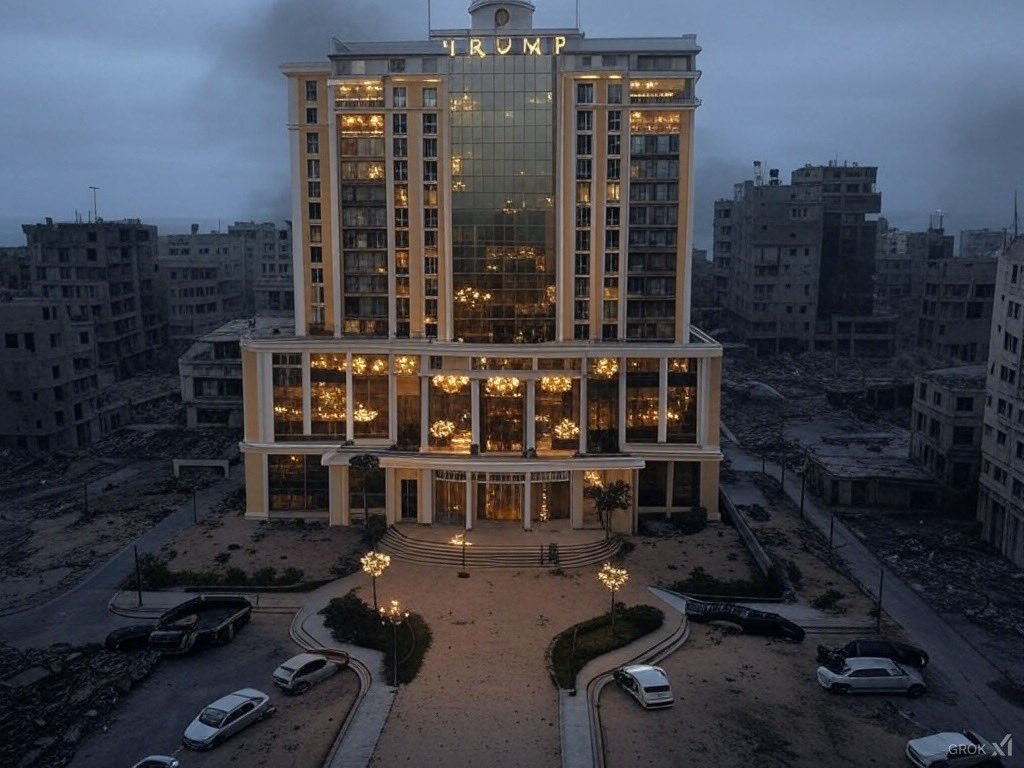
 😜
😜



A globally recognized A+ commentator and analyst on the Israel-Hamas conflict and more—Lt. Col. Jonathan Conricus (Res.). He spoke on Saturday evening—after a very busy day doing media in Israel and abroad. The hostage release has been a spectacle unlike any other—when an Islamist terror group commands center stage on media worldwide—showcasing their grotesque propaganda machine and what appears to be surprising military prowess after 16 months of war. Hamas, which produced and choreographed three of the four release “ceremonies” to date, has shown the world that it remains a strong fighting force with discipline, might, and well-fed and outfitted terrorists—sartorially and in terms of weapons. Its smaller ally—Palestinian Islamic Jihad—demonstrated that they are far less “together.” During the release they organized last Thursday, two Israeli hostages, who had been held in isolation throughout their captivity, were nearly lynched by a braying mob that surged towards them. Conricus and I get into it all: who won, who lost, and what this all might mean for the rest of the hostages and the horrible war that never seems to end. And we also discuss the unfortunate reality that for months the Government of Israel rebuked its citizens for gathering at weekly rallies in support of the hostages and their families. It showed weakness, we were told, and the rallies played into the hands of Hamas. I never understood that analysis, but here’s what we know today: that those rallies were covered on Arabic radio and TV—and many hostages knew about them. And that advocacy was an invaluable morale booster for those in Hamas dungeons. It’s always fascinating speaking with Mr. Conricus. I expect you will find it so as well.
Below is a link to our YouTube version of the podcast; you can watch it there if you prefer the audio-visual thing. The introductions to the podcast and YouTube versions are different but otherwise the same content. We aim to please. If you appreciate our work, please take a moment to like us on your podcast platform, YouTube, or wherever. And if you would subscribe to YouTube, that would be very helpful. Numbers and algorithms—that’s what they tell me. Thanks for being here.

|
|
The ceasefire that is now in force between Israel and Hamas has left many supporters of Israel aghast.
For It was the IDF that had battered Hamas, not the other way round, yet Israel found itself having to sue for peace, granting Hamas concession after concession and leaving the terror group able to claim that it is still standing. Israel has agreed in this first phase to pull the IDF forces from Gaza’s main cities, including Rafah, Khan Younis, and Gaza City, thus allowing Hamas operatives inside those cities to reappear from their hideouts, both above and below ground, to regroup, rearm, and also to recruit new members. Israel has agreed to give up the east-west Netzarim Corridor, which allowed the IDF to prevent Hamas operatives moving from south to the north, or north to south of the Strip, in attempts to evade IDF attacks that focus now on one, and now on another part of Gaza. Israel will also withdraw its forces from the Philadelphi Corridor, along the Egypt-Gaza border, which has allowed the IDF to prevent weapons from being smuggled from the Sinai into Gaza.
Veteran Israeli journalist Nadav Shragai discusses the lopsided — in both quantity and quality — hostage-for-criminal exchange that Israel has agreed to here: “Why the Hamas Deal Could Lead to More Hostage Taking — And Why No One Is Talking About It,” JNS.org, Jan. 19, 2025:
…Those who insist may naively believe that after the deal, we can resume the war against Hamas at our discretion. However, we must simultaneously recognize the deal’s devastating repercussions and damage.
It is imperative to cling to the truth, no matter how painful, and to pose relevant questions—questions we have long avoided. We must confront the harsh realities we have whitewashed and repressed. This reckoning must occur now, mere moments before the first phase of the deal, and only then can we make an informed decision.
We must question aloud why the discourse surrounding the deal’s cost has focused for months solely on Gaza’s Philadelphi Corridor (on the southern border with Egypt), the Netzarim axis (in the middle of the Strip), the return of Gazans to the northern Strip, and the war’s conclusion.
Meanwhile, the release of hundreds of terrorists—hundreds of potential “Sinwars”—remains absent from the conversation, accepted as a fait accompli and an inescapable fate we must simply “deal with” and contain.
We should challenge the assessments of the Israel Security Agency (Shin Bet) and the Israel Defense Forces that they can “manage” the released terrorists. On the eve of the Shalit deal, they made similar assurances and misjudged the reality.
We must ask them directly: Could you be mistaken again? Might Shin Bet chief Ronen Bar be wrong in 2025, just as Yoram Cohen was in 2011?
It is crucial to remember that since 1985, Israel has released thousands of terrorists through various deals, gestures and diplomatic frameworks. About half of them returned to terrorism and murdered Jews. Hundreds were killed or wounded by these released terrorists long before the Simchat Torah massacre on Oct. 7, 2023….
How many hundreds of Palestinian terrorists that Hamas demands be let loose in this latest, most regrettable exchange, will promptly return to terrorism, and how many Israelis will die as a result? And why did the Israeli leaders not show that they had learned the lesson of the Shalt debacle, and insist that no terrorist murderers should be included in the exchange?
They could have listed a number of the most vicious of the killers that Hamas has demanded be freed, such as those responsible for the attack on the Passover service at the Park Hotel in 2001, including Abdullah Barghouti, a bomb expert who was sentenced to 67 life terms; Abbas Sayed, the planner of the Passover Seder, when 30 elderly Israelis were killed and 130 wounded, Ibrahim Hamed, commander of the Izz ad-Din al-Qassam Brigades in Judea and Samaria during the Second Intifada, the man responsible for attacks including the double suicide bombing on Ben-Yehuda Street and at Cafe Moment in Jerusalem, and Ahmed Mughrabi, the Fatah-Tanzim commander in Bethlehem.
Imagine the effect of listing these men, and their intolerable crimes, whom Israel is supposed to free but could still appeal to the world’s conscience: “are these people who, if they had been murdering your people in similar ways, you would have agreed to free?”
https://www.frontpagemag.com/trading-innocents-for-murderers/?
Welcome to a bonus episode of What Matters Now, a weekly podcast exploring key issues currently shaping Israel and the Jewish World, with host deputy editor Amanda Borschel-Dan speaking with senior analyst Haviv Rettig Gur.
This week, we answer a slew of listeners’ responses to our conversation last week, “Excruciating dilemmas as murderers set to be released,” about the painful issue of the release of Palestinian security prisoners as part of the hostage release-ceasefire deal.
We received dozens of emails from listeners who asked how an Israeli implementation of the death penalty for mass murderers may shift future terrible negotiations as the nation currently reels from the reality that terrorists with blood on their hands are being freed.
https://www.timesofisrael.com/what-matters-now-to-haviv-rettig-gur-death-penalty-for-terrorists/?

After 482 days in Hamas captivity, Israeli hostages Arbel Yehud, Gadi Moses, and Agam Berger returned home on Thursday, revealing harrowing details of their ordeal—including how they clung to their faith, refusing to eat leavened bread on Passover and attempting to fast on Yom Kippur, despite their captors’ cruelty.
The IDF observers from Nahal Oz, including Agam Berger, made a conscious effort to observe Jewish traditions even while being held underground and in Hamas-controlled apartments in Gaza, Ynet reported.
Despite the dire conditions, they refused to eat chametz (leavened bread) on Passover and attempted to fast on Yom Kippur, a difficult task given the severe malnutrition they suffered.
Berger, the last IDF observer to be released, said that holding onto faith gave her strength. She had remained in captivity alone for a full week after her comrades Liri, Daniella, Naama, and Karina were freed. She reportedly took comfort in knowing they had been released and held onto hope that she would be next, according to Kan News.

For nearly 16 months, Arbel Yehud was held in complete isolation, underground for extended periods. She suffered from severe malnutrition, had minimal food, and endured cruel treatment from her captors.
According to Kan News, Yehud was informed during her captivity that her brother, Dolev Yehud, had been murdered in the October 7 attack on Nir Oz. Still, she remained unaware of the full scale of the massacre. "I was mostly alone," she reportedly said after her release.
"What you saw today—the armed men escorting me—that is just a fraction of the horror,” she said of the thousands of terrorists whom surrounded her in Khan Yunis, while being transferred to the Red Cross on her way back to Israel.
80-year-old Gadi Moses spent his captivity focusing on the day he would return home to rebuild his community. "I never broke, I never cried—I just waited for the moment I would be free," he told his family, as reported by Kan News.
Moses saw his relatives on TV, including footage on Al Jazeera, but had no contact with them. Like Yehud, he was mentally and physically tested throughout his captivity but refused to give up hope.
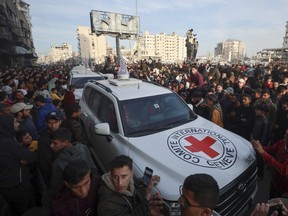
The release of three Israeli captives marks an important milestone in the implementation of the agreement for the return of hostages to their loved ones.
Hostages Romi, Doron and Emily were taunted and tormented by howling mobs — broadcast live on Qatari state media Al Jazeera — as they were transferred by Hamas to the custody of the Red Cross, the first time the international aid organization had seen them in their 470 days of captivity.
It is the first stage of a three-stage process towards the release of 94 more hostages in exchange for the continued release of nearly 2000 security detainees and terrorists, many with blood on their hands. The asymmetry of paradigms — rescue and recovery of hostages, versus clemency for convicted mass murderers — rewards terrorist criminality and extortion while incentivizing further acts of terror.
In announcing the agreement, Hamas leaders reiterated, yet again, their intention to commit the heinous crimes of October 7 all over again. The mass murderers being released by Israel to secure the return of innocent civilians taken hostage could therefore be the architects and perpetrators of another atrocity.
In pursuing a ceasefire and hostage release, the convicted killers emerging from Israeli jails might well breach the ceasefire, take more hostages, and start another war. Indeed, the previous release of over 1,000 terrorists in the Gilad Shalit exchange included Yahya Sinwar and other Hamas leaders who went on to perpetrate the crimes of October 7.
No country should be put in such a painful and impossible position, and every country should have condemned this dangerous paradigm imposed by terrorists, while simultaneously supporting the agreement.
Every life is a universe, and saving a single life is like saving an entire universe. For each hostage ripped from their home who is now returning to their loved ones alive, it is a whole world that has been rescued. For all the lives that would otherwise be lost to the war, the ceasefire offers life-saving protective cover. And for the cause of peace and security that Hamas and their state backers sought to so desperately disrupt with their October 7 assault, the agreement will allow for the continued expansion of the Abraham Accords and regional peace agreements, changing the world as a whole for the better.
Despite the very real risks and painful sacrifices presented by the agreement, it deserves global support.
But there are important lessons to be learnt.
A hostage recovery and ceasefire agreement could have likely been achieved earlier — and many lives saved — and at lower cost with less risks, had the world held Hamas accountable and more clearly and unequivocally called for the release of the hostages as a standalone humanitarian principle and international legal obligation.
Indeed, the current agreement reflects the framework for a hostage release and humanitarian ceasefire that was first proposed in December 2023, and an exact replica of what was proposed in May by the U.S. and supported by Israel, but rejected by Hamas. Its August reformulation was similarly rejected by Hamas.
The singling out of Israel for selective opprobrium and indictment, coupled with indulgence of Hamas demands, only prolonged the painful process, and the pernicious paradigm that underpinned it. In not condemning Hamas’ outrageous demands, the international community delayed a ceasefire and thereby contributed to the suffering of Palestinians and Israelis alike.
The Canadian government was missing in action, thereby prejudicing this process and the cause of the hostages. As a major G7 country and founding nation of the rules-based international order and its multilateral institutions like the UN, Canada’s foreign policy positions matter in influencing other countries and shaping the global narrative.
The government could have more clearly called for “the immediate and unconditional release of all the hostages,” without referencing any other considerations in the same statement. While negotiations are the means through which this would be achieved, the rhetoric surrounding it matters, and “unconditional and immediate” underscores the illegality of hostage-taking and reinforces international norms against it, while increasing pressure on Hamas. Many others, such as the U.K. government, have effectively done so.
Far
too often, the Canadian government linked the recovery of hostages to
other considerations or conditions including a ceasefire, two-state
solution (which we otherwise support), and the broader situation in the
Middle East, thereby encouraging other countries to do the same and
emboldening Hamas intransigence.
In echoing false accusations against Israel like the Al-Shifa hospital bombing — where the evidence revealed that the bombing was by Palestinian Islamic Jihad — and becoming the first G7 country to ban sales of defence materials to Israel, Canada further marginalized Israel amidst hostage negotiations, strengthened Hamas, and was marginal amongst major allies. Even Hamas issued a statement thanking the Canadian government for its positions.
As counsel to families of hostages and victims of October 7, we have been supporting the ongoing investigations by U.S. law enforcement, which led to the issuance of indictments against Hamas perpetrators. While Canada had initiated criminal investigations for Russian crimes against Ukrainians, ISIS crimes against Yazidis and others, and Canadian victims of terrorism and kidnapping abroad, the government has opted not to pursue justice and accountability for the Jewish Canadian victims of Hamas.
This did not only hurt Israelis and Palestinians, but also Canadians, who are at increasing risk of being abducted abroad. As hostage-takings rise around the world, Canada’s words and deeds inadvertently normalized the largest international hostage-taking in history, thereby undermining the international norms against it and putting all Canadians abroad at risk.
As the hostage recovery and ceasefire agreement is implemented, all Canadian public officials and parliamentarians can support its success by continuing to emphasize the standalone nature of the hostage crisis, and the need for the return of all the hostages, including human remains being illegally held captive. Particular reference should continue to be made to Toronto-native Judi Weinstein, who deserves a dignified burial and her Canadian family the closure of a funeral and gravesite. As well, specific support should be extended to hostages with close Canadian connections, such as Omer Neutra, Agam Berger, and Hadar Goldin.
The current hostage crisis and concomitant rise of other global hostage-takings — and Canada’s insufficient leadership therein — demonstrates the need for a new approach.
When Parliament resumes in March, it should adopt Bill C-353, the Foreign Hostage Takers Accountability Act, which makes important improvements to the legislative framework to combat hostage-taking.
Canada should also establish a standalone office for freeing hostages with a dedicated staff and an integrated whole-of-government approach, headed by a Special Envoy or Ambassador. This would be in line with our major allies, where the U.S. already has a Special Envoy — the cornerstone of a bipartisan foreign policy priority — and the U.K. is in the process of establishing one, after having already appointed an ambassador and team specifically for the October 7 hostages.
Grounded in the Canada-led Declaration on Arbitrary Detention in State to State Relations endorsed by 79 states — and wherein hostage-taking by terrorist state proxy would logically be within its mandate — Canada should convene a global task force of states against hostage-taking with concrete collective actions against hostage-takers and their state backers.
The return of hostages must continue to be urgently pursued as a humanitarian imperative until all are free. It is a legal obligation of the first order, as every day hostages remain in captivity is an ongoing Crime Against Humanity. Canada can now help free the captives in Gaza while combating the global scourge of hostage-taking by exercising global leadership.
Irwin Cotler is a former Minister of Justice and Attorney General of Canada and longtime parliamentarian. Brandon Silver is an international human rights lawyer and Director of Policy and Projects at the Raoul Wallenberg Centre for Human Rights. They serve as counsel to families of Hamas hostages and Canadian victims of October 7.
https://nationalpost.com/opinion/opinion-freeing-hostages-should-be-a-standalone-imperative?

On the eve of Robert F. Kennedy Jr.’s confirmation hearings, his physician niece has shared a trove of private emails in the hopes of derailing his nomination to lead the Department of Health and Human Services.
The exchanges show RFK Jr. making false claims about Covid-19 vaccines at the height of the pandemic, citing online articles by fellow vaccine skeptics, linking childhood immunizations to autism, and raising doubts about the flu shot. The emails span more than two years, starting in late 2020. While many of his controversial beliefs have been publicly examined, the emails — provided to STAT on Tuesday — show him in unguarded, personal moments.
His niece, Kerry Kennedy-Meltzer, a primary care physician at NYC Health + Hospitals in New York City, told STAT that she had struggled with whether to release the emails publicly, knowing that they could further stir “family drama.” But in the end she said she decided it was vital for the public — and U.S. senators — to better understand what she described as her uncle’s misguided views and conspiracy theories.
As President Trump’s top health official, RFK Jr. would have broad power to shape U.S. vaccination policy, and a bully pulpit from which he could discourage — or encourage — people to get vaccinated. Both Republican and Democratic senators have expressed concerns about Kennedy’s history of criticizing vaccines, and he is likely to face probing questions on the topic in his hearings.
In the exchanges, Meltzer takes care to be respectful, even solicitous, of RFK Jr., sometimes expressing her love for him.
“Bobby, I’ve been working in the ICU for the past two weeks and have taken care of too many people who have died, or will likely die soon, from Covid. None of them are vaccinated,” she wrote in an email dated Feb. 12, 2022. “I watched a daughter collapse on the floor while we pronounced her mother’s time of death. I held the hand of a man who was about to get intubated. He looked at me with tears in his eyes, asking me to please save him. He will likely die in the coming days.”
She wrote at the end: “I love you Bobby. You are an inspiration to so many and are giving voice to people who feel they have experienced injustice. I just wish I could take you to my ICU, and show you how much destruction this disease has caused.”
That same day, Kennedy responded: “Kerry. I don’t dismiss your experience but it differs with data we are seeing from Israel, UK and other nations with much more reliable data systems. You might want to ask your hospital to publish this data so that people can take it seriously. That problem is that CDC has been using corrupt metrics to assess who is vaccinated. CDC counts all people as ‘unvaccinated’ until two weeks after their second shot. We have seen dramatically increased cases and mortalities in the two weeks following the first shot and CDC counts these as unvaccinated.”
RFK Jr. and representatives for the Trump transition, White House, and HHS did not respond to requests for comment.
* "A liar swears with all his might,
That day is dark and noon is night.
A lunatic will nod and say,
“Of course, the sun just hides away!”
They shake your hand, they vow, they plead,
But trust them not, they’ll make you bleed.
For trusting lunatics and lies,
Will leave you lost—and none too wise! "
So trust, my friend, at your own cost,
For logic here is surely lost.
With lunatics and liars combined,
You'll lose your wits and half your mind!*

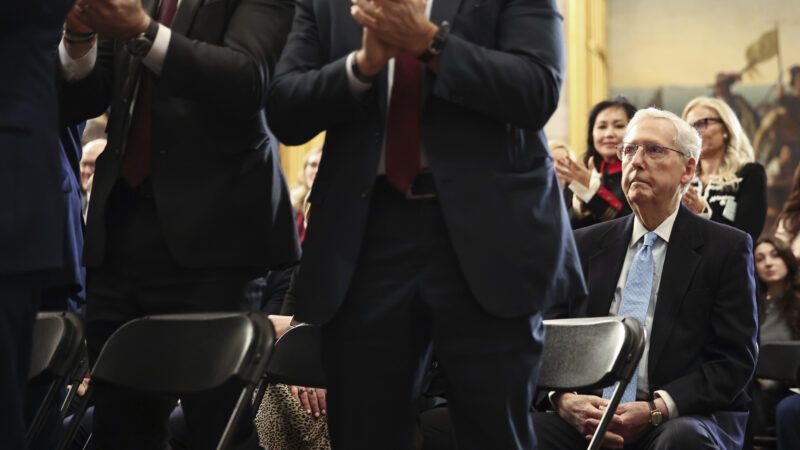 |
| Sen. Mitch McConnell (R-KY) reacts as U.S. President Donald Trump
speaks during inauguration ceremonies in the Rotunda of the U.S. Capitol
on January 20, 2025. |
Sen. Mitch McConnell (R–Ky.) does not seem to trust President Donald Trump's foreign policy judgment. In an interview with the Jewish Insider published on Thursday, he called Trump's recent staff choices "alarming" and warned that the administration should steer clear of officials who "make their Obama and Biden predecessors look tough by comparison."
The next day, Fox News ran an article with the headline "Trump's latest hires and fires rankle Iran hawks as new president suggests nuclear deal." The hawks in question were Mark Levin, a former NeverTrumper who hosts a conservative radio show; Kasra Aarabi, director of research at United Against Nuclear Iran, a hawkish nonprofit chaired by Jeb Bush; and an anonymous "Iran expert" who called Trump's hires "very concerning."
It's not just Trump's hires who have the hawks concerned. In a Wednesday interview, Fox News host Sean Hannity tried to goad Trump into saying that he would bomb Iranian nuclear sites and oil refineries. Instead, Trump responded: "I want them to have a great country. They have great potential. The people are amazing. The only thing I've said about Iran is that they can't have a nuclear weapon….There are ways that you can make it absolutely certain if you make a deal."
Although Trump has postured as both a hawk and a dove at times, his stance towards the Middle East in his first term was aggressively hawkish, almost leading to war with Iran. During the 2024 campaign, Trump signalled more of the same, promising to make Iran broke and help Israel "finish the job" in Gaza. But so far this year, he has secured an Israeli-Palestinian ceasefire and signaled loudly that he wants to resolve America's disputes with Iran.
Along with the deal to free Israeli hostages, Trump adviser Elon Musk also reportedly negotiated for Iran to release an Italian journalist a week before Trump's inauguration.
In the process, Trump has purged many Middle East hawks who served in his first term. A few days before his auguration, Trump mocked "disloyal warmongers" in a social media post. He even revoked the government-issued security detail from former National Security Adviser John Bolton, former Secretary of State Mike Pompeo, and former Special Envoy Brian Hook, who was in charge of Iran.
"Last year, Trump promised he would blow Iran 'to smithereens' if it ever harmed an American presidential candidate. But pulling security away from Americans who need it, in a move seemingly motivated by personal animosity, he leaves America weaker and Tehran emboldened," the editorial board of the hawkish Free Press complained on Friday. "The president calls his whole agenda, 'America First.' This move is just the opposite."
Two staffers at the neoconservative Foundation for Defense of Democracies, which had been highly influential during Trump's first term, made a desperate plea in The Wall Street Journal on Wednesday for Trump to arm Israel for an attack on Iran and prepare U.S. forces for any Iranian retaliation.
"Many in Mr. Trump's America-first movement would probably rather see Iran go nuclear than have the U.S. pre-emptively destroy Iran's nuclear facilities," they wrote, pointing the finger at Vice President J.D. Vance and conservative talk show host Tucker Carlson.
Other Republican hawks have shied away from such a frontal attack on Trump. Instead, they've been claiming that the president is being misled by bad advisers. The pressure campaign has focused on Mike Dimino, the new assistant secretary of defense for the Middle East; Elbridge Colby, awaiting confirmation as undersecretary of defense for policy; and Steven Witkoff, the special envoy who brokered the Israeli-Palestinian ceasefire and is reportedly responsible for talks with Iran.
"It's amazing to me that over twenty years after the Iraq War, its architects and supporters are still—not fully in control of America's foreign policy, but certainly influential in it," Carlson said on a Saturday episode of his show. "And it's shocking to me that two months after Trump's landslide victory, a race in which he ran against the neocons, the neocons are still brazen enough to try and influence and sabotage his nominations."
Much of this pressure campaign has played out in the pages of Jewish Insider, where Republican sources have tried to cast Dimino as an opponent of Israel. In his own interview, McConnell alluded to Dimino without naming him.
Dimino, who served as a CIA officer before working at the libertarian-aligned Defense Priorities Foundation, is certainly not a fan of current U.S. alignments in the Middle East. "If you look at America's experience as the primary security broker in the region…it has not rendered any lasting political, economic, or security benefits in service of U.S. interests or the American people writ large," he said on a February 2024 panel, adding that U.S. troops in Iraq and Syria are "really there to counter Iran and that's really at the behest of the Israelis and the Saudis."
In an October 2023 interview, Dimino warned that "we should steel ourselves against" the risk of U.S. forces getting dragged into Israel's wars, and that "you can't really address any kind of long-term political arrangements in the Gulf or in the Middle East without also addressing" the Palestinian issue.
Fox News' coverage cast Colby, who will be in charge of U.S. military planning for the entire world, as "cut from the same cloth" as Dimino. To be clear, Colby is no anti-establishment dove. He comes from an old national security pedigree—his grandfather, former CIA Director William Colby, was famously described by the beatnik poet Allen Ginsberg as "chief of dirty tricks"—and Colby's overriding concern today is preventing China from dominating Asia. But that concern has also made Colby skeptical of U.S. aid to Ukraine and U.S. military commitments in the Middle East.
"Beijing will not be deterred from attacking Taiwan by actions America takes in Europe or the Middle East. Common sense dictates that it will only be deterred or defeated by the military might made available for Asia," Colby wrote in a July 2023 essay. "Washington needs to hyper-focus on the Western Pacific. It needs to reorient its military and defense industrial base, money, and political capital to urgently strengthen its defenses along the first island chain."
For years, conservatives who support a U.S. drawdown from the Middle East have tried to make common cause with the pro-Israel camp; Vance and Colby have both argued that indirect support to Israel would allow Washington to avoid direct involvement in the region. But the past few months have disproven that theory—and proven Dimino's warnings correct. In addition to funding and arming the Israeli war effort, the U.S. military has had to step in directly several times to shield Israel from Iranian retaliation and the regional spillover of the war.
Witkoff, who is proudly Jewish and ran an explicitly pro-Israel fundraising campaign during the elections, is hard to pidgeonhole as an anti-Israel fanatic. That hasn't stopped some hawks from trying. The anonymous "Iran expert" who spoke to Fox News argued that Dimino and Witkoff are "difficult to detangle, very concerning."
Soon after the November 2024 elections, Insider zeroed in on Witkoff's real estate dealings in Qatar, the oil-rich Arab monarchy that is a rival with Saudi Arabia. Months later, in a Fox News interview about the ceasefire, Witkoff thanked Qatar for its "enormously helpful" role in the talks and promised to visit Gaza in person.
For some hawks, that was confirmation that Witkoff was a Qatari stooge. Britain's Israel Advocacy Movement posted a clip of Witkoff's Fox News appearance, claiming that he has a "serious conflict of interest" with Qatar and questioning whether he can be trusted. Michael Pregent, a former intelligence officer and frequent congressional witness during the first Trump administrated, released a social media video claiming that Witkoff "has been cajoled by Qatar".
Trump, however, seems pretty happy with Witkoff, who is his personal friend from their years in the real estate business. "He's done a fantastic job. He's a great negotiator," the president said at an executive order signing ceremony. "Steve has a wonderful way about him and people like him. And even in this case, both sides like him, and he was able to make a deal. That deal would have never been made without Steve."
Voters are happy, too. A recent Data for Progress poll shows 78 percent of Americans approving of the Israeli-Palestinian ceasefire. Rather than a consequence of wily advisers and palace intrigue, Trump's dovish shift on the Middle East might just be a genuine attempt to fulfill one of the most popular parts of his agenda.
"We will measure our success not only by the battles we win but also by the wars that we end, and perhaps most importantly, the wars we never get into," Trump said during his inaugural address. "My proudest legacy will be that of a peacemaker and unifier. That's what I want to be, a peacemaker and a unifier."
As Israel celebrates the release of seven of the hostages kidnapped on October 7, 2023 and anticipates the release of more over 42 days, every Israeli dreads the consequences of the dangerous price extorted on the Jewish State by Hamas.
For just 33 hostages alone, Israel has agreed to release over 1,900 terrorists, including many murderers, such as Wael Qassem, who is serving 35 life sentences.
READ MORE:
When you’re the president of the United States, you have a lot of freedom to do and say stuff. You can organize photo ops. You can hire Tucker Carlson’s son to be your VP’s comms person. You can sign over 30 executive orders in a single week. But some things are off-limits. You should not, for instance, call up your Office of Management and Budget and ask them to send a sloppy, vague memo ordering all agencies to halt federal financial assistance programs the very next day at 5 PM, all so that you can make sure the math is mathing with your executive orders. If you did that, you’d be recklessly throwing a number of critical, live-saving programs into absolute chaos, and nobody wants that. And yet, dear reader, that’s exactly what President Donald Trump did today.


