EVERY SIGNATURE MATTERS - THIS BILL MUST PASS!

EVERY SIGNATURE MATTERS - THIS BILL MUST PASS!
CLICK - GOAL - 100,000 NEW SIGNATURES! 75,000 SIGNATURES HAVE ALREADY BEEN SUBMITTED TO GOVERNOR CUOMO!

EFF Urges Court to Block Dragnet Subpoenas Targeting Online Commenters

EFF Urges Court to Block Dragnet Subpoenas Targeting Online Commenters
CLICK! For the full motion to quash: http://www.eff.org/files/filenode/hersh_v_cohen/UOJ-motiontoquashmemo.pdf

Thursday, October 13, 2022

The school, which goes by MFU, currently has about 700 full-time students, only about 15% of them Jewish. But thanks to a $22 million government grant awarded in May, the school — which has the capacity to grow enrollment nearly sixfold — is looking to expand and turn into a “major player in Hungarian academia,” said Daniel Bodnar, its president. Chabad bárhová elmegy, bármit megtesz a pénzért, a halachic judaizmus legyen átkozott!


One Does Not Need A Vivid Imagination To Know What Goes On in Budapest’s Chabad-run Milton Friedman University, Where Jews Are Only 15% of The Student Body!
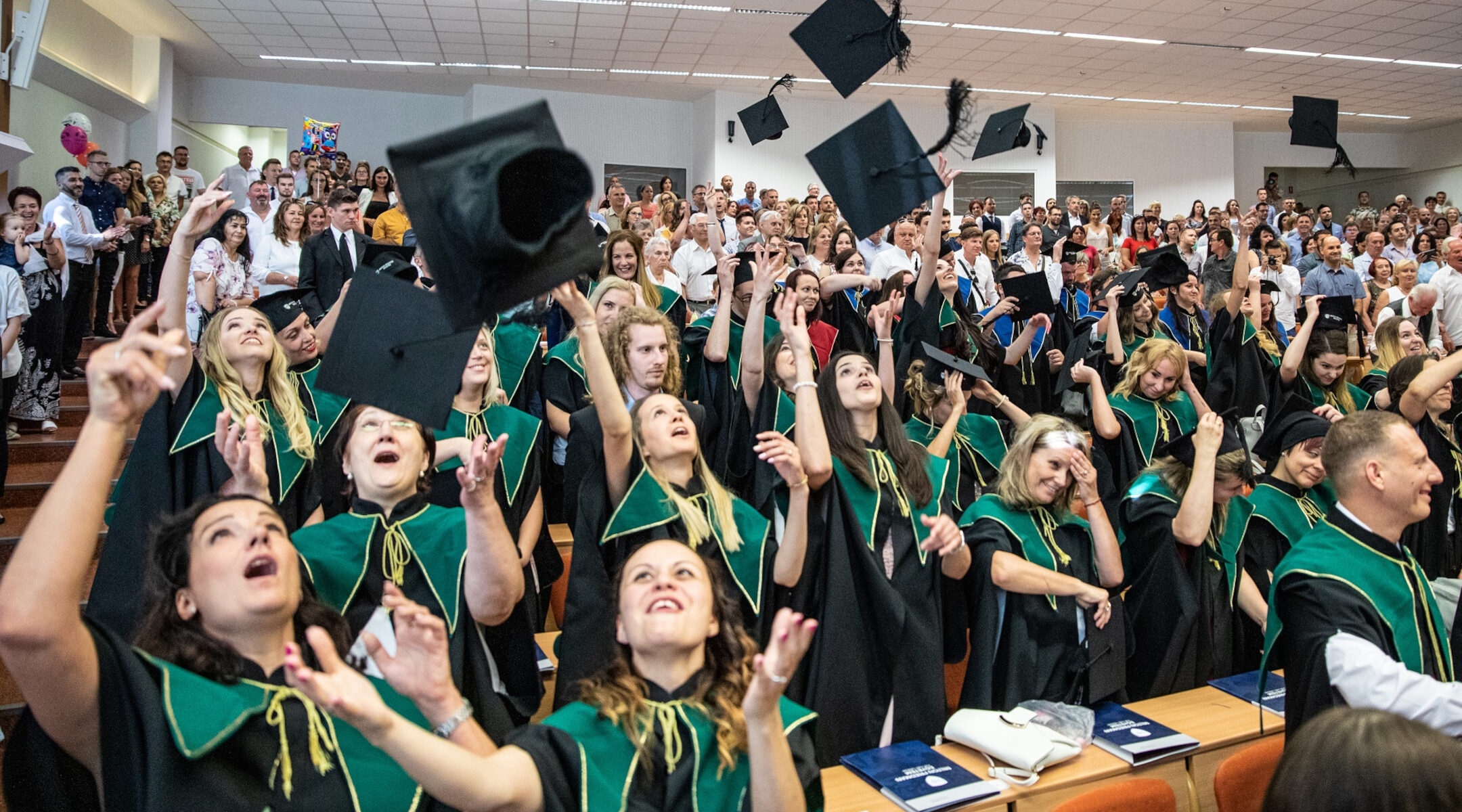


BUDAPEST (JTA) — Still a major hub of Jewish thought and culture, Budapest is home to several imposing Jewish institutions, such as the majestic Dohany Synagogue and the 145-year-old University of Jewish Studies.

But arguably the most ambitious institution of them all is tucked away in a drab suburban university campus on Budapest’s northern edge. There, casually dressed young men and women picnic and smoke on lawns surrounding four buildings adjoined by spacious atriums.

This is Milton Friedman University, named after the influential Jewish American economist whose immigrant parents were from what was then part of Hungary (and now is part of Ukraine). It opened in 2018 under the auspices of EMIH, a Hungarian Jewish group affiliated with the Hasidic Chabad-Lubavitch movement.

The school, which goes by MFU, currently has about 700 full-time students, only about 15% of them Jewish. But thanks to a $22 million government grant awarded in May, the school — which has the capacity to grow enrollment nearly sixfold — is looking to expand and turn into a “major player in Hungarian academia,” said Daniel Bodnar, its president.

Running a secular university is unusual for Chabad, an Orthodox movement whose rabbis do community-building work around the world. The group is famous for its efforts to do outreach to less observant Jews, but like other Jews it does not proselytize to non-Jews. But the university is not a religious institution anyway: Most students study business.

EMIH hopes to expand the number of students in the Jewish studies department, called the Ashkenazium, and, according to a recent report, ultimately open a rabbinical school as well.

“In a country where Jewish community life has been decimated in the Holocaust and during communism, the only way for a Jewish community to be relevant is to promote its beliefs and values ​​through the most open and diverse operation possible,” said Rabbi Slomo Koves, the group’s head.

A view of Milton Friedman University in Budapest, Hungary, January 2019.

EMIH’s detractors say the group is using the university as a strategy to obtain more public funding and clout. “They have no real following in Hungary so they set up shell organizations like MFU, which is not Jewish, and they open up empty synagogues,” charged Zoltan Radnoti, a prominent rabbi from Mazsihisz, the largest Jewish group in Hungary. Mazsihisz is affiliated with Neolog Jewry, a Central European denomination similar to Conservative or Masorti Judaism, and has long had an adversarial relationship with EMIH.

The Chabad-affiliated group, Radnoti charged, “is happy to go along with anything the government says and they get funding in return.”

Koves has rejected these claims, pointing out that Mazsihisz receives far more government funding than EMIH — a fact that Hungarian Deputy Prime Minister Zsolt Semjen confirmed to JTA. The group gets 75% of the government funding for Jewish communities, Semjen said; last year, Mazsihisz inaugurated a new wing in its Jewish Charity Hospital in Budapest, built with a $14 million government grant.

The newly-opened EMIH synagogues — at least five of them have been inaugurated in recent years — are “vibrant and viable,” Koves said. As for the low percentage of Jews at MFU, he said, “just as New York’s Yeshiva University or Mazsihisz’s hospital do not limit their activities to Jews, neither do we.“

The spat, and the university, point to the complicated calculus facing Hungarian Jewish groups right now, as they operate under the leadership of Prime Minister Viktor Orban, a populist who has said he wants to turn Hungary into an “illiberal democracy” and who recently expressed his displeasure of racial mixing.

Mazsihisz has warned that Orban is “encouraging antisemitism” with his ad campaign against George Soros, an American Jewish billionaire who was born in Hungary and funds multiple left-leaning causes, including in Hungary. (Soros moved a university he founded and supported, Central European University, from Budapest to Vienna in 2018 after Orban enacted rules that prevented it from granting degrees.) But Koves has said that there is “nothing antisemitic” in the campaign.

The differences were on display last month, after Orban said that Hungarians “do not want to become peoples of mixed races” and made a joke that appeared to reference Nazi gas chambers in a speech in Romania.

Mazsihisz’s top rabbi, Robert Frolich, called Orban’s remarks “a violation of human dignity and morals.” Koves called them only “unfortunate.”

Koves’ approach reflects the widespread attitude within Chabad that it is appropriate to work with any government that does not put Jews at particular risk. But it reflects the creativity that the 43-year-old rabbi, who has a deep Rolodex as well as a propensity for pulling 16-hour workdays, has employed to turn EMIH from a marginal group into a major force in Hungarian Jewry.

 

Rabbi Slomo Koves, head of EMIH, stands inside the Star of David-shaped elevated corridor


The university was known as King Sisimund College for almost two decades before EMIH bought it in 2018. The classrooms are roomy, but the campus’ age is starting to show. There are two cafeterias, one of which is kosher.

“Most of the budget goes into the students, not the building,” said Adam Gere, a Hungarian-Jewish mathematician who is the college’s CEO.

Situated half an hour’s drive from the center, MFU’s largely residential area boasts some attractions, including a beach on the Danube with multiple bars and restaurants where many MFU students hang out. Most classes are in Hungarian and fewer than 10% of the students are from outside of Hungary.

In the past, many students paid privately for tuition, which can cost a few thousand dollars per academic year, a fraction of what a private university costs in the United States, but still a hefty sum in a country where the average salary is just over $21,000. The new grant is going mostly to reducing the price tag for students, Bodnar said, and this year, for the first time, most students are getting government scholarships.

“Before the funding, MFU was hardly affordable for a significant chunk of the population in Hungary, including many Jews,” Bodnar said about the school, which previously had a $6 million operating budget. “Now it can attract a much broader student population.”

Koves wants that broader population to include more Jews.

“We can do this in two ways: offer Jewish studies, but also simply by making an excellent university with strong economics, communications, business administration and mathematics departments, because that’s where Jewish students traditionally tend to gravitate,” he said.

Mazsihisz also has a university, the Jewish Theological Center, which teaches Jewish studies and social work. It has about 230 students and an annual budget of about $1.5 million, half of which is provided by the government and half by Mazsihisz, according to its vice rector, Gábor Balázs.
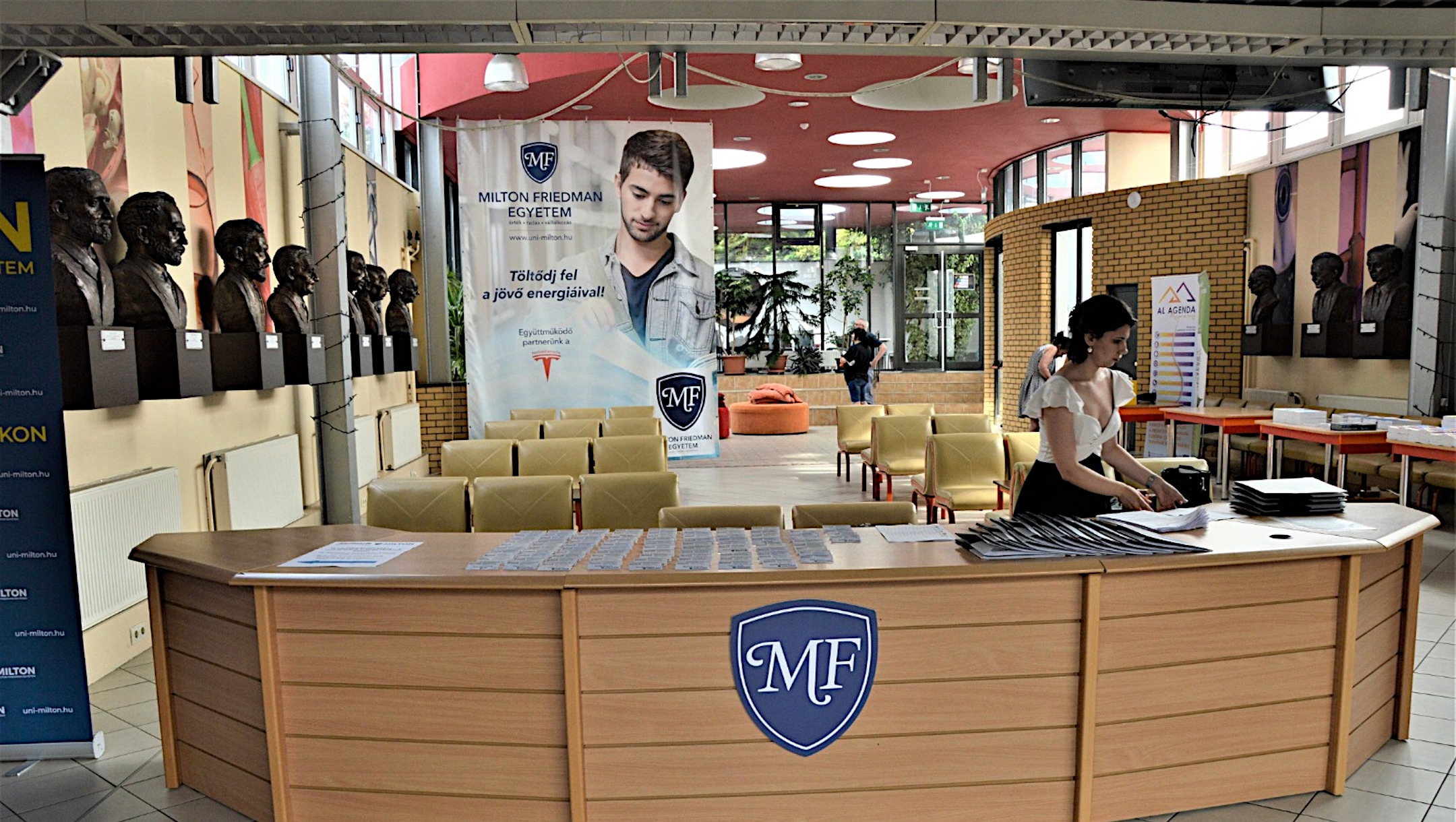
 

Hungary prepares booklets for visitors of the institutions atrium on July 21, 2021

But for Jews in academia, Koves added, there is symbolic meaning to a secular university operated by a Jewish group in Hungary, which in 1920 became the first European country to institute a quota limiting Jewish enrollment.

One Jewish student, Oliver Laczko, 19, said he feels “comfortable” at Milton Friedman University because it’s a Jewish school. But he did not enroll there because of that fact and does not feel the need to study anything Jewish there, he said. Like many Hungarian Jews, one of his parents, his father, is not Jewish. His maternal grandfather is also not Jewish and his mother only learned that her mother is Jewish when Laczko’s mother was 20. “I’m interested in my Jewish heritage, but I’m not very observant,” he said.

Another Jewish student, Geri Buzas, who works in security for the Israeli airline El Al, said MFU feels safe because it’s Jewish.

The Milton Friedman University is “a cool place, it’s a laid back place, the lecturers are very high level,” said Buzas, a 24-year-old who is studying for a bachelor’s degree in international affairs, and does not plan to study any Jewish subjects. “But I think it’s also a safe place for me because in the end I’m a Jewish kid.”


https://www.jta.org/2022/10/12/global/budapests-chabad-run-milton-friedman-university-eyes-a-major-expansion-with-more-jewish-students-a-goal?utm_source=JTA_Maropost&utm_campaign=JTA_Around_the_World&utm_medium=email&mpweb=1161-49450-25499


Wednesday, October 12, 2022

One of the oldest Catholic dioceses in the United States, it has been forced to sell properties to help pay a settlement agreement that resulted from a clergy sex abuse scandal.

 Ye aka Kanye ---“death con 3” on all Jewish people - dem Jews control the money -- and I'm Jewish - all black people are Jews - Jews got a good nose for a deal... Kushner & The Saudis...


Fast fundraising saves Las Vegas Jewish history

The Jewish community of Las Vegas, New Mexico, orchestrated a fundraising effort that allowed it to buy this building, constructed in the 1880s as the first Jewish place of worship in New Mexico Territory, from the Catholic Archdiocese of Santa Fe


It seemed like an impossible dream. Raise $200,000 in just a few weeks to buy back a priceless part of a community’s heritage.

That was the challenge facing the Jewish citizens of Las Vegas, New Mexico, who seized on the opportunity to purchase a building constructed in Las Vegas in the 1880s to serve as the first Jewish place of worship in New Mexico Territory.

The synagogue, Temple Montefiore, was sold to the Archdiocese of Santa Fe in the 1950s when the number of Las Vegas Jewish residents had dwindled to very few. But recently, the archdiocese put the building up for sale, and the Jewish community, which experienced a resurgence in the 1990s, responded by setting up a GoFundMe account and appealing for donations throughout the country.

Amazingly, within a month, the community raised considerably more than $300,000, enough to purchase the old synagogue building and an adjacent parcel of land with a house on it that the archdiocese was also selling.

“I’m happy and excited,” said Diana Presser, a board member of the Las Vegas Jewish Community, her words tumbling over each other in an ecstatic rush during a phone interview. “Twenty years of longing for something and then having it presented to you. God works in mysterious ways.”

‘Totally thankful’

The purchase was made the last week in September during the celebration of Rosh Hashana, the Jewish new year.

“We are always excited to have a new year, but this year there was a palpable sense of excitement because we were finally in reach of purchasing the building,” Presser said. “I led the services for the first Sabbath of the new year in a building we now own.”

A plaque recognizes the significance of the building at 901 Eighth St. in Las Vegas, New Mexico. The city’s Jewish community recently purchased back the old synagogue from the Archdiocese of Santa Fe.

Lewis Terr, an Albuquerque attorney with Las Vegas roots and president of the Montefiore Cemetery Association, played a vital role in closing the sale.

“Everyone is just totally thankful for the outpouring of support from a grassroots level and the generosity of private donors,” Terr said. “I am not easily moved, but it is quite remarkable that we were able to raise that amount of money in less than a month. Once people knew about it, they just wanted to contribute.”

Larry Ilfeld works for an Albuquerque commercial real estate company and is the great-nephew of Charles Ilfeld, an influential Jewish merchant who settled in Las Vegas just after the Civil War. He learned about the effort to purchase the synagogue in a Journal article.

“I have a pretty extensive family,” he said. “A lot of them are from New Mexico, but they don’t all live here now. Some live in Wyoming or California. I got in touch with them, and a lot of the family donated.”

Zelda McCrossen, treasurer of the Las Vegas Jewish Community, said donations came in from all over the country and from outside the country as well.

A dream come true

The synagogue was built on Douglas Avenue in Las Vegas, but was moved in 1922 to its present location at 901 Eighth St. In recent years, it has served as a Newman Center chapel, a place of worship and community for Catholic college students. The archdiocese put it up for sale to pay a small portion of a multi-million dollar settlement with victims of clerical sexual abuse. The deadline for the purchase was the end of September.

Originally, the Jewish community’s plan had been to raise $200,000 to buy only the old synagogue building.

“But the synagogue is on a parcel of land with (another) building on it,” Terr said. “We had to buy the whole thing.”

Presser said that pushed the price tag to $352,000, but the fundraising campaign took in the asking cost and more.

“We had a bunch of money left over,” she said. The surplus will be used to make improvements to the temple.

“We are getting a toilet that works, and the stucco needs work,” Presser said. “The house next door will be a museum of some kind.

“It was a dream and at long last it has come true.”


https://www.abqjournal.com/2539073/fast-fundraising-saves-las-vegas-jewish-history.html


Friday, October 07, 2022

The first is that being religious, or living in a religious community, does not afford one or one’s children protection from predators. The data point to the opposite – that religious children are at greater risk!


It is time for all sectors in Israel & the USA to combat sexual abuse!

Children are in danger. It is time to act now. 


Living in a religious community does not afford one or one’s children protection from predators. All sectors of Israeli society need to address and combat sexual abuse.

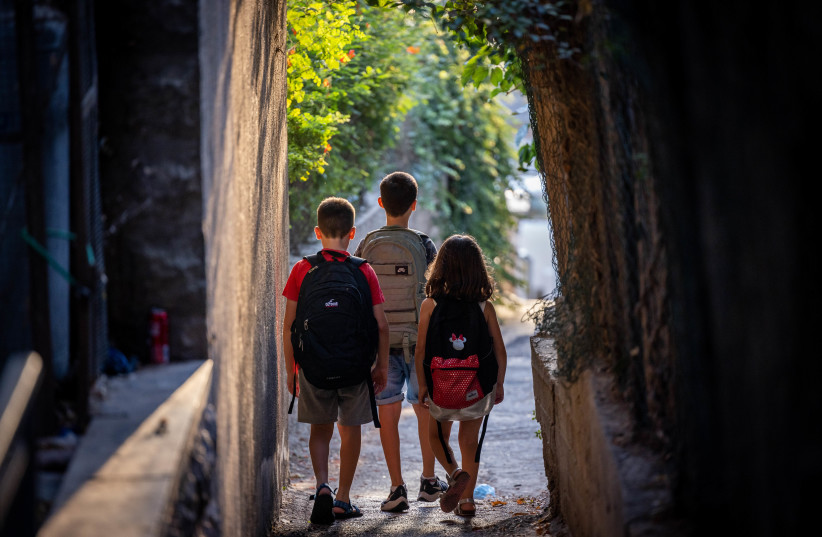
Israeli kids wearing school bags. (photo credit: YONATAN SINDEL/FLASH90)

It’s a truth most people realize: no community is immune to sexual abuse.

Sexual abuse of children happens in the haredi (ultra-Orthodox) community, in the religious-Zionist community, in the secular community and in the Arab community. It happens in wealthy communities and in poor ones; among immigrants and native-born Israelis.It is a plague that, sadly, is universal.


What some may find surprising about a study published this week dealing with sexual abuse in the three streams of education for Jewish youth – the secular public schools, religious-Zionist schools and haredi schools – is that the highest number of students being treated by the country’s social services come from the religious-Zionist and haredi school systems.

Why should this be surprising? Because some have long assumed that children are more protected in a religious environment. However, a study carried out by the religious-Zionist Torah Va’avodah movement based on data from 2020 demonstrates that this assumption is false.

What did the study find?

According to the study, although students from preschool through 12th grade in the country’s religious-Zionist or haredi frameworks account for 45% of the country’s Jewish students, 63% of the victims of sexual abuse being treated by social welfare departments around the country come from those schools. For every 1,000 students in the religious-Zionist stream, 2.39 were treated by the welfare services as a result of sexual abuse, compared with 1.98 in the haredi stream and 1.04 in the secular school system.

The data further shows that while in the non-religious schools 69% of those treated for sexual abuse were girls, in the religious-Zionist schools, boys accounted for 48% of the victims, and for 53% of the victims among the haredim. Interestingly, the figures show that in the religious-Zionist stream, the number remains the same regardless of whether boys and girls are studying separately or in the same classes.

The study also found that there are more reports of sexual abuse in small, homogeneous communities, something true both in the secular and religious worlds. One reason often given for this is that in many cases the abuser is a relative or friend who often feels that in a small, tight-knit community they will be more “protected,” since if their crimes come to light there will be a greater reluctance among the community to turn in someone they know and “one of their own” into the authorities.

As troubling as the data are – and it is troubling indeed – there is one silver lining: people in religious communities are stepping forward and, despite fear and the stigmas attached, are reporting sexual abuse more so than in the past. There is less of a tendency now to deny the problem or to try to sweep it under the rug.

The curtain of silence that for years was draped around this issue in religious communities is being drawn open, and – as is true with so many other issues – shedding light on a problem is an important step toward solving it.

Hard truths

These statistics reveal a couple of hard truths.

The first is that being religious, or living in a religious community, does not afford one or one’s children protection from predators. The data point to the opposite – that religious children are at greater risk.

This realization is important because if parents feel that the community or neighborhood where they live provides their children automatic protection, then they may not feel a need to educate their children about sexuality or warn them of the dangers of sexual predators.

Second, there needs to be more sex education in religious schools. Too often the subject, because it is considered “immodest,” is not discussed.

*זה לא עניין פשוט*

This need not be the case and can be dealt with within the framework of Halacha. A healthier, more open attitude toward sex education in religious communities needs to be promoted, because where sexuality is repressed and not discussed, it has a tendency from time to time to find expression in the most unsavory ways.

This study needs to serve as a wake-up call for the religious-Zionist and haredi school systems. 

Children are in danger. It is time to act now.

https://www.jpost.com/opinion/article-718977

Thursday, October 06, 2022

The study found that abuse rates were higher among both male and female students in state-religious and in ultra-Orthodox, or Haredi, schools. However, male students in those religious frameworks experienced far higher rates of abuse — more than three times higher — than their secular counterparts.


Religious students report sexual abuse at twice rate of secular school peers – study


Report by liberal Orthodox group, based on Welfare Ministry data, finds those who attend state-religious and Haredi schools are much more likely to experience sexual assault


Illustrative: Israeli students seen on the first day of school at a school in Jerusalem, on September 1, 2022. (Olivier Fitoussi/Flash90)
 Israeli students seen on the first day of school at a school in Jerusalem
 

Students who attend religious schools are more than twice as likely to have reported being sexually abused than those in secular public schools, according to a dramatic report from a liberal Orthodox organization released Sunday, based on Welfare Ministry data.

Out of every 1,000 students in the secular state school system, 1.04 were receiving treatment of some kind from the Welfare Ministry after having been sexually abused. In the ultra-Orthodox system, that number was nearly double — 1.98 — and in the state-run religious school system it was more than twice as high at 2.39, according to the study by the Ne’emanei Torah Va’Avodah Movement, a progressive religious rights group.

Shmuel Shattach, the head of Ne’emanei Torah Va’Avodah, said the study showed that separating classes by gender, as is done in ultra-Orthodox schools and many state religious schools, does not necessarily make any difference in cutting down on sexual abuse of children.

“People say, let’s gender-separate schools and we’ll be safer. In mixed schools, there’s definitely abuse. That’s something that people would always tell me. So we checked it,” he said.

The figures used in the report were gleaned from the Central Bureau of Statistics, which gathered them from reports from municipal social services offices that were collected by the Welfare Ministry. The figures only noted what type of school the victims attended, meaning the abuse did not necessarily occur within the schools.

These figures only comprise reported cases of sexual abuse. Unreported cases are not included nor are they estimated. According to Shattach, the actual numbers are likely even higher as Israel’s religious community typically underreports abuse cases.

“None of the experts we consulted with for this study were surprised by the results. None of them said, ‘No, your numbers must be wrong.’ Every professional who deals with this issue said that the figures we found generally reflected reality,” Shattach said.


Shmuel Shattach, head of Ne’emanei Torah Ve’Avodah Movement
 

The study found that abuse rates were higher among both male and female students in state-religious and in ultra-Orthodox, or Haredi, schools. However, male students in those religious frameworks experienced far higher rates of abuse — more than three times higher — than their secular counterparts. According to the figures, 0.61 male students in secular schools out of every 1,000 were being treated after having been sexually abused, while in Haredi schools it was 2.07 and in national-religious schools it was 2.3.

The data did not break down abuse rates by individual school but rather according to school type, which limited Shattach’s ability to draw wider conclusions about abuse rates of coed schools compared to gender-segregated schools, since not all religious schools separate by gender.

“I can’t prove definitively that mixed settings are better, but I can absolutely prove that gender segregation doesn’t help,” he said.

Shattach — who drew a clear distinction between the findings, based on unequivocal data, and his analysis of it, which reflects his and his organization’s views — offered a number of explanations for why there might be higher rates of abuse among students who attend religious schools.

He noted that gender-separated state religious schools have a higher number of male teachers, who are statistically more likely to commit sexual abuse than female teachers.

The teachers in state religious schools are also typically not as well trained or supervised as in secular schools, according to multiple state comptroller reports.

Many of the towns with the highest rates of reported sexual abuse were West Bank settlements, which generally lack the same level of government oversight as municipalities in Israel proper.

Shattach, who advocates for coed schools, said gender-segregated schools also instill a false sense of security among parents and typically do not have strong sex education programs, though he said they had made notable and laudable improvements on the latter front.

“In a mixed society, we don’t have a false sense of security. We are constantly on top of our kids. ‘Where are you going? Who are you with? Who are your friends?’ We also talk about [sexual abuse], there are conversations about it. What constitutes abuse? Kids have the terminology to understand the issue, to understand what’s right and what’s wrong,” Shattach said.


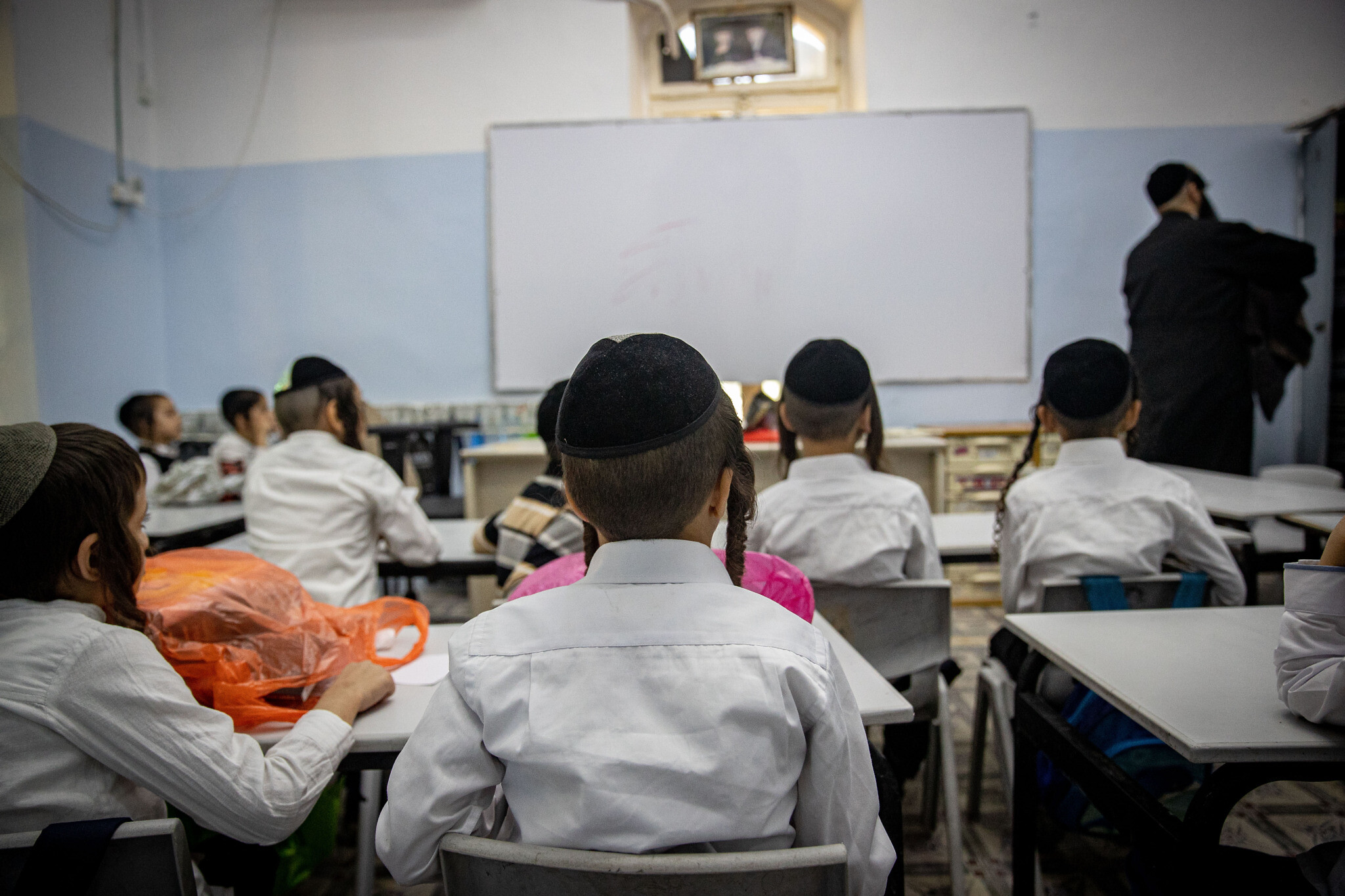
Ultra-orthodox Jewish children at a school founded by Rabbi Shmuel Stern in Jerusalem
 

“In gender-segregated societies, there’s that false sense of security. Parents think, ‘OK, it’s just boys,'” he said. “There’s generally less attention paid to it. So the kids don’t have that terminology. A boy who grew up in that educational system, even if he were to see something happen, he wouldn’t be able to connect it to anything.”

He said his organization’s support for coed study partially stemmed from a desire to force adults to teach children about the complexities of the world.

If you place children in a bubble “they don’t have that exposure,” he said.

Shattach surmised that family structures among the religious, who tend to have more children than their secular counterparts, could also be a contributing factor to the higher rates of abuse.

“When you have large families, practically it’s more difficult to have control over what goes on,” he said. “When you have three kids, you can track where they all are. When you have 10, it’s more difficult.”


https://www.timesofisrael.com/religious-students-report-sexual-abuse-at-twice-rate-of-secular-school-peers-study/

Monday, October 03, 2022

Let’s think for a moment about English “forgive.” There are cases of “forgive and forget,” when the wrong is truly erased, but there are many cases where something is forgiven for now, but not totally forgotten, to say nothing of cases where something is forgiven, but the damage is already done and cannot be totally undone.


How Much Forgiveness Can We Expect From God?


How Much Forgiveness Can We Expect From God?

" It is not always reasonable to ask for complete forgiveness, for sins to be totally scoured away. Confession of sin, even of the most sincere type, does not automatically imply full and complete forgiveness. Some sins have lasting consequences, and the most we can hope for is that the consequences be mitigated through divine compassion."


Although the noun teshuvah is never found in the Bible in the sense of repentance, personal and communal teshuvah is very much part of biblical theology, and is often expressed through the root shuv “to (re)turn,” the basis of the word teshuvah.  Teshuvah  is not, however, emphasized in the few biblical texts that deal with Yom Kippur. The longest such text, Leviticus 16, outlining the detailed Tabernacle (mishkan) and later Temple rites connected with Yom Kippur, notes (v. 30):

כִּי בַיּוֹם הַזֶּה יְכַפֵּר עֲלֵיכֶם לְטַהֵר אֶתְכֶם מִכֹּל חַטֹּאתֵיכֶם לִפְנֵי יְ-הוָה תִּטְהָרוּ
For on this day atonement shall be made for you to cleanse you of all your sins; you shall be clean before the Lord.

Nevertheless, the chapter suggests that this is accomplished via a complex set of rituals, not via teshuvah.

V. 21 of that chapter mentions a confession—“and confess over it all the iniquities and transgressions of the Israelites, whatever their sins (וְהִתְוַדָּה עָלָיו אֶת כָּל עֲוֹנֹת בְּנֵי יִשְׂרָאֵל וְאֶת כָּל פִּשְׁעֵיהֶם לְכָל חַטֹּאתָם)”—but it is Aaron, not the individual Israelite, who confesses. Only once the Temple was destroyed did Yom Kippur as we know it develop, with its emphasis on personal, individual repentance. It has become the day that culminates a period of deep introspection about our relationship with God, that is supposed to be preceded by a period in which we ask individuals that we have wronged to forgive us (see Maimonides, Hilchot Teshuva 2:9).

But what does it mean for God to forgive? Asked differently, when we interrupt the longer acrostic viddui (confession) on Yom Kippur to say, ועל כלם אלו-ה הסליחות סלח לנו מחל לנו כפר לנו, “for all of these sins, O God of forgiveness, forgive us, pardon us, grant us atonement,” for what are we asking? Are these three imperatives (isn’t it remarkable that we command God!) simply synonyms, and we are piling up synonyms because we really want to be forgiven? Or, at least in their classical usages, are there differences between these verbs?

The Meaning of Forgiveness

Let’s think for a moment about English “forgive.” There are cases of “forgive and forget,” when the wrong is truly erased, but there are many cases where something is forgiven for now, but not totally forgotten, to say nothing of cases where something is forgiven, but the damage is already done and cannot be totally undone.

 What type of forgiveness are we asking of God on Yom Kippur? Are we asking for our sins and their consequential punishment to be erased, for total forgiveness in lieu of punishment? Or are we asking “only” for our deserved punishment to be mitigated or moderated?

I think of such issues in terms of what the roots מחל, סלח, and כפר mean in classical Hebrew. Two central guides of a word’s meaning in the Bible are etymology and context. Interpretation based on etymology—how a word is related to similar words in other ancient languages—was already practiced by medieval Jewish commentators who used the two other Semitic languages they knew, Aramaic and Arabic, to elucidate the Bible. We now know many more Semitic languages, and often the meaning of a word in Ugaritic, a language close to Hebrew, spoken in Syria in the late second millennium, or Akkadian (the language of Hammurabi and the Gilgamesh Epic), a more distant relative to Hebrew, spoken in Mesopotamia for several millennia, clarifies an obscure biblical word or sheds light on a better-known word.

Term 1 – סלח

In several Semitic languages, the root “s-l-ḥ” is related to words concerning stripping off or sprinkling, actions that lend themselves well to removal of sin. But what happens when sin is stripped off or sprinkled away from a person? Does it disappear, or is it just moved elsewhere? As is often the case, the biblical answer is “yes”—some contexts suggest total removal, while others, displacement.

For example, Jeremiah 50:20 notes:

בַּיָּמִים הָהֵם וּבָעֵת הַהִיא נְאֻם יְ-הוָה יְבֻקַּשׁ אֶת עֲוֹן יִשְׂרָאֵל וְאֵינֶנּוּ וְאֶת חַטֹּאת יְהוּדָה וְלֹא תִמָּצֶאינָה כִּי אֶסְלַח לַאֲשֶׁר אַשְׁאִיר
In those days and at that time — declares the Lord — the iniquity of Israel shall be sought, and there shall be none; the sins of Judah, and none shall be found; for I will pardon those I allow to survive.”

In Jeremiah’s ideal future, the sin totally disappears.  But that is not always the case.  After the sin of the spies in Numbers, Moses asks God (Numbers 14:19-20):

סְלַח נָא לַעֲוֹן הָעָם הַזֶּה כְּגֹדֶל חַסְדֶּךָ וְכַאֲשֶׁר נָשָׂאתָה לָעָם הַזֶּה מִמִּצְרַיִם וְעַד הֵנָּה׃ וַיֹּאמֶר יְ-הוָה סָלַחְתִּי כִּדְבָרֶךָ׃
Pardon, I pray, the iniquity of this people according to Your great kindness, as You have forgiven this people ever since Egypt. And the Lord said, ‘I pardon, as you have asked.’

Indeed, the latter verse appears in the selichot prayers, as a precedent for God forgiving us. However, this forgiveness is unlike that of Jeremiah; as the following verses make clear, the sin is in some sense forgiven—the entire nation is not destroyed, but the sin is not erased, but “dispersed” (like water) among the elder generation, who had seen (v. 22), “My Presence and the signs that I have performed in Egypt and in the wilderness (אֶת כְּבֹדִי וְאֶת אֹתֹתַי אֲשֶׁר עָשִׂיתִי בְמִצְרַיִם וּבַמִּדְבָּר)”—they will all be punished. Thus, s-l- need not imply total forgiveness.

The Bible elsewhere offers a sense that sins must be redressed, and a blanket erasure is not possible.  One of the clearest examples of this is in the final chapter of Samuel. David counts the population; he realizes that he has sinned by organizing a census (more on what is wrong with censuses on another occasion), and confesses his guilt (2 Samuel 24:10):

וַיַּךְ לֵב דָּוִד אֹתוֹ אַחֲרֵי כֵן סָפַר אֶת הָעָם. וַיֹּאמֶר דָּוִד אֶל יְ-הוָה חָטָאתִי מְאֹד אֲשֶׁר עָשִׂיתִי וְעַתָּה יְ-הוָה הַעֲבֶר נָא אֶת עֲוֹן עַבְדְּךָ כִּי נִסְכַּלְתִּי מְאֹד׃
But afterward David reproached himself for having numbered the people. And David said to the Lord, ‘I have sinned grievously in what I have done. Please, O Lord, remit the guilt of Your servant, for I have acted foolishly.’

The word translated as “remit” is הַעֲבֶר, which really means “transfer,” and that is exactly what the rest of the chapter deals with. The prophet Gad gives David three choices:

הֲתָבוֹא לְךָ שֶׁבַע שָׁנִים רָעָב בְּאַרְצֶךָ אִם שְׁלֹשָׁה חֳדָשִׁים נֻסְךָ לִפְנֵי צָרֶיךָ וְהוּא רֹדְפֶךָ וְאִם הֱיוֹת שְׁלֹשֶׁת יָמִים דֶּבֶר בְּאַרְצֶךָ
Shall a seven-year famine come upon you in the land, or shall you be in flight from your adversaries for three months while they pursue you, or shall there be three days of pestilence in your land?

David may avoid personal punishment for the sin he initiated, but the sin must be punished, and he must choose between three equivalent punishments that will befall others. David realizes (of his own initiative!) that he is wrong, and confesses, and his confession is heard and heeded, but punishment is not averted. We usually do not think of sincere, successful teshuvah in those terms.

Term 2 – מחל

The root “m--l” is post-biblical; it can mean “forgive,” and is used with both  people and God as its subject, but it also means “to remit or cancel a debt.” Thus, we may ask forgiveness for sin just as we may ask a bank to forgive a loan. As the biblical scholar, Gary Anderson, has noted in his wonderful book Sin: A History, the image of sin as a debt developed only in the rabbinic period, supplementing the common biblical image of sin as a weight or burden, which might be removed.

See, for example, Genesis 50:17 where the brothers plead with Joseph שָׂא נָא פֶּשַׁע אַחֶיךָ, Forgive [literally “lift”], I urge you, the offense… of your brothers”. See also the case of David in 2 Samuel 24, discussed above, where the sin is transferred to other people, as well as 2 Samuel 12:13-18, when David’s capital punishment for adultery with Bathsheba is meted upon their newborn son.

Term 3 – כפר

The final verb, “k-p-r”, is often not connected to atonement as we understand it. The root is closely related in meaning to its Akkadian cognate, which can mean “to cleanse ritually,” and that is precisely its main use in Leviticus 16, where it is used in reference to various objects, as in v. 16:

וְכִפֶּר עַל הַקֹּדֶשׁ מִטֻּמְאֹת בְּנֵי יִשְׂרָאֵל וּמִפִּשְׁעֵיהֶם לְכָל חַטֹּאתָם וְכֵן יַעֲשֶׂה לְאֹהֶל מוֹעֵד הַשֹּׁכֵן אִתָּם בְּתוֹךְ טֻמְאֹתָם׃
Thus he [Aaron, the high priest] shall purge the Shrine of the uncleanness and transgression of the Israelites, whatever their sins; and he shall do the same for the Tent of Meeting, which abides with them in the midst of their uncleanness.

On the basis of this context, Yom Kippur has sometimes been called “the Day of Purgation,” related to the notion that certain types of sins make the tabernacle (mishkan) or Temple ritually polluted (טמא), and they need to be removed by what the late Jacob Milgrom called “ritual detergent”—blood of the chatat sacrifice.  (That sacrifice is better rendered “purification offering,” not “sin offering.”)

Thus, the primary meaning of k-p-r has little to do with forgiving sins; it is connected to the ritual decontamination of a holy place. The importance of this decontamination, however, cannot be overestimated, since according to this conception God will only reside with Israel if God’s physical house is in order.

The non-Temple related meaning of k-p-r, as “to forgive,” is also found in the Bible, and once the Temple was destroyed, “to forgive” rather than “to purge” became the main sense of the word, and so for us, living in a non-Temple world, Yom Kippur evokes a day of forgiveness, and not a day or Temple cleansing and purgation.  (The importance of purgation remains through the vivid, detailed reenactment of the Temple cleansing ritual in the avodah section of the Yom Kippur musaf service.)

The formula ועל כלם אלוה הסליחות סלח לנו מחל לנו כפר לנו  does not exhaust the classical Hebrew terminology for forgiveness.  Micah 7:18, used in the tashlich ceremony, introduces another conception:

Term 4 – עבר

The formula ועל כלם אלוה הסליחות סלח לנו מחל לנו כפר לנו does not exhaust the classical Hebrew terminology for forgiveness. Micah 7:18, used in the tashlich ceremony, introduces another conception:

מִי אֵ-ל כָּמוֹךָ נֹשֵׂא עָוֹן וְעֹבֵר עַל פֶּשַׁע לִשְׁאֵרִית נַחֲלָתוֹ
Who is a God like You, Forgiving [literally ‘lifting up’] iniquity and remitting [literally ‘passing over’] transgression.”

Sins can remain, but can be passed over—root “῾-b-r”—by God. I assume that this conception allows God to return to them and punish the sinner at some later point.

Term 5 – מחה

A still different, more comforting idea is found in the Bible with the verb root m-ḥ-h, “to wipe clean” (of a dish in 2 Kings 21:13) or “annihilate” (e.g. concerning Amalek, in Exodus 17:14). This term is used of sins, for example, in Isaiah 43:25:

אָנֹכִי אָנֹכִי הוּא מֹחֶה פְשָׁעֶיךָ לְמַעֲנִי וְחַטֹּאתֶיךָ לֹא אֶזְכֹּר:
It is I, I who — for My own sake — Wipe your transgressions away And remember your sins no more.

Of all the terms we have looked at, only here does the sin totally disappear, obviating any need for punishment.

Conclusion

The prayer after the amidah for Yom Kippur requests:

ומה שׁחטאתי לפניך מרק (או מחק) ברחמיך הרבים, אבל לא על ידי יסורים וחלים רעים
and concerning the sins I have committed before you, scour them in Your great compassion, but not through chastisement and severe illness.

The above survey of biblical forgiveness clarifies this request: It is not always reasonable to ask for complete forgiveness, for sins to be totally scoured away. Confession of sin, even of the most sincere type, does not automatically imply full and complete forgiveness. Some sins have lasting consequences, and the most we can hope for is that the consequences be mitigated through divine compassion.

https://www.thetorah.com/article/how-much-forgiveness-can-we-expect-from-god

Sunday, October 02, 2022

“EVENING OF ENTERTAINMENT”: In New Letter, Rabbonim Come Out Against “Musical Selichos”


THIS IS WHAT HAPPENS WHEN A 96 YEAR OLD RABBI IS LOCKED IN A ROOM IN ISRAEL AND FED INFORMATION THROUGH THE PEEP HOLE!

Science brings hope!


As families confront the tragedy of Tay Sachs, scientific advances in screening make a big difference


Before genetic screening was available, 40 to 50 babies with Tay Sachs were born in the United States every year. Most of them were born to Ashkenazi Jewish families, because about 1 in 30 Ashkenazi Jews are carriers of the Tay Sachs disease variant — that is about 10 times the rate found in the general population. A baby born with Tay Sachs appears healthy at birth, then begins a rapid decline, losing critical functions in the first few years and typically dying by the age of 4 or 5.

In a 2013 paper published in Human Genetics, geneticists Harry Ostrer and Karl Skorecki reported that more recently, due to the availability of genetic testing, approximately four to five cases of Tay Sachs disease occur in the United States annually. That’s a 10-fold decline.

This decline was a major victory, a testament to the success of genetic screening for that specific disease. The significant decline in Tay Sachs cases is due to awareness, education, and screening of Jewish singles and couples to identify carriers — people who have a single copy of the Tay Sachs gene. When two such carriers conceive a child, there is a 25% chance that their child will inherit two copies of the disease gene and suffer from that fatal neurological disorder. Screening and identification of carriers empowers couples, helping them avoid the heartbreak of losing a child, and giving them the opportunity to have healthy children.

Although the number of Tay Sachs babies born today is small, we might ask why Tay Sachs babies still are being born at all. That is because screening for a recessive gene, such as the Tay Sachs variant, does not eliminate it from the population. Recessive genes still are passed from generation to generation, and carriers abound. Anyone who is a carrier can pass the silent recessive gene to an unsuspecting descendant, with potential to be expressed in the future.

Tay Sachs is just one of dozens of known genetic diseases that occur in higher incidence in the Jewish community. It is estimated that one in three Jews carries a recessive gene for some genetic disease. For genetic screening to work, it must be done universally, in every generation, now and for the foreseeable future.

JScreen is an organization that addresses the need for testing; it offers a screening program that is comprehensive, affordable, and available throughout the United States. Its program fills a void – a need for reliable and accessible genetic screening throughout the country. JScreen sends out kits for collecting saliva; recipients mail them back. It also offers genetic counseling services that are available remotely, using such services as Telehealth.

JScreen’s executive director, Karen Grinzaid, has been a genetic counselor for more than 30 years. She said that the department of human genetics at Emory University’s medical school launched the JScreen program in 2013.

“There are two genetic testing panels, one for reproductive purposes, which tests for Tay Sachs, cystic fibrosis and other disease genes, and a separate panel of cancer susceptibility genes,” she said. The ReproGEN panel tests for more than 200 genes and the cancer panel now tests for 63 different genes, including those that show a hereditary risk for breast, ovarian, pancreatic, colon, skin and urinary tract cancers. Young people typically choose the reproductive panel, but some who are at higher risk for cancer also will screen with the cancer panel.

While genetic screening can flag genes of concern, the process is not perfect. Some cases of Tay Sachs disease have occurred because of human error, the result of mistakes in choosing tests and interpreting the results. JScreen’s testing program includes the services of a genetic counselor, whose assistance can reduce the incidence of errors. That is a critical component of a successful program since genetic counselors are experts who review, explain, and advise participants every step of the way. Genetic counseling helps to ensure that the correct tests are used, the reports and interpretations are accurate, and that options and choices are explained to the patients. The JScreen testing program also continues to update the repertoire of tests, staying current as new screenings become available.

Here are three stories about the experiences of families with Tay Sachs. Two are tragic, and one has a happy ending.

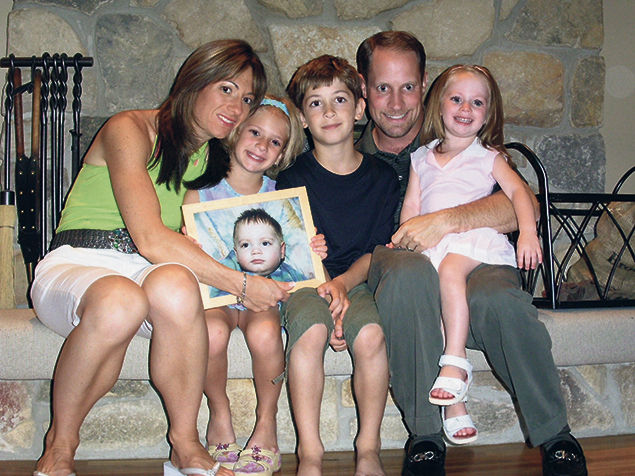
Shari and Jeffrey Ungerleider and their younger children hold a picture of Evan, who died of Tay Sachs.
 

Shari and Jeffrey Ungerleider

Shari and Jeffrey Ungerleider of Wayne had a child who was born with Tay Sachs disease 28 years ago. As a result of that experience, Ms. Ungerleider is a strong advocate for JScreen.

“Evan was born August ‘94,” she said. “We thought he was born healthy and normal. I was tested for Tay Sachs and the doctor said, ‘You are not a carrier.’”

But “at 6 months old we noticed he wasn’t progressing,” she continued. “At 10 months the pediatrician recommended we see a pediatric neurologist.”

The doctors they consulted continued to test young Evan, trying to determine why he continued to regress.

“All the doctors we saw asked if we were tested for Tay Sachs, and when I said that I was, it was ruled out. At 13 months old, the pediatric ophthalmologist noticed the cherry red spot on the retina. ‘I know what that means. It means Tay Sachs,’ the neurologist said.

“This was the missing link to the puzzle,” Ms. Ungerleider said. The ob/gyn who initially tested the Ungerleiders looked at the records again and told them, “I misread your test. You are, in fact, a carrier of Tay Sachs.”

The saga of Evan’s short life included severe difficulties eating and swallowing; he needed a feeding tube. “He had seizures, bad respiratory problems, needed suction machines, physical therapy, respiratory therapy,” Ms. Ungerleider said. “He became blind and deaf, and he had to have full-time nursing care. He lived to almost 4 1/2 years old.”

The Ungerleiders have three other healthy children, who are now 25, 22, and 19 years old. “We chose to get pregnant naturally and get CVS testing,” Ms. Ungerleider said. CVS, or chorionic villus screening, is used to test the fetus for specific genetic sequences early in the pregnancy. One of Ms. Ungerleider’s pregnancies tested positive for Tay Sachs, and the couple chose to terminate it.

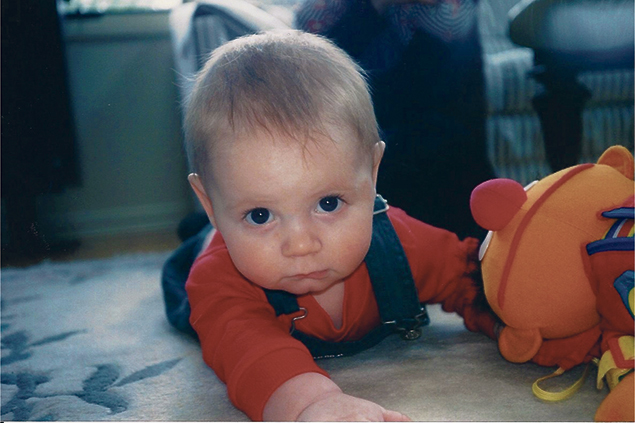
Evan, at 10 months.
 

“Evan’s short life impacted all of us,” she said. “We had two goals: We made a lifetime of memories [of Evan] in a few short years, and we wanted to educate people on the importance that genetic testing of couples be done with genetic counseling.

“For the last 25 years I’ve been trying to educate people to get tested before they get pregnant. But mistakes still can be made. It still happens.”

Ms. Ungerleider was frustrated that although she spread the word about the need for screening, at the time “we did not have the appropriate resources. JScreen has been the best thing that could have happened in carrier screening. Now anyone can access it, and it’s so much more accessible and affordable.”

She recalled that they did screening in person, and as more genes were added to the panel, the costs became prohibitive. In the JScreen program the reproductive panel costs $149, and the cancer panel costs $199. “They’re a nonprofit,” she said. “They won’t let anyone walk away if they can’t afford it.”

Current recommendations are that everyone should have carrier screening. “Because carriers are healthy individuals, you don’t know [if you are a carrier] until you are tested or someone with the disease is born into the family,” Ms. Ungerleider said. “It’s important to have an organization like JScreen that can reach everyone in this country so they can be screened and educated. The counselors can also emphasize the importance of sharing [results] with other family members.”

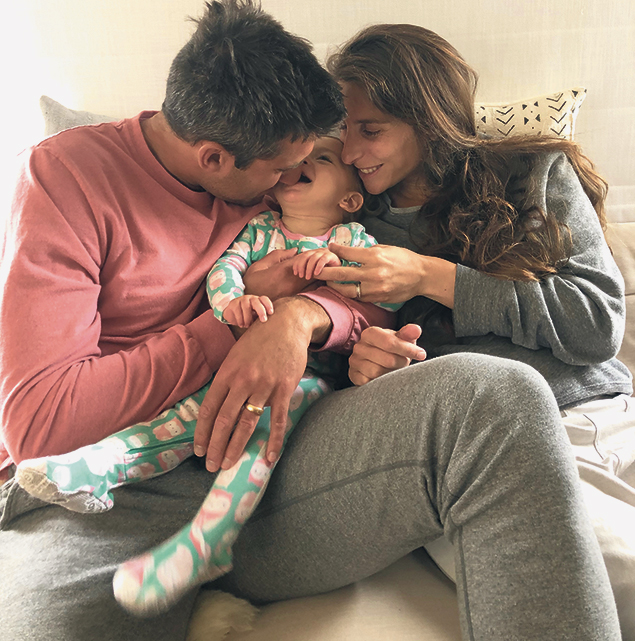
Matthew Goldstein and Myra Sack hold their daughter Havi.
 

Myra Sack and Matthew Goldstein

Myra Sack and Matthew Goldstein of Boston more recently suffered the loss of their child as the result of an error in genetic testing. Mistakes can happen in genetic screening, even to a couple with scientific and medical acumen. Dr. Goldman is an MD/Ph.D. who works at a biotechnology company; even his scientific expertise couldn’t protect him and his wife from a tragic human error.

“Before we got pregnant with Havi, we underwent preconception genetic screening,” Ms. Sack said. “I learned I was a carrier for Tay Sachs. Matt, my husband, was tested immediately. He had an enzyme test that came back positive, which indicated that he was likely a carrier.” Their genetic counselor recommended that Matt have full gene sequencing, which would search for every variant of the gene that could cause Tay Sachs disease. However, Ms. Sack reported, “The ordering physician ordered the wrong test, a test that only looked at five to seven common mutations. That came back negative, and we were told we were in the clear. We got pregnant a few months later with Havi.”

Havi was diagnosed with Tay Sachs.

Havi was born seemingly healthy. “We only learned that an erroneous test was ordered when we saw developmental delays at around a year,” Ms. Sack said. “When the pediatrician noticed a startle reflex, one of the hallmark symptoms of Tay Sachs, he asked if we were tested, then advised retesting to confirm. Havi was born on September 4, 2018, our second anniversary.” Their baby girl, Havi, was diagnosed with Tay Sachs in December 2019 and died in January 2021.

By the time Havi was diagnosed, Ms. Sack was pregnant with her second child, Kaia. She was able to do a CVS genetic test and learned, to their relief, that Kaia was not affected. Myra Sack and Matthew Goldstein had their third child, Ezra, in August 2022.

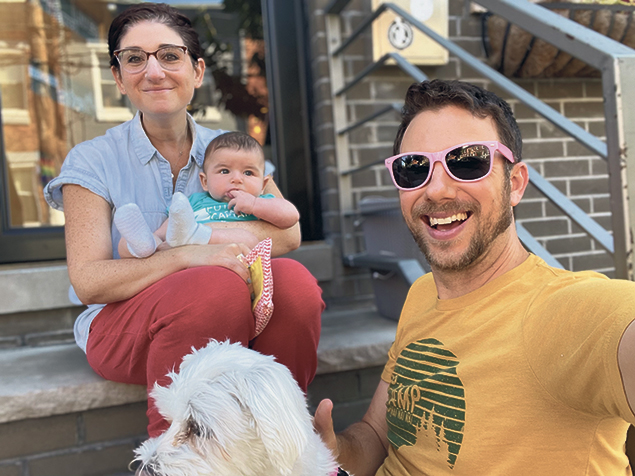
Molly Wernick, Andrew Davies, and the couple’s young son, Miller. Ms. Wernick and Mr. Davies used medical science to ensure that their child would not have Tay Sachs.
 

Andrew Davies and Molly Wernick

When Andrew Davies and Molly Wernick of Philadelphia learned they both were carriers of Tay Sachs disease, they were well equipped to deal with the challenge. “She found out a long time ago, and I found out about eight years ago, when I met a JScreen person and felt I should get tested,” Mr. Davies said. “The first step all couples should take is getting screened with JScreen. That information gives you risks and options.

“We decided to do IVF” — that’s in vitro fertilization — “and test the embryos,” he continued. “We went through the IVF process in 2019 and got several embryos that were Tay Sachs negative and several that were carriers but did not have Tay Sachs.”

In the IVF procedure, eggs and sperm from a couple are mixed in a petri dish in a clinical lab. The fertilized eggs are sustained in the lab, and develop into early embryos, which can be tested individually for many types of genetic defects by PGD — preimplantation genetic diagnosis. Tay Sachs-positive embryos, which have two copies of the Tay Sachs gene, are not used to establish a pregnancy. Embryos that have no Tay Sachs genes are used preferentially. Embryos with one copy of the Tay Sachs gene, which will produce children who are carriers but will not have the disease, can be considered for use.

“It took three times to work,” Mr. Davies said; referring to the transfer of three of their precious embryos into Ms. Wernick’s uterus. When their son Miller was born, “we called him ‘‘the charm,’ as in third time’s the charm.’

“We got about ten embryos,” Mr. Davies continued. “We used three that were negative for Tay Sachs. Three more that are still left are carriers. They are still frozen.

“It’s very expensive, about $30,000. We got help from our family and a small grant from a Jewish organization,” Mr. Davies said; most health insurance plans do not cover the costs of IVF, he added.

The couple is very involved in the prochoice movement. “All families should have the options that we do,” Mr. Davies said. “We’re afraid that procedures like IVF won’t be available for all. It’s a political and judicial decision, but really affects so many people’s personal lives.” He said that the Supreme Court’s decision in Dobbs, repealing Roe v. Wade, will interfere with many families’ access to the choices they might need. There are many cases where women’s lives are at stake, he said. “My sister-in-law had an ectopic pregnancy,” If left untreated, the ectopic pregnancy “would kill my family member.”

“Andrew and I are Jewish professionals dedicated to spreading the message of importance about genetic testing,” Ms. Wernick said. She works for Repair the World, a national Jewish nonprofit service-learning organization.

Ms. Wernick talked about the urgency of a woman’s right to choose. “It’s wild to think that we would be forced to choose between terminating a pregnancy at four months, and having a Tay Sachs baby and watching that infant child die,” she said. “That we would be denied that choice and be forced to do the latter is deeply disturbing.”

She said that her husband, whose unusual professional title is Chief Improvising Officer of the Bible Players, a Jewish comedy team in Philadelphia and New York City, and is a member of CharacTours, an Interactive theatrical acting group, has made videos to promote JScreen’s services. The amusing scripts encourage young people to keep genetic testing in mind as a priority. One such video is a parody of “The Bachelor,” called “The Beshert.” Instead of getting the rose at the end of the night, the man’s mother asks the girl if she would get JScreened.

Molly Wernick and Andrew Davies revel in their happy ending, a healthy baby boy. “IVF is quite a ride,” Ms. Wernick said. “Every early morning and progesterone shot was worth the joy we get from Miller every day. He’s just overwhelmingly joyous, and brings us an incredible amount of light.”

However, she emphasized, it is important to consider that these technologies are expensive, and they are not available to everyone. “We sit in a position of immense privilege for being able to afford in vitro,” she said. “For all the work JScreen does, it leads to the need for IVF. IVF is not covered by most insurance. It’s not available to those who don’t have the same economic access. And it’s not something that is accessible to all the people who need it.”

Molly Wernick’s message to the Jewish community is to focus on generating financial resources to support reproductive healthcare. “Why is there such an emphasis on screening in the Jewish community, but so much less support for actually addressing reproductive healthcare we need?” she asked. Many couples who discover that they are carriers for serious genetic diseases need IVF to have healthy children. “This is also true for same sex couples, and for people who need surrogates,” she said. “Fertility is wildly under-supported, and it is needed for helping Jewish continuity.

“In Israel there is infinitely better access to universal healthcare and reproductive healthcare,” she continued. “It’s up to us Jewish professionals to put it on the radar.”

In 2008 the United States Senate voted to designate September as National Tay-Sachs Awareness month, raising awareness of the disease, and recommendations for testing.

There is information on JScreen programs and services at www.jscreen.org.


https://jewishstandard.timesofisrael.com/science-brings-hope/?utm_source=Jewish+Standard+Daily&utm_campaign=837c10d47a-EMAIL_CAMPAIGN_2018_07_26_08_03_COPY_01&utm_medium=email&utm_term=0_1d7094cc43-837c10d47a-407694561

Dr. Miryam Z. Wahrman of Teaneck, professor of biology at William Paterson University, is the author of “The Hand Book: Surviving in a Germ-Filled World,” and “Brave New Judaism: When Science and Scripture Collide.” She was part of the Mount Sinai Medical School team that set up the first IVF program and produced the first test tube baby in New York State.

Friday, September 30, 2022

Shanda Vs. Past Nischt ... I Say Both Words Need To Be Kept Alive.... A people that has a covenant with God should know better, be better and act better.


The Jewish word that no one uses anymore ...


 (I'll Add One -  (Shanda Far Der Yidden!)


A word that comes straight out of the Jewish moral vocabulary list. Sometimes, it is about our own families. 


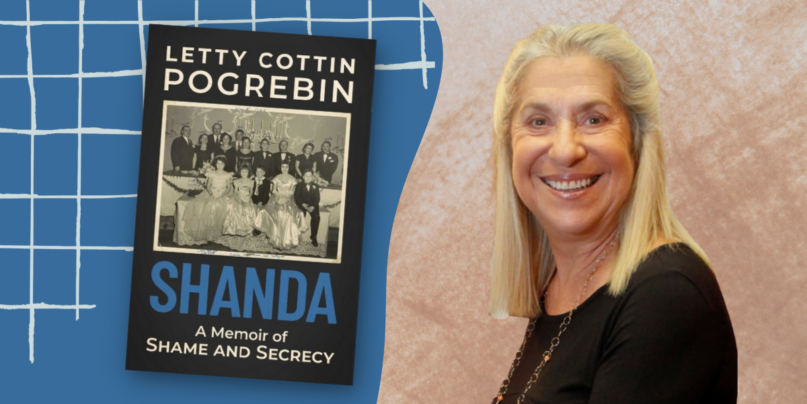
Letty Cottin Pogrebin and her book 


(RNS) — There is a Yiddish word that our grandparents used that has fallen out of use.
The word is shanda — shame.

Some would say: Good riddance.

For several generations, the idea and living reality of shanda served as fuel in our personal and communal Jewish engines.

Consider the way that we used that word.

If something was a shanda fur die goyim — what did that mean?

It meant that whatever it was — it was something that would bring shame, disrepute or embarrassment to the Jews — and it was something that we should not let the gentiles see.

Why?

Because we feared antisemitism. Shanda was our internalized sense of powerlessness.

We screamed shanda about any number of people:

  • Ethel and Julius Rosenberg, the atomic bomb spies.
  • Their nemesis, the attorney Roy Cohn (who my parents believed was a life form somewhat lower than algae).
  • The disgraced arbitrager and inside trader, Ivan Boesky, who so greatly understood that he was a shanda that he asked that the Jewish Theological Seminary in New York remove his name from their library.
  • Bernie Madoff, of the Ponzi scheme — a man who targeted his fellow Jews and Jewish organizations, and whose criminality left serious and enduring wreckage in its wake.
  • And, most recently, the wealthy sexual predator Jeffrey Epstein.

These were all Jews who brought disrepute to the Jewish people. Hence, shanda!

A new book by Letty Cottin Pogrebin, the feminist author and activist (co-founder of Ms. magazine) takes the idea of shanda to a new, deeper level. The book is, appropriately, “Shanda: A Memoir of Shame and Secrecy.”

The best term I can invent for what Letty does is “family archaeology.” She digs into her family stories, generation by generation, level by level. She discerns the layers of fables and outright fictions that undergird her narrative — all as a way of getting real, getting clear and getting whole.

She writes: “Every family has its underbelly. Mine was fat with pretense, the denied, the obscured, the unsaid.” Hiding is my heritage, she says.

There is something very Jewish about hiding and secrecy. Over the years, I have ruminated on the essential Jewish nature of the superhero with a secret identity — superheroes invented by Depression-era Jews who wanted to assimilate, who understood secrecy and hidden identities. 

Letty reminds us that biblical figures often disguised themselves. The entire Book of Genesis is one long masquerade party — for example, Jacob disguises himself as Esau, Tamar disguises herself as a prostitute, and Joseph disguises himself as an Egyptian overlord. On the holiday of Purim, masks have a starring role.

Letty embarks on a journey into her family’s past, which includes her own past.

Among the things she unearths and confesses:

  • Her own abortion.
  • Her encounter with a drunken Irish author that almost ended up in rape.
  • A divorce from two generations ago.
  • Her own bout with cancer. (How did our parents speak of that illness? In hushed tones that you would normally reserve for a public library or a synagogue. The “C-word.” “The big C.”)
  • A cousin who is gay.
  • A child who died in infancy.
  • Her parents’ previous marriages.
  • Mothers who died in childbirth.
  • Siblings who showed up unexpectedly, whom she never knew she had.
  • Unhappy marriages.

In particular, and most poignantly, there are the stories about Letty’s father, Jack Cottin. He was a communal leader, apparently successful, dashingly handsome.

But, it turns out that Jack Cottin was hiding something. Beneath the façade, under the masks, he was a financial failure. All of his outward success turned out to be mere posturing, a mirage.

Was it possible that my father’s unilateral decision to sell our house and relegate me to a daybed in his new apartment’s entry hall was not born of selfishness and insensitivity to my feelings of loss and abandonment, but of shame and his refusal to admit that he was unable to afford an apartment with a second bedroom?

Could it be that the reason he didn’t give me any spending money in college was not to teach me financial independence but because he didn’t have a dollar to spare? What a great relief it would be, even these many years later, were I able to believe that his actions sprang from a paucity of resources, not of love. Was he performing prosperity to save face? If so, I would sympathize with him retroactively and forgive him posthumously.

Few things could shame a husband or father more than being unmasked as an inadequate provider. I knew that. But I never imagined my self-assured dad would wear any kind of mask in the first place. Looking back, I recognize now that compelling social forces in his upwardly mobile Jewish community — namely masculine pride and the loom of the shanda — were enough to make my father, or any man of his generation, lie about his finances.

As Letty put it, knowingly: “In the Jewish world of the 1950s, a man who couldn’t support his family was not a man.”

What gets me about this wonderful, lyrically written book is that it proves something we all know: The more personal a story, the more universal it is. Every reader will find themselves in these pages. These are all of our stories.

But, this leaves me with a question about the future of Jewish identity.

Once upon a time, our parents and grandparents could, and would, complete the following sentence: “Jews don’t (fill in the blank).”

We had our list of answers:

  • “Jews don’t buy retail.”
  • “Jews don’t make racist jokes.”
  • “Jews don’t play or enjoy violent sports.”
  • “Jews don’t hunt.” (Because of the prohibition against cruelty to animals, and also because the biblical Esau was a hunter — which was, by the way, a shanda).

I once gave a sermon on that last statement — “Jews don’t hunt” — in a Southern congregation.

During the oneg Shabbat, a few congregants approached me to tell me, in no uncertain terms, that Jews do, in fact, hunt.

Is it still possible to make the statement: “Jews don’t … “? 

I wonder.

And, I wonder what happens to a culture when there are no longer taboos.

I believe the era of shanda has vanished — if only because our children and grandchildren will lack the ethnic Velcro to see Jewish bad actors as somehow inextricably linked to them. 

While shanda has evaporated, another Yiddish word might be experiencing a renaissance — though perhaps not in the original Yiddish.

I am talking about past nischt — that there are things Jews should not do.

Shanda was about what others might think. The Other has the power to define you and evaluate you.

Past nischt is about what we — in the form of Jewish history, Jewish values, and we might even dare to say, God — might think. We, or our surrogates, have the power.

I feel that sense of past nischt all over the place, and I suspect Letty would agree with me.

In particular, I feel that sense of past nischt not only in an ethical sense, but increasingly in the sense of what is going on in our world today.

I know Letty knows this, because of her leftward leanings on Israel. She might think Benjamin Netanyahu was a shanda, but a more concise critic of Israeli policies might hope a people that has been powerless would say, about the gratuitous use of power: Past nischt.

Sometimes, I agree with her.

I will go beyond that.

When I encounter Jews who behave badly, it is not only a case of shanda; it is a case of past nischt.

As in: They should know better and be better and act better.

As in: A people that has a covenant with God should know better, be better and act better. 

In the words of my friend, colleague and teacher, Rabbi Lauren Berkun of the Shalom Hartman Institute, in her interpretation of the teachings of Rabbi Donniel Hartman (whose father, the late Rabbi David Hartman, Letty cites in this book):

We answer to a higher authority, we answer to a higher standard, and that is the standard that’s worthy of who we perceive we ought to be. A standard that embraces exceptionalism, not in any sense of arrogance, but in the sense that “you shall be unto me a kingdom of priests and a holy nation.” This is what you must work to become. If we fail to do so, we are failing to live up to our mission as a nation charged to be God’s covenantal partners and consequently to be a light that sanctifies God’s name and enables God to be the God of the world.

If we fail in doing that — well, that would be a shanda.

I love this book, and I suspect I will be returning to it frequently.

You will love it as well — probably because you will see yourself, and your family, and your own complicated narrative in its pages.

With that, may we all live in such a way that our names appear in the Book of Life.

https://religionnews.com/2022/09/28/shanda-letty-cottin-pogrebin/

Thursday, September 29, 2022

UOJ Gets More Results --- The No Surprises for Survivors Act would require private insurers to provide coverage, without cost-sharing, for forensic medical exams regardless of where they are administered according to its co-sponsors. It would also require the exams to be covered under the emergency services protections of the No Surprises Act, regardless of where they are performed.


New Bill Would Help Survivors of Sexual Assault Avoid Surprise Costs


— The No Surprises for Survivors Act was introduced to help with surprise bills for forensic exams


A photo of a sad looking woman reacting to the piece of mail in her hand.

Survivors of sexual assault often receive unexpected medical bills for critical care, but lawmakers and physicians are pushing for new ways to address this staggering problem.

On Monday, a group of bipartisan lawmakers introduced a bill called the No Surprises for Survivors Act, which is designed to ensure that patients with private health insurance do not have to pay out-of-pocket costs or surprise medical bills for forensic medical exams, commonly known as rape kits.

In announcing the introduction of the bill, Reps. Linda Sánchez (D-Calif.), Gwen Moore (D-Wis.), and Carol Miller (R-W.Va.) said that while the Violence Against Women Act (VAWA) of 1994 authorized federal funds to be used for services that support survivors of sexual assault, independent analyses have found that some survivors continue to receive surprise bills and can be left to pay for them out of pocket.

In a correspondence recently published in the New England Journal of Medicine (NEJM), a group of physicians and public health experts detailed the thousands of dollars in costs that are still faced by many survivors of sexual assault.

"The VAWA allows health care facilities to bill for diagnostic testing, laceration repair, counseling, prevention of sexually transmitted diseases and HIV infection, and emergency contraception -- a provision of the law that is especially worrisome, especially since many states have outlawed abortion," the authors of the correspondence wrote.

They further noted that, in 2019, sexual violence was a coded diagnosis for an estimated 112,844 emergency department visits. Most patients (88.3%) were female, 38.2% were 17 years old or younger, and 52.7% were between the ages of 18 and 44.

Of these patients, 36.2% had Medicaid and 22.1% had private insurance, while 16% were expected to pay out of pocket. Overall, emergency department charges averaged $3,551, and victims of sexual abuse during pregnancy incurred the highest charges ($4,553). Charges for self-pay patients -- which some hospitals may discount -- averaged $3,673.

However, it isn't just the financial costs that are detrimental, the authors noted, pointing out that emergency department charges may discourage survivors of sexual assault from reporting rape and seeking medical care in both the short and long term. Such charges may disclose "potentially stigmatizing events" to family members or employers, they added, and charges may "further traumatize survivors by suggesting that they are personally responsible for their assault."

Co-author Samuel Dickman, MD, of Planned Parenthood of Montana, told MedPage Today that while previously working as a doctor in Texas, "I would routinely see patients who had been victims of rape, and some of them told me that they were dealing with medical bills after going to the emergency room, or that they hadn't even wanted to go to the emergency room because they knew they would be hit with medical bills." In discussing the piece, he noted that he was not speaking on behalf of his organization.

"It's just an incredibly tragic way that our healthcare system fails survivors of rape and abuse, which is that they are often asked to pay thousands of dollars for this medical issue," Dickman said.

The No Surprises for Survivors Act would require private insurers to provide coverage, without cost-sharing, for forensic medical exams regardless of where they are administered (unless reimbursed by the state under VAWA), according to its co-sponsors. It would also require the exams to be covered under the emergency services protections of the No Surprises Act, regardless of where they are performed.

The bill further states that if an individual receives a forensic medical exam where the state is responsible for the out-of-pocket costs associated with the exam, "private insurers must provide appropriate notice to help victims avoid bills and streamline the reimbursement process."

Dickman noted that, however staggering, the numbers included in the NEJM correspondence were "certainly an underestimate" of the actual number of patients expected to pay out of pocket for services. Furthermore, those most likely to be victims of sexual violence -- young women from low-income communities -- are also those most likely to not have health insurance, especially in states that haven't expanded Medicaid, he said.

In order to have access to VAWA protection, a survivor of sexual assault needs to be able to disclose that information, and for many reasons, that often doesn't happen, Dickman added. In addition to expanding VAWA, he proposed broader reforms, such as universal healthcare coverage, that would further protect survivors of sexual assault, regardless of whether they are able to disclose what had happened to them when they seek care.

https://www.medpagetoday.com/special-reports/features/100875?xid=nl_mpt_investigative2022-09-28&eun=g2011045d0r&utm_source=Sailthru&utm_medium=email&utm_campaign=InvestigativeMD_092822&utm_term=NL_Gen_Int_InvestigateMD_Active

Wednesday, September 28, 2022

UOJ Gets Results :-)


New California Law: Docs Who Sexually Abuse Patients Can't Get Their Licenses Back


— Statute bars medical board from restoring licenses revoked from sex offenders


A photo of Larry Nassar, DO, escorted by a court officer during his sentencing hearing in Lansing, Michigan
Disgraced Doctor Predator Larry Nassar


A new California law prohibits the state's medical board from granting a license to clinicians whose credentials were previously surrendered or revoked on grounds of sexual misconduct with patients, with no chance of winning an appeal.

Prior to the new law -- which appears to be the only of its kind in the nation -- a clinician whose license was revoked or surrendered because of earlier sexual misconduct violations could reapply after 2 or 3 years and return to practice if approved.

What's more, the wording of the new law leaves open the possibility that it could apply to as many as 18 other health licensing agencies that are asked to grant or renew the license for a clinician who engaged in sexual misconduct, acknowledged Carlos Villatoro, spokesperson for the Medical Board of California (MBC).

While the MBC licenses some 145,000 physicians, other boards license hundreds of thousands of health professionals such as nurses, physician assistants, dentists, podiatrists, psychologists, acupuncturists, chiropractors, optometrists, and pharmacists.

Asked to clarify, Matt Woodcheke, spokesman for the Department of Consumer Affairs which oversees all licensing boards in the state, said the new law will apply only to the MBC and the Osteopathic Medical Board of California (OMB), which licenses more than 10,000 osteopathic physicians and surgeons. However, the OMB is not mentioned in the law.

The legislation was prompted by a 2021 investigation by the Los Angeles Times, which found that the MBC approved restoration applications from 10 of 17 physicians who had lost their licenses because of sexual misconduct with patients and sought to get them back.

As of January 1, 2023, when the new law takes effect, the agency will have no discretion in these cases; these physicians would never get their licenses back.

The law will "prohibit the board from reinstating a person's certificate that has been surrendered because the person committed an act of sexual abuse, misconduct, or relations with a patient or sexual exploitation, as specified, or the person's certificate has been revoked based on a finding by the board that the person committed one of those acts," the statute says.

Robert Wailes, MD, president of the California Medical Association, which sponsored the bill, applauded Gov. Gavin Newsom for his September 22 signature. In a news release, he said the law ensures that the licensing board "has the tools they need to protect patients and keep any physician who violates a patient's trust from practicing medicine."

Assemblymember Akilah Weber, MD, a San Diego-based ob/gyn and the bill's author, added that the "heinous behavior of abusing patients goes against everything physicians stand for and should not be tolerated. This legislation is essential to protect patients and the sanctity of the physician-patient relationship."

The California legislation appears to be the only such law in the nation prohibiting the granting of medical licenses to applicants who have a history of sexual misconduct or are registered sex offenders, said Joe Knickrehm, spokesperson for the Federation of State Medical Boards, who mentioned a handful of state bills or statutes.

Michigan lawmakers passed two bills (HB 4372 and 4373) that would have revoked the license of any health professional convicted of sexual misconduct under the pretext of medical treatment, but they did not pass the corresponding house.

Michigan (HB 4858 and 4857), Georgia (HB 458), and Florida introduced several pieces of legislation in an effort to discipline any physicians like Larry Nassar, DO, the former team doctor for the U.S. women's national gymnastics team who was convicted of rape and other sexual assaults on children and young women.

The two Michigan bills died after they failed to win approval in their corresponding house.

Although the Georgia legislation passed, it appears to "provide for the refusal, suspension or revocation of the license of a physician who has committed a sexual assault on a patient," but doesn't require it as California's new law will.

The Florida bill passed in June of 2021, but is more narrow in that it is focused on a physician's sexual acts involving children or those with mental illness or intellectual disability, as well as actions related to sex trafficking and deriving profits from prostitution.

Consumer groups' reactions were mixed. Eric Andrist of the Patient Safety League, a frequent critic of the MBC, said the new law only applies to physicians in the context of their relationships with their patients. It "turns a blind eye" to doctors who get in trouble for sexual misconduct with non-patients, including fellow staff members, he said.

"I mean, what difference does it make who the misconduct was with?" he said. "Yes, it's an even worse breach of the doctor patient relationship when it's a patient, but sexual misconduct is wrong across the board."

On Andrist's point, in a June letter to Weber, the MBC's executive director William Prasifka said the board supported the bill but suggested it could go farther.

"As currently drafted, the restrictions on licensure reinstatement and application denials do not apply to those who have engaged in sexual criminal or professional misconduct against a colleague, employee, family member, or others who have never been the offender's patient/client," the letter stated. "Offenses against these victims also represent a serious breach of a current, or aspiring, physician's ethical obligations and display a critical lack of judgment."

Prasifka added that the licenses of "physicians who are guilty of sexual crimes ... should be automatically revoked and, further, that this behavior should disqualify them from both applying for an initial license and from seeking reinstatement of a revoked license. Closing this gap in the bill will protect consumers from the individuals who have committed sexual offenses, regardless of their relationship to the victim."

Marian Hollingsworth, also of the Patient Safety League, said there are physicians like Narayana Ambati, MD, who received a mere reprimand for allegedly engaging in sexual misconduct against his sonographer as she performed an ultrasound on a patient, according to the agency's accusation.

"There's no world in which sexual abusers should be doctors," said Carmen Balber, executive director of Consumer Watchdog.

Balber also noted that while the law is a good first step, it doesn't go far enough. It doesn't apply to the licensee who is put on probation numerous times for sexual assault, nor to physicians who lose their license for reasons other than sexual misconduct, such as causing a patient's death, she said.

"There's a lot more that this medical board and the legislature need to do," she said.

Asked if the MBC will now revoke the restored licenses of physician sex offenders, Villatoro said it would not. The new law "does not call for retroactive enforcement," he said.

https://www.medpagetoday.com/special-reports/exclusives/100935?xid=nl_mpt_DHE_2022-09-27&eun=g2011045d0r&utm_source=Sailthru&utm_medium=email&utm_campaign=Daily%20Headlines%20Evening%202022-09-27&utm_term=NL_Daily_DHE_dual-gmail-definition